
How to Identify the Antiochos IV Epiphanes Tetradrachm
A collector's guide to recognizing this Seleucid royal tetradrachm by its diademed portrait, enthroned deity reverse, Greek legend, silver fabric, and weight.
Read the full Antiochos IV Epiphanes Tetradrachm encyclopedia entry →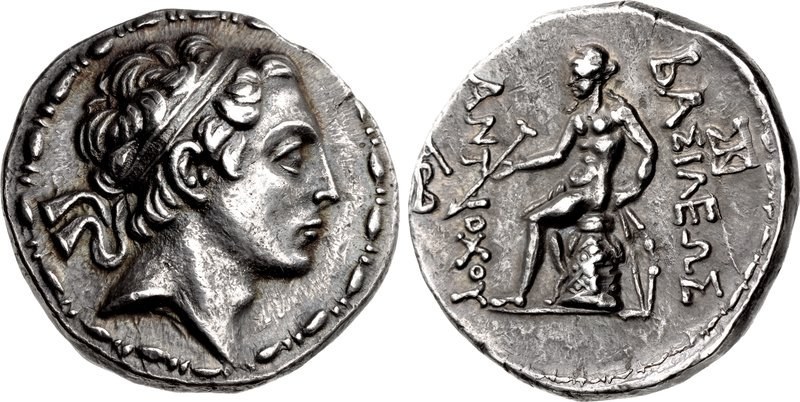
Start with the denomination and metal. This is a tetradrachm of high-grade silver, a large coin on the order of roughly 16 to 17 grams and about 28 to 32 mm wide. Weigh and measure any candidate first: much lighter or smaller silver pieces are drachms or fractions, and a wrong weight rules out a full tetradrachm before you study the types.
Read the obverse. You want a diademed male head facing right, the diadem being a plain royal band tied behind the head with loose ends at the neck, not a laurel or radiate crown of leaves. The portrait is a real ruler likeness in bold Hellenistic relief, filling most of the flan, and on Antiochos IV's coinage the features are idealized in a divine, sometimes heroic manner. A head lacking the tied diadem, or a beardless youthful civic type, points to a different coin.
Turn to the reverse, which should show a seated deity holding attributes, most typically an enthroned Zeus with a small Victory or bird in the outstretched hand and a long scepter in the other. Crucially, look for the Greek royal legend, usually reading BASILEOS ANTIOCHOU with epithets such as THEOU EPIPHANOUS, arranged around the figure. Confirming the king's name in the legend is the single strongest way to attribute the coin to Antiochos IV rather than another Seleucid ruler using similar imagery.
Examine the fields for monograms and mint controls. Seleucid tetradrachms were struck at many mints, and small Greek letters, monograms, or symbols in the field or beneath the throne identify the mint and issue. These are often weak or partly off the flan; record what is genuinely present rather than inventing marks. Genuine strikes are hand-made and slightly irregular, with an oval or off-round flan, uneven edges, and old grey or iridescent toning over metallic silver.
Finally, weigh authenticity carefully. Seleucid royal silver is widely faked. Watch for the signs of a cast copy: a seam around the edge, a soft or bubbly surface, and a dull, non-metallic tone. Tooled coins show unnaturally sharp, scratchy detail added to worn relief. Because the same king struck at multiple mints and later Seleucid kings reused the enthroned-deity formula, a secure attribution rests on the legend, portrait style, and mint controls together; for a significant purchase, rely on specialist cataloguing or third-party certification and documented provenance.
Frequently asked questions
How do I tell this from a posthumous Alexander tetradrachm?
Alexander tetradrachms show a heroic head in a lion skin and name Alexander in the legend. This coin shows a diademed royal portrait and names Antiochos, typically BASILEOS ANTIOCHOU, so read the legend and look for the plain tied diadem rather than a lion skin.
How do I distinguish Antiochos IV from other Seleucid kings named Antiochos?
Several kings shared the name, so rely on the epithet in the legend and the portrait style. Antiochos IV uses THEOU EPIPHANOUS, "God Manifest," and his idealized divine portrait and reverse style help separate his issues; mint controls and specialist references confirm it.
How do I confirm it is a tetradrachm and not a smaller coin?
Weigh and measure it. A full tetradrachm sits on the order of roughly 16 to 17 grams and about 28 to 32 mm across. Lighter, smaller silver of the same style is a drachm or fraction, so the weight settles the denomination.
What are the main warning signs of a fake?
A seam around the edge, a soft or bubbly surface, and a dull non-metallic tone suggest a cast copy, while unnaturally sharp, scratchy detail on otherwise worn relief suggests tooling. For valuable examples, seek specialist attribution or certification.