
How to Identify the Anglo-Saxon Styca
A collector's guide to recognizing Northumbrian stycas by their tiny base-metal flans, cross-and-pellet reverses, legends, and common look-alikes.
Read the full Anglo-Saxon Styca encyclopedia entry →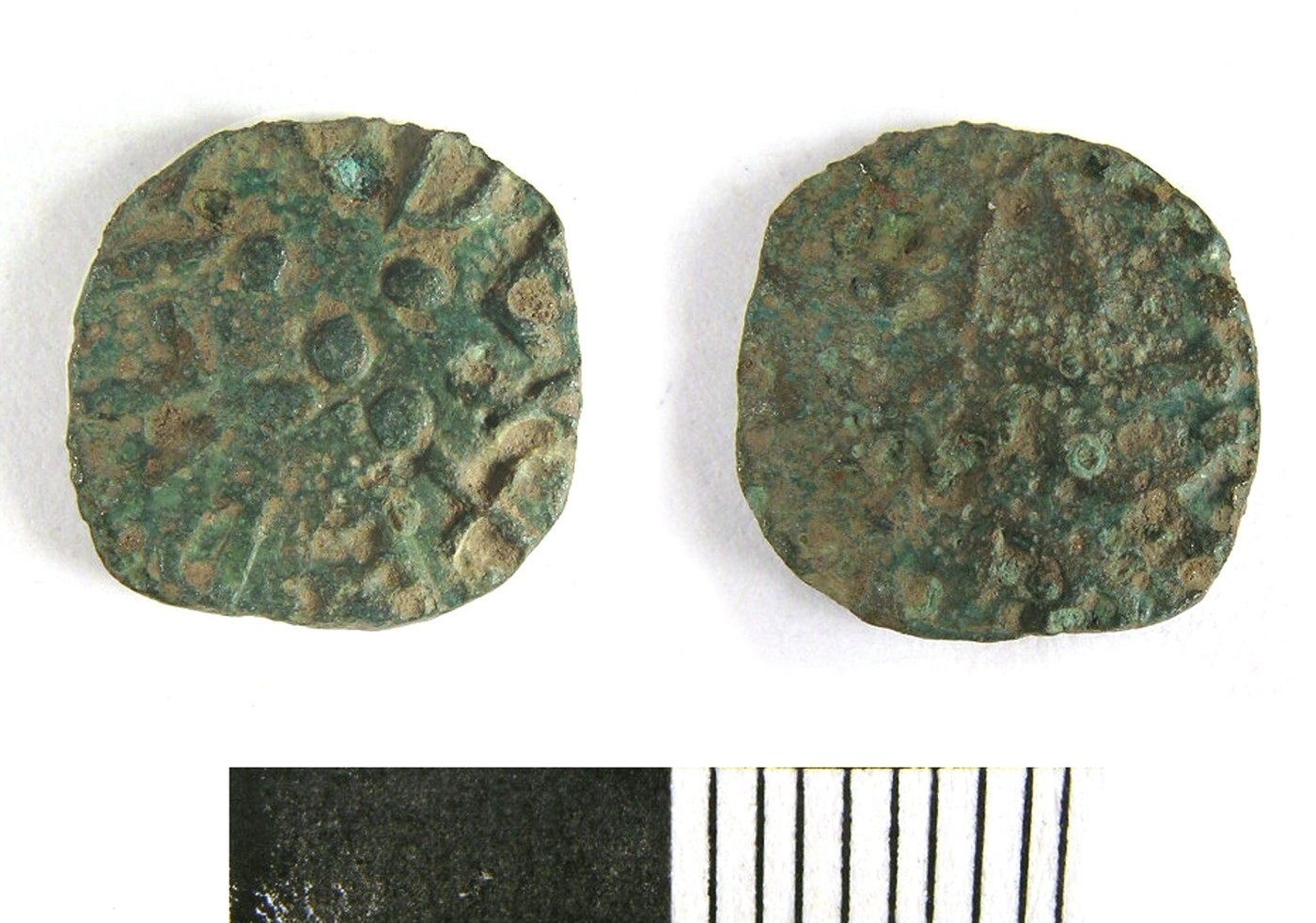
Begin with size and metal, which are the quickest tests. A styca is small and stubby, usually about 12-14 mm across and roughly a gram in weight, and it is struck in a copper-based alloy rather than silver. Expect a dark brown, green, or reddish surface rather than the bright grey of a silver penny. If a coin of this era is silver and noticeably larger and thinner, it is a penny or a sceat, not a styca.
Read the two faces for their layout. On the type shown here, one side has a head facing right ringed by an inscription, while the other shows a cross combined with pellets or geometric ornament, again ringed by lettering. On many stycas both sides instead carry a small central device, such as a cross, star, or pellet, with the legends around the rim. The key diagnostic is a pair of short Anglo-Saxon Latin legends: one that typically names a king or an archbishop of York, and one that names a moneyer.
Work with the legends even when they are damaged. Styca dies were small and cut quickly, so letters are frequently crowded, retrograde, or garbled, and hoard coins are often corroded. Try to pick out the ruler's name on one side and the moneyer's name on the other, since the combination is how specialists attribute a piece. Do not expect a mint name in the modern sense; the concentration of production at York is inferred from the series rather than stated on the coin.
Watch for look-alikes and condition traps. Small, dark, base-metal coins of other cultures, later medieval jettons, and heavily worn tokens can superficially resemble a styca, so confirm the characteristic short paired legends and the Northumbrian style before concluding. Because stycas are inexpensive there is little incentive to fake common types, but corrosion, over-cleaning, and modern casts do occur; a genuine struck styca shows crisp raised letters and an irregular hand-made flan, whereas a cast copy tends to look soft, grainy, or seamed at the edge.
Frequently asked questions
How do I tell a styca from an Anglo-Saxon silver penny?
A styca is much smaller and thicker and is made of base copper alloy with a dark or greenish surface. A penny is larger, thinner, and struck in bright silver, so metal and size separate them quickly.
The legends are unreadable. Is that normal?
Yes. Styca dies were small and often crudely cut, and many coins come from hoards with corroded surfaces, so blundered or partly legible legends are common and do not by themselves indicate a fake.
What names should I look for on the coin?
Look for a ruler such as a Northumbrian king or an archbishop of York on one side and a moneyer's name on the other. That pairing is what specialists use to attribute the coin.
How can I spot a cast reproduction?
A struck styca has sharp raised lettering and a slightly irregular flan. A cast copy usually looks soft or grainy, with mushy detail and sometimes a faint seam around the edge.