
How to Identify the Anglo-Saxon Silver Sceat
A small, thick early English silver coin from around 680-750 AD, usually anonymous, identified by comparing its varied obverse busts and reverse motifs to known type series.
Read the full Anglo-Saxon Silver Sceat encyclopedia entry →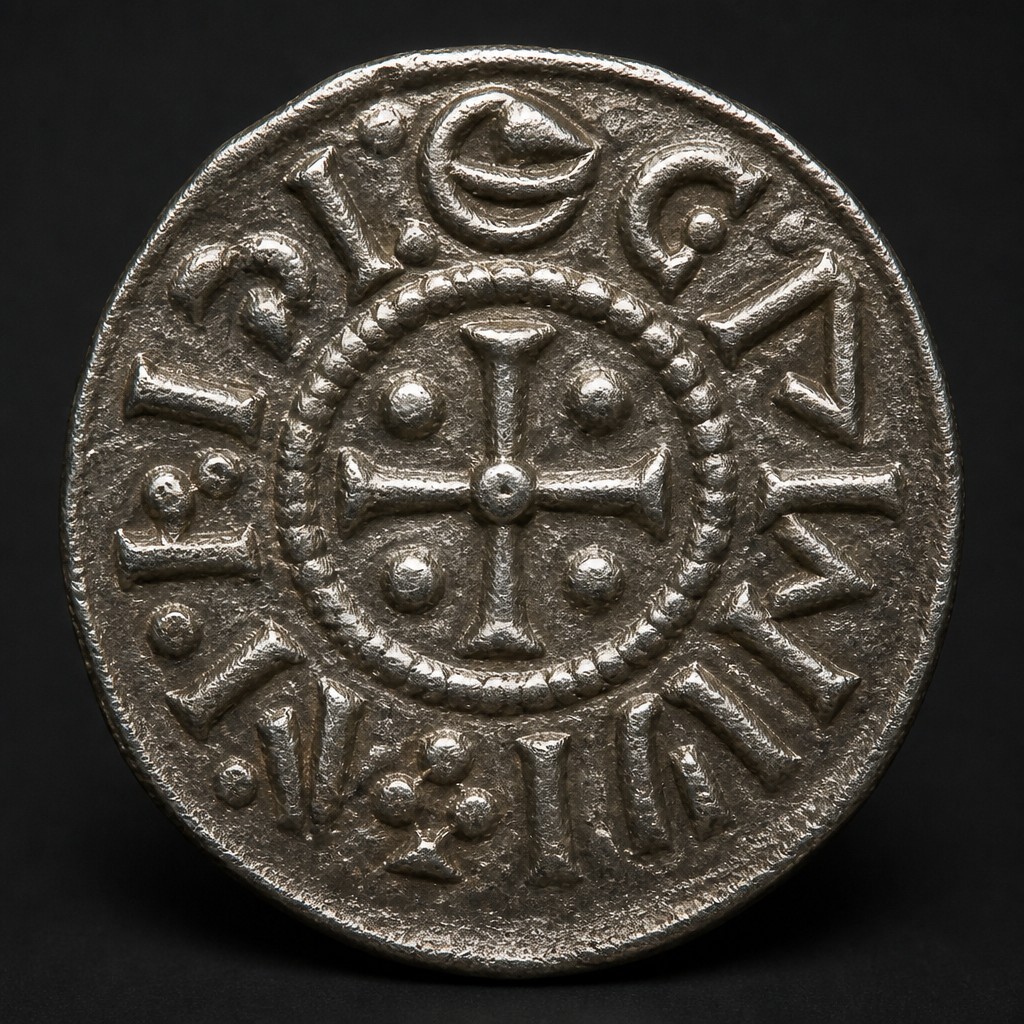
What It Is
The sceat (plural sceattas) was the principal small silver coin of England and neighboring Frisia during roughly 680 to 750 AD, a period before English coins regularly named a ruler. It bridges the gap between the earliest Anglo-Saxon gold coinage and the later broad silver pennies introduced under King Offa, and it circulated widely in cross-Channel trade linking eastern England, Kent, and the Frisian coast.
Obverse Design
Sceattas display an enormous variety of obverse designs across dozens of recognized types, including diademed or helmeted heads, geometric "porcupine" busts made of radiating lines, and figures holding crosses or standards. Most carry no legible ruler's name, though a small number of Northumbrian issues name King Aldfrith.
Reverse Design
Reverse designs are equally varied, featuring motifs such as a standing figure, a bird perched on a cross, a four-legged animal, a whorl or geometric pattern, or a cross accompanied by pellets or annulets. Because there are so many die combinations, collectors and dealers classify sceattas by series letters (such as Series A through U) rather than by ruler.
Size, Weight, and Metal
These are small but noticeably thick coins for their weight, roughly 11-13mm in diameter and around 1.0 to 1.3 grams, struck in silver whose fineness declined somewhat toward the end of the series.
Mint Marks and Where to Find Them
Sceattas do not carry mint names or mint marks in the way later pennies do; identification of a probable origin (English or Frisian, and which region) depends entirely on comparing the die style and motifs to documented type series.
Telling It Apart from Similar Coins
Sceattas are smaller and thicker than the broad, thin pennies introduced under Offa of Mercia after about 760, which are inscribed with the king's name and a moneyer. They are also generally smaller than contemporary Frankish deniers, which tend to be more thinly struck on wider flans. Within the sceat series itself, distinguishing one series letter from another often comes down to small differences in the bust style or the exact reverse motif, so side-by-side comparison with reference plates is the most reliable approach.
Judging Condition at a Glance
Because dies were often larger than the flan, off-center strikes with part of the design missing are common and not necessarily a sign of wear; instead, judge condition by how sharp the remaining design elements are and how much metal flatness appears on the highest points. A sceat with a complete, well-centered strike showing crisp detail on both the bust and reverse motif is considerably harder to find than a typical off-center example.
Authenticity Red Flags
Be cautious of coins with motifs that do not match any recognized series, an unnaturally smooth or soft surface suggesting a cast copy, or a weight well outside the normal one to one-and-a-quarter gram range for the type.
Frequently asked questions
Why doesn't my sceat show a king's name?
Most sceattas were struck anonymously, without inscribing a ruler's name, which is typical for this coinage before Offa's later reforms introduced named, inscribed pennies.
How are sceattas classified if they don't name a ruler?
They are grouped into series identified by letters, such as Series A through U, based on shared obverse and reverse design types.
Why is my coin off-center?
The dies used were often larger than the small flans, so off-center or partial strikes are common on genuine sceattas and are not necessarily a wear issue.
How is a sceat different from a later Anglo-Saxon penny?
Sceattas are smaller, thicker, and anonymous, while later pennies from Offa's reign onward are broader, thinner, and inscribed with the king's name and a moneyer.