
How to Identify the Anglo-Saxon Sceatta
Practical checks for the tiny early silver coin: fabric and size, abstract animal and geometric designs, series types, and authentication cautions.
Read the full Anglo-Saxon Sceatta encyclopedia entry →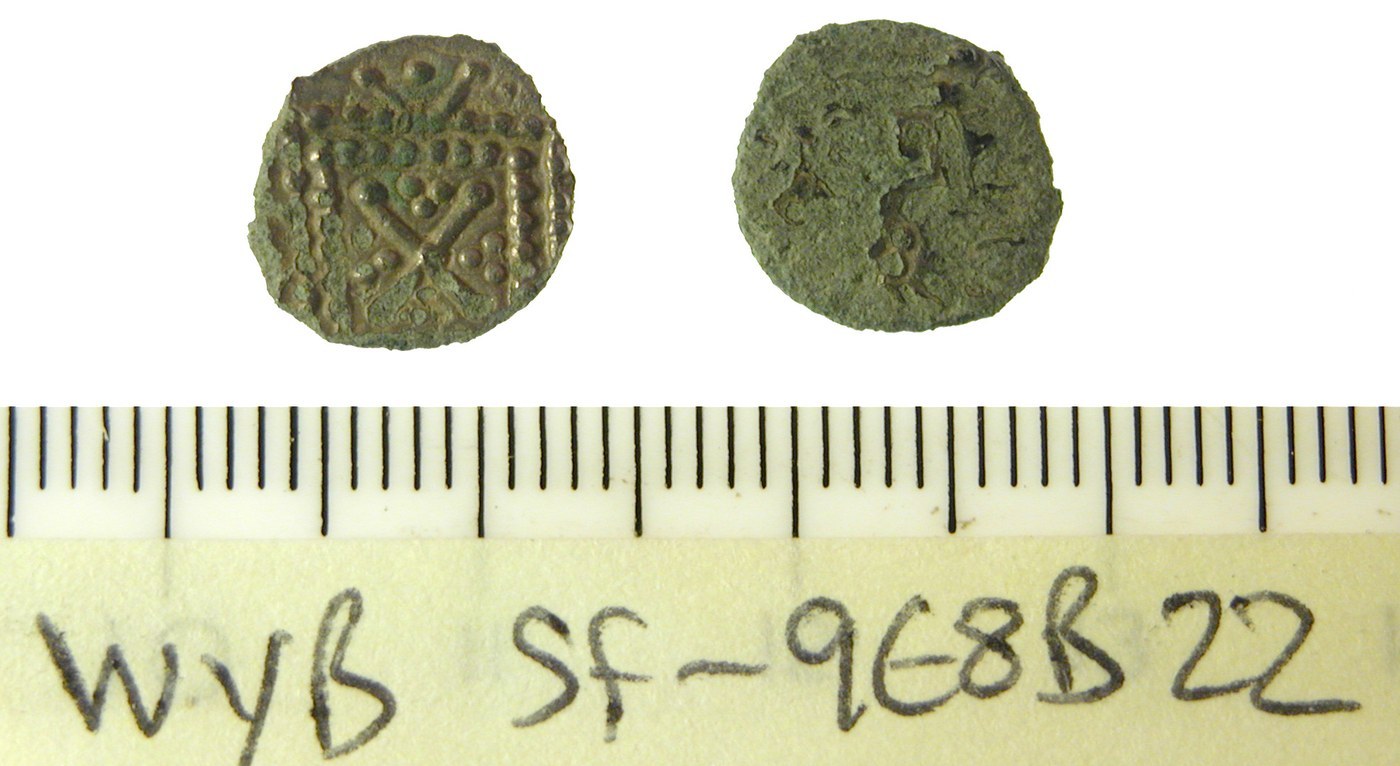
Begin with fabric and size, the fastest tell. A sceatta is tiny, usually only about 10-13 mm in diameter, yet distinctly thick and chunky, quite unlike the broad, thin Anglo-Saxon penny that replaced it. If your coin is small but flat and wide, or large and thin, it is probably a different type. Genuine pieces are hand-struck silver and often slightly irregular in shape.
Read the designs, not the words. Sceattas rarely bear a legible ruler's name, so identification rests on imagery. On this example, the obverse centers on a zoomorphic bird worked into geometric patterns, while the reverse is a geometric composition with symbolic elements. Note the specific creature or motif, the arrangement of pellets and lines, any crosses, standards, faces, or interlace, and the style of the border.
Match it to a series. Numismatists group sceattas into series (often cited by letters or names) defined by these motifs. Comparing your coin's bird, geometry, and layout against a reference of the series is the way to pin down the type, since two sceattas can look broadly similar but belong to different series with different values.
Watch for look-alikes and later issues. Continental (Frisian and Low Countries) sceattas share the same tiny thick fabric and abstract style and can be easy to confuse with English pieces. Debased later sceattas may show duller, more coppery metal. Do not expect a datable inscription; its absence is normal, not a red flag.
Authenticate carefully. Because sceattas are small, valuable, and popular with detectorists, cast copies and modern fakes exist. Look for sharp, hand-struck detail rather than the soft, blurred surfaces and seams of casts, check that weight and diameter fall in the expected range, and for anything of real value seek an experienced dealer or specialist opinion. Where a coin is a find, follow local rules on reporting and provenance.
Frequently asked questions
How do I tell a sceatta from a later Anglo-Saxon penny?
A sceatta is tiny and thick, roughly 10-13 mm, while the reformed penny is much broader and thinner. Fabric and size separate the two at a glance before you even read the designs.
How can I work out which sceatta type I have?
Match its imagery, such as the bird, geometric patterns, and symbolic elements, against a catalogue of sceatta series. The motifs and their layout, not any inscription, determine the series and type.
Could my sceatta be from the Continent rather than England?
Yes. Frisian and Low Countries sceattas share the same small, thick silver fabric and abstract style. Some designs are firmly English, but others are hard to localize without specialist references.
How do I spot a fake sceatta?
Genuine coins are hand-struck with crisp detail and slightly uneven flans, while casts look soft and may show seams. Check that size, weight, and silver appearance fit the type, and get expert help for valuable pieces.