How to Identify the Andrew Jackson Presidential Dollar
Spot a 2008 Jackson dollar by its left-facing portrait, golden manganese-brass color, Statue of Liberty reverse, and edge-lettered date and mottoes.
Read the full Andrew Jackson Presidential Dollar encyclopedia entry →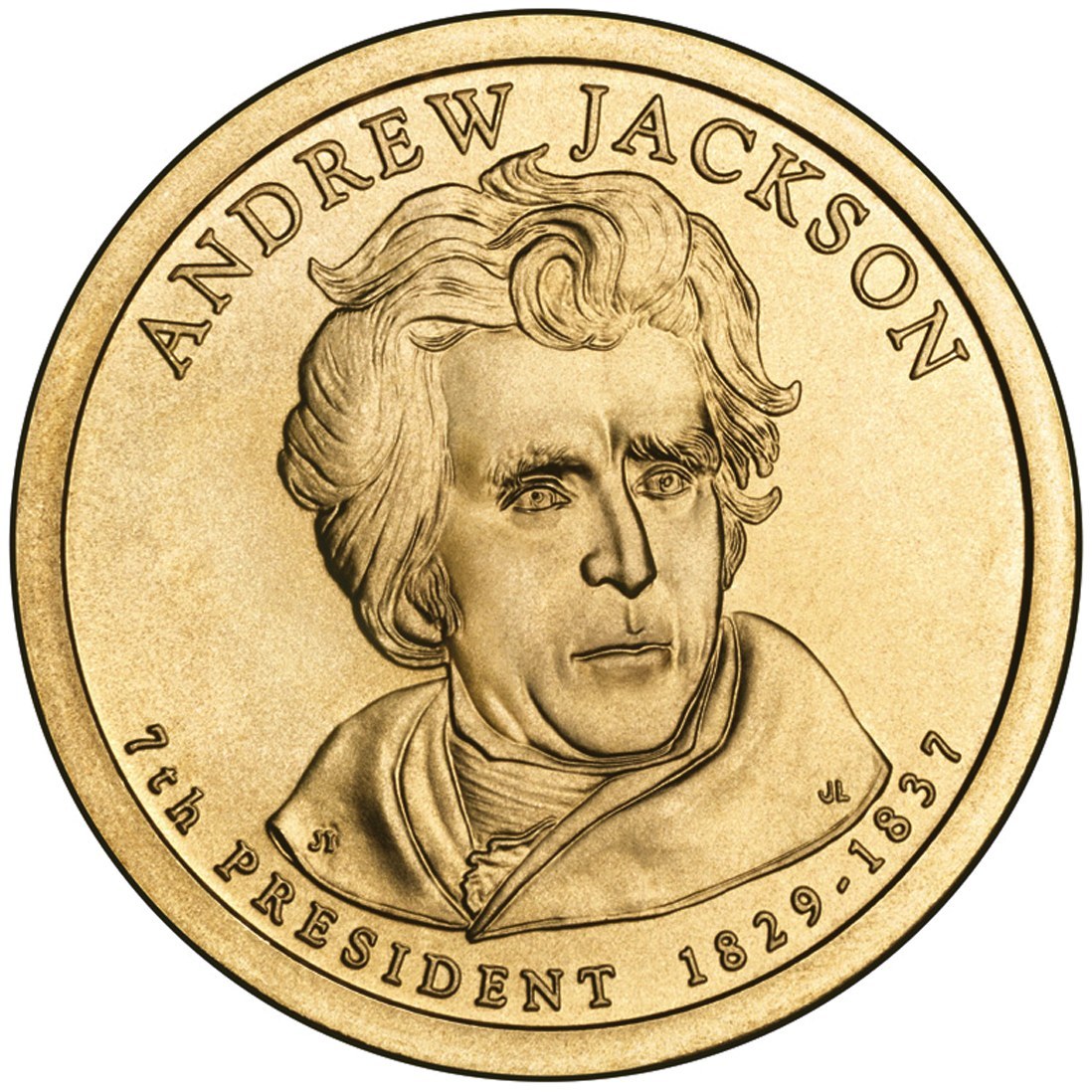
What It Is
The Andrew Jackson Presidential Dollar is a 2008 U.S. golden dollar from the Presidential $1 Coin Program, honoring the seventh president. Jackson was the third of four presidents issued that year, between John Quincy Adams and Martin Van Buren. Identification rests on the obverse portrait, the shared reverse, and the coin's edge inscriptions.
Obverse (Front)
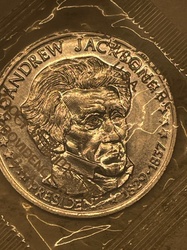
Look for a bare-headed, left-facing bust of Andrew Jackson. The surrounding inscriptions read "ANDREW JACKSON," "7th PRESIDENT," and "1829–1837" (his term dates, not the coin's year of issue). Do not mistake the term dates for a mint year—on this series the actual year of striking is on the edge, not the face.
Reverse (Back)
Every Presidential dollar shares the same reverse: the Statue of Liberty, with "UNITED STATES OF AMERICA" above and the denomination "$1" below. Because the reverse is identical across the whole program, it confirms the coin is a Presidential dollar but does not by itself identify the president—use the obverse portrait and name for that.
Size, Metal, and Edge
The coin is about 26.5 mm across, weighs roughly 8.1 grams, and has a golden hue from its manganese-brass cladding—there is no gold or silver in it. The edge is plain (no reeding) and carries incused lettering: the year, the mint mark ("P" for Philadelphia or "D" for Denver on circulation coins, "S" for San Francisco proofs), "E PLURIBUS UNUM," and "IN GOD WE TRUST." To confirm the date and mint you must rotate the coin and read its rim.
Look-Alikes and Cautions
The golden color and size are shared with Sacagawea/Native American dollars and with the other Presidential dollars, so read the obverse name to be sure you have Jackson rather than Monroe, John Quincy Adams, or Van Buren. Coins with no edge lettering at all may be genuine "plain edge" errors, but altered or filed edges can imitate them, so treat any suspected error with caution. For coins offered as scarce errors or high grades, seek authentication from a reputable third-party grading service before paying a premium.
Frequently asked questions
How do I tell which president is on the coin?
Read the name and "7th PRESIDENT" inscription on the obverse. The Statue of Liberty reverse is identical on every Presidential dollar, so only the front portrait and legend identify Jackson.
Why can't I find a date on the front or back?
On 2008 Presidential dollars the date and mint mark are incused on the edge, not the faces. Rotate the coin and inspect the rim to read the year, mint mark, and the two mottoes.
Is a Jackson dollar with a blank edge valuable?
A genuine missing-edge-lettering error can carry a premium, but filed or altered edges can mimic the look. Have any suspected error authenticated by a professional grading service before assuming it is rare.
How is it different from a Sacagawea dollar?
Both are golden manganese-brass dollars of the same size, but the Sacagawea/Native American dollar shows a woman with a child on the obverse, while the Jackson coin shows his profile and name and uses the Statue of Liberty reverse.
Andrew Jackson Presidential Dollar identified by the community
Recent Andrew Jackson Presidential Dollar coins identified with Coin Identifier.