
How to Identify the Amphipolis Apollo Tetradrachm
A Macedonian silver tetradrachm from Amphipolis featuring a distinctive three-quarter facing head of Apollo on the obverse and a racing torch within a linear square on the reverse.
Read the full Amphipolis Apollo Tetradrachm encyclopedia entry →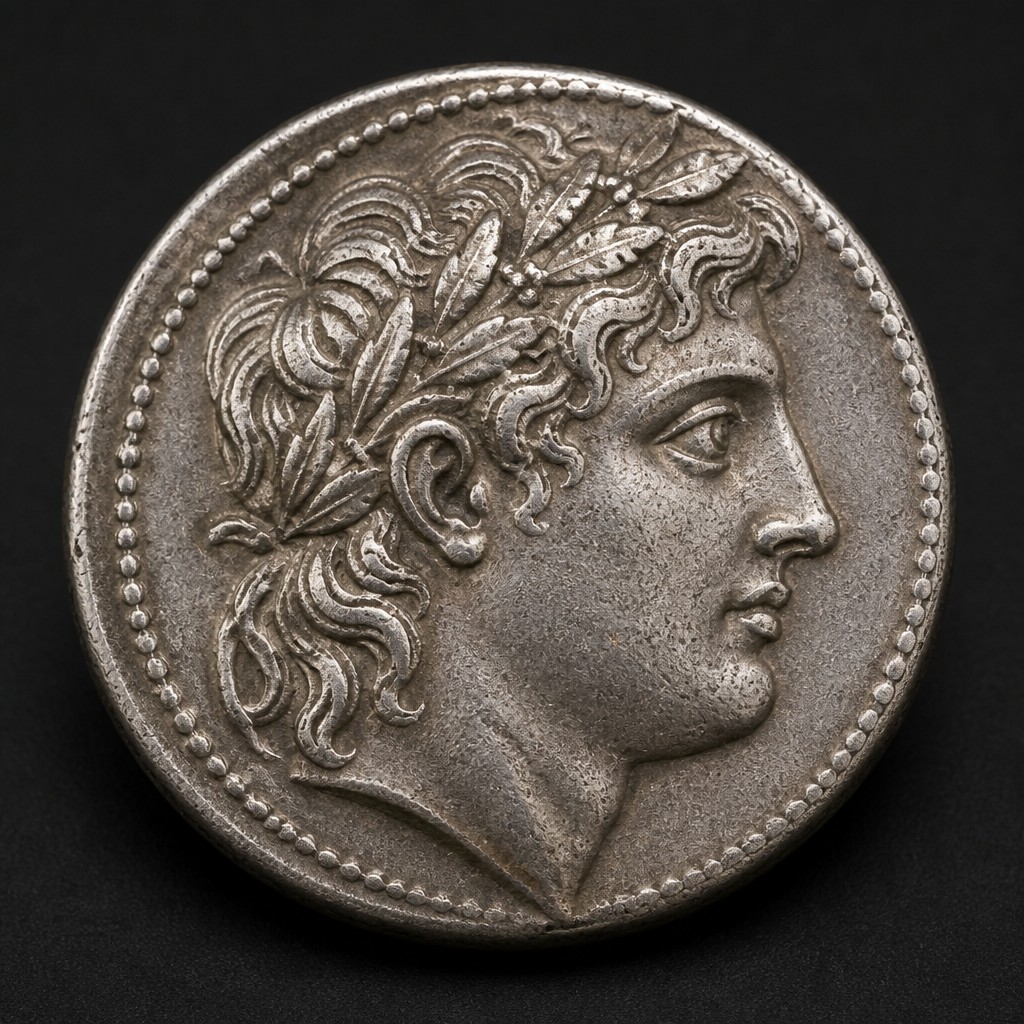
What This Coin Is
This is a silver tetradrachm struck by the city of Amphipolis in Macedon, mainly during the fourth century BC after the city came under Macedonian influence and later control. Amphipolis coinage is especially admired for its innovative, semi-facing obverse portrait, a technically demanding style choice that set it apart from the strict profile portraits typical of most Greek coinage.
Obverse Design
The obverse shows the head of Apollo laureate, turned in a three-quarter facing view rather than a strict profile, with the head angled slightly toward the viewer while still displaying recognizable profile features. This semi-facing treatment required exceptional skill from the die engraver to render convincingly in low relief and is one of the most celebrated technical achievements of fourth-century Greek numismatic art.
Reverse Design
The reverse depicts a lit racing torch standing upright within a plain linear square border, a design referencing the torch races that were a significant part of local religious festivals. The ethnic ΑΜΦΙΠΟΛΙΤΩΝ (of the Amphipolitans) is inscribed around or beside the torch, sometimes with small accessory letters or symbols serving as control marks.
Size, Weight, and Metal
Struck in silver on the local Thraco-Macedonian or Attic-influenced weight standard depending on the period, these tetradrachms generally weigh around 14 to 15 grams, though this can vary by issue, with a diameter of roughly 24 to 26 millimeters. The edge is plain, hand-struck, without any milling.
Mint Marks and Where to Find Them
Look around the torch on the reverse for the ethnic ΑΜΦΙΠΟΛΙΤΩΝ and any small accompanying letters, which serve as issue-specific control marks. The plain linear square border framing the torch is itself a strong identifying feature of this mint's coinage.
Telling It Apart From Similar Coins
The semi-facing Apollo portrait is highly distinctive and differs sharply from the strict profile Apollo heads used at most other Greek mints, making the obverse alone a strong identifying clue even before reading the reverse legend. The simple torch-in-square reverse is likewise a design unique to Amphipolis among major Macedonian issues, further confirming attribution when the ethnic is worn or partially legible.
Judging Condition at a Glance
On the obverse, the semi-facing pose makes wear assessment slightly different from a typical profile head, since both the near and far sides of the face need to be checked for flattening; the laurel wreath and hair are the highest points and wear first. On the reverse, the torch's flame and shaft, along with the linear border, show wear evenly since the design has relatively low relief variation; a coin with a clear, unbroken border and distinct flame detail is in better condition than one with a worn or indistinct torch.
Authenticity Red Flags
Because the three-quarter facing portrait is technically difficult to render, cast or low-quality forgeries often show a flattened, unconvincing version of this pose that lacks the subtle modeling of a genuine die-struck example. Additional warning signs include a grainy surface texture, a visible seam around the edge, an incorrect or garbled ethnic, and a weight noticeably outside the normal range for genuine Amphipolis tetradrachms. Given how celebrated and technically distinctive this portrait style is, any example where the facing angle looks crude or poorly resolved compared to well-documented genuine coins deserves closer scrutiny.
Frequently asked questions
What makes the Apollo portrait on this coin unusual?
It is rendered in a three-quarter facing view rather than the strict profile used on most Greek coin portraits, a technically demanding style that is one of the most admired achievements of fourth-century Greek die engraving.
What does the torch on the reverse represent?
It likely references torch races held as part of local religious festivals at Amphipolis, a common way Greek cities incorporated meaningful civic or religious imagery into their coinage.
How can I distinguish this from other Macedonian tetradrachms?
The semi-facing Apollo obverse and the simple torch-in-square reverse are both distinctive to Amphipolis and differ from the profile portraits and more elaborate reverse scenes used at other Macedonian and northern Greek mints.
What weight should I expect from a genuine example?
Genuine tetradrachms generally weigh around 14 to 15 grams, though exact figures can vary somewhat depending on the specific period and weight standard in use at the time of striking.