How to Identify the American Platinum Eagle
A collector's checklist for confirming a U.S. Platinum Eagle — the Statue of Liberty obverse, .9995 PLATINUM legends, cool white metal, and authentication cautions.
Read the full American Platinum Eagle encyclopedia entry →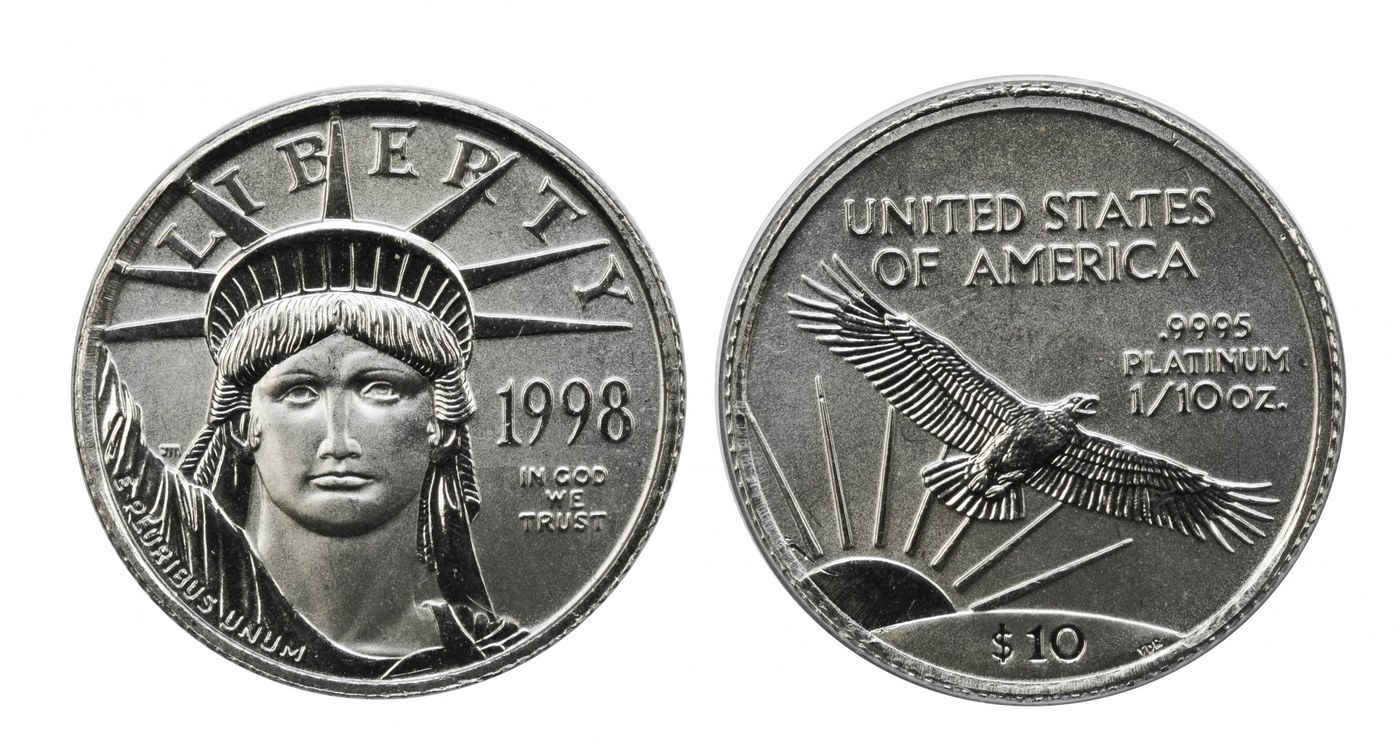
Start with the obverse, which is the fastest way to separate the Platinum Eagle from its gold and silver siblings. It shows a close portrait of the Statue of Liberty facing right in her seven-spiked radiate crown, with LIBERTY, the date, IN GOD WE TRUST, and E PLURIBUS UNUM in the fields. On the 1998 coin shown, the date reads 1998. If your coin instead shows a full striding Liberty, a Walking Liberty, or an eagle on the obverse, it is not a Platinum Eagle.
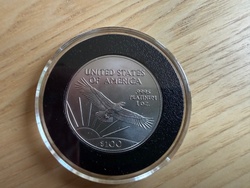
Turn to the reverse to confirm the type, size, and metal. Standard bullion coins carry Thomas D. Rogers Sr.'s eagle in flight rising over a sunlit landscape, and the fields state the fineness and weight directly: .9995 PLATINUM with the ounce fraction, plus the face value — "1/10 OZ. $10" on this coin, or the matching legend on the 1/4 oz ($25), 1/2 oz ($50), and 1 oz ($100) sizes. Reading that legend is the surest way to tell which size you hold. A coin with a different, ornate reverse scene is likely a proof issue.
Check the metal itself. Platinum is a cool, silvery-white metal that looks slightly grayer and reads noticeably denser than silver of the same size — the one-tenth-ounce coin is small but surprisingly heavy for its diameter. This density is a useful first clue, since platinum is far denser than the base metals used in fakes. A calibrated scale and caliper matter here: correct gross weight and diameter together are strong authenticity indicators.
Mind the mint mark and finish. Plain bullion coins have no mint mark, while a "W" beneath the design signals a West Point proof — a different, more valuable product that also carries a special year-specific reverse rather than the flying eagle. Do not confuse the two. Look-alikes to rule out include silver rounds or medals that borrow a Liberty image, gold or silver Eagles mistaken at a glance, and privately made platinum rounds that lack the exact .9995 PLATINUM and ounce legends.
When value is significant, verify rather than assume. Because platinum is valuable and dense, confirm gross weight to the tenth of a gram and check the diameter against published specs for the coin's size; genuine coins are non-magnetic and show crisp, well-defined detail. Be wary of any coin that is under- or over-weight, magnetic, or soft in strike. For higher-value purchases, buy from established dealers and consider coins certified by a recognized grading service, which authenticate both the metal and the design.
Frequently asked questions
How do I tell a Platinum Eagle from a Silver Eagle at a glance?
Check the obverse and the legend. The Platinum Eagle shows a Statue of Liberty head in a spiked crown and states .9995 PLATINUM, while the Silver Eagle shows a full-length Walking Liberty and states FINE SILVER. Platinum also looks cooler and grayer and feels denser than silver of the same size.
My proof coin's reverse isn't a flying eagle — is it fake?
Not necessarily. Standard bullion Platinum Eagles use the eagle-in-flight reverse, but proof issues carry rotating year-specific reverse designs. A different reverse scene, often with a "W" mint mark, usually indicates a legitimate proof rather than a counterfeit.
What quick test helps confirm authenticity?
Check gross weight and diameter against published specs for the coin's size and confirm the coin is non-magnetic. Platinum is very dense, so a genuine coin feels heavy for its diameter; correct weight and size plus crisp detail are strong indicators, and high-value coins are best authenticated by a professional grading service.
American Platinum Eagle identified by the community
Recent American Platinum Eagle coins identified with Coin Identifier.