
How to Identify the American Plantations Token
A collector's walkthrough for attributing the 1688 James II tin token: metal, portrait, heraldic reverse, varieties, restrikes, and tin-disease cautions.
Read the full American Plantations Token encyclopedia entry →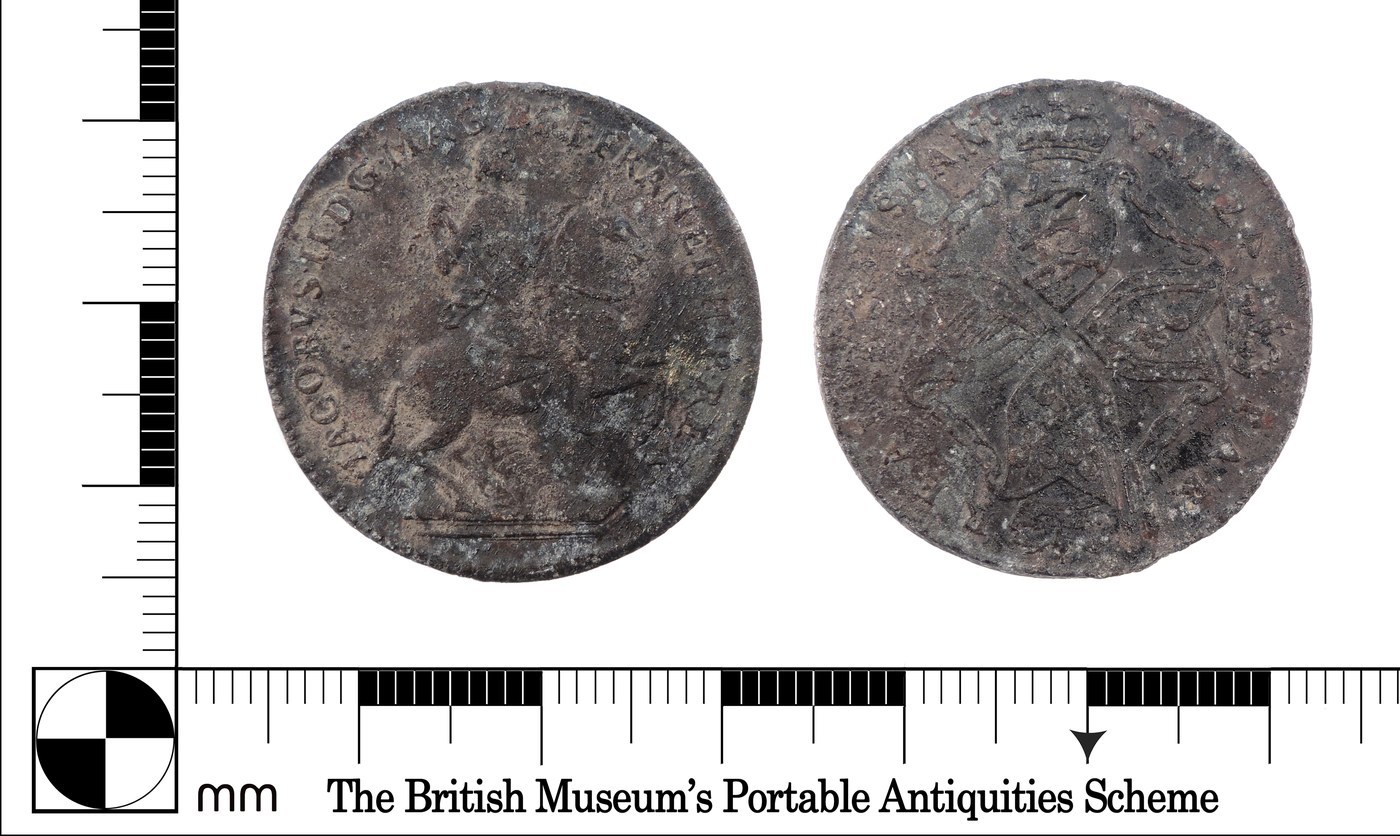
Start with the metal, because it settles most misidentifications immediately. The American Plantations Token is tin — light in hand for its size, soft grey rather than bright silver-white or coppery, and very often marred by pitting or a warty, frosted surface. A bright, dense, well-preserved "silver" piece the size of this token is a red flag; genuine examples almost always show their tin nature.
Read the obverse next. It bears a laureate Stuart royal head with a Latin legend giving the king's titles by the grace of God ("...D:G: REX"). The reverse is the heraldic side: crowned shields and arms set in a cruciform arrangement drawn from the royal coat of arms, accompanied by the fractional value tying the token to 1/24 of a Spanish real. The pairing of a royal portrait with cruciform crowned shields and a fractional-real value is the core signature of the type.
Check size and fabric. This is a small, thin token, not a heavy crown-sized coin. Under magnification, look at the shields and legend punctuation — several minor die varieties exist in the heraldry and lettering, and noting them helps pin down the exact variety even though it rarely changes the broad attribution.
The single biggest trap is the 1828 restrike. Restrikes were produced from the very same original dies, so the design will match an original perfectly. Separating the two comes down to surface state, sharpness of strike, and documented provenance rather than the devices themselves — do not assume an 1688 design means an 1688 striking.
Finally, treat authentication with care. Tin is difficult ground for both counterfeiters and collectors: tin pest can mimic damage and hide detail, and cast copies exist. Weigh the piece, examine the edge and surfaces for casting seams or bubbling, and for anything potentially valuable defer to a dealer or grading service versed in colonial American tin coinage.
Frequently asked questions
What is the fastest way to confirm the type?
Confirm it is tin (light, grey, often corroded), then verify a royal laureate portrait with a Latin "...D:G: REX" legend on one side and cruciform crowned heraldic shields with a fractional-real value on the other.
Does corrosion mean my token is fake?
No. Surface pitting and crumbling from tin disease is normal and expected on genuine pieces. It affects value and eye appeal but is a property of the original tin metal, not proof of a reproduction.
Can I identify the exact variety at home?
You can narrow it using the shield heraldry and legend punctuation under magnification, but fine variety and original-versus-restrike calls are best confirmed by a specialist in colonial coinage.
Should I clean the token to see the details better?
No. Cleaning tin is risky and can destroy surfaces and value. Leave any patina and corrosion intact and let a professional examine it if you need the details clarified.