
How to Identify the Almohad Silver Dirham
A collector's guide to spotting the square Almohad dirham by shape, script, size, and legend, and telling genuine strikes from imitations.
Read the full Almohad Silver Dirham encyclopedia entry →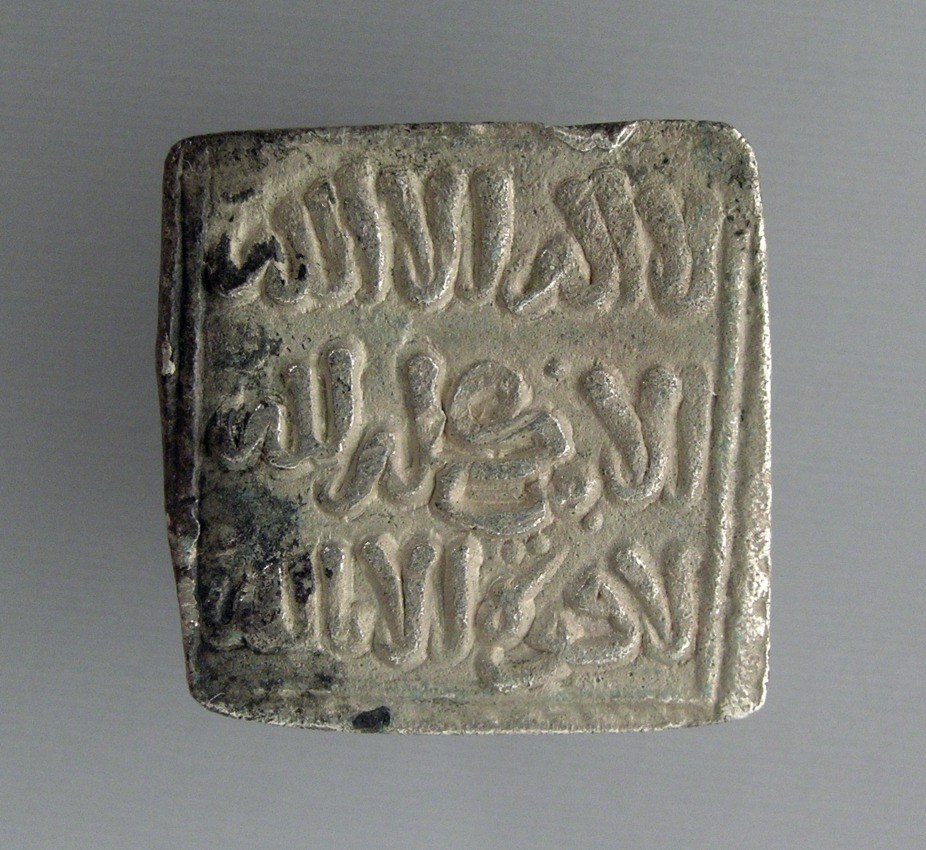
Start with the outline. The defining trait of an Almohad dirham is that it is square, not round. A small, thin, four-cornered silver flan covered on both faces with Arabic text is the classic profile, and this shape alone separates it from almost every other medieval Islamic coin. If the piece is round, it is not an Almohad square dirham (the round gold dinar is a different denomination entirely).
Check size and metal. A full dirham is small, on the order of 15 mm and around 1.5 grams of silver; half-dirham fractions are smaller and lighter. The metal should look like a low-relief silver with even, matte gray toning. Both obverse and reverse show only calligraphy, arranged in horizontal lines inside a square border, with no portrait, animal, or figural device anywhere.
Read the layout, not a date. Genuine Almohad dirhams are almost always undated and frequently show no mint name, so do not expect a year. Instead, look for neatly ruled lines of angular Maghribi Arabic containing religious formulas praising God and referencing the Mahdi and the caliphate. Consistent, confident letterforms and balanced spacing are good signs of an official striking.
Watch for imitations. Christian merchant imitations called millares copy the square format but often render the Arabic as garbled, mirrored, or meaningless shapes; unusually crude or nonsensical script is a red flag for an imitation rather than an Almohad mint product. Also be cautious of modern reproductions and tourist copies, which may feel too thick, too heavy, or too crisp, or show casting bubbles and seams instead of struck detail.
When in doubt, weigh and measure the coin, examine the script under magnification, and compare the legend arrangement against published references or a specialist in Islamic coinage. Because the type is standardized and text-based, attribution rests on calligraphy and legend details rather than dates or mint marks.
Frequently asked questions
How can I tell an Almohad dirham from other Islamic silver coins?
The square shape is the quickest test. Most contemporary Islamic silver is round, so a small square silver coin filled with Arabic text on both sides strongly points to an Almohad or Almohad-style dirham.
How do I distinguish a genuine coin from a millares imitation?
Look closely at the Arabic. Genuine Almohad strikes show coherent, well-formed religious legends, while millares imitations often display blundered, mirrored, or meaningless letters even though the square layout looks similar.
What size and weight should I expect?
A full dirham is roughly 15 mm and about 1.5 grams of silver, with half-dirhams smaller and lighter. A piece that is far heavier or thicker than this may be a reproduction.
Should there be a visible date?
No. These coins are typically undated and often lack a clear mint name, so identification relies on the square form, the Maghribi script, and the religious legends rather than on a year.