
How to Identify the Aksumite Gold Coin of Ezana
A small 4th-century gold coin from the Kingdom of Aksum, identifiable by King Ezana's bust with grain stalks and the historic shift from a disc-and-crescent symbol to a Christian cross.
Read the full Aksumite Gold Coin of Ezana encyclopedia entry →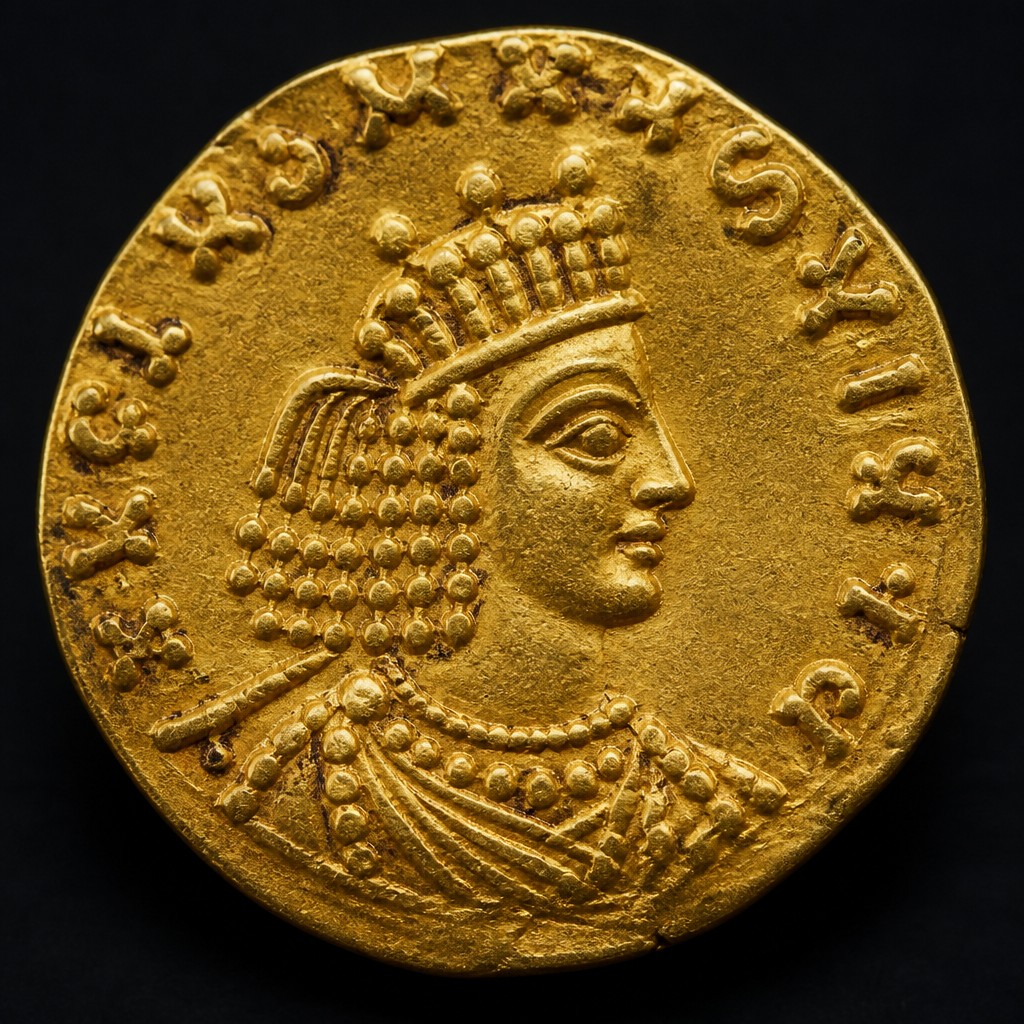
What It Is
King Ezana of Aksum, ruling in the 4th century AD in what is now Ethiopia and Eritrea, issued gold coinage that marks a pivotal moment in numismatic history: his reign saw Aksum's conversion to Christianity, and his later coins became among the first in the world to feature a Christian cross as a primary design element. Aksum itself was a major trading power linking the Red Sea, the Mediterranean, and the Indian Ocean world, and its coinage in gold, silver, and bronze was used to facilitate this long-distance commerce.
Obverse Design
The obverse shows a bust of the king wearing a headcloth or fringed tiara, often depicted holding stalks of grain to either side of the head, a distinctive Aksumite royal motif. A Greek legend surrounds the bust, typically giving the king's name and a royal title such as "BACIΛEYC" (king).
Reverse Design
Ezana's earlier coins carry a disc-and-crescent symbol above the bust, a pre-Christian royal or celestial emblem. His later coins replace this with a cross, reflecting his conversion, and some legends include a Christian phrase in Ge'ez script expressing faith or victory through the cross.
Size, Weight, and Metal
These are small, thin gold coins, generally around 1.5 to 1.7 grams, struck on a fairly compact flan compared to other ancient gold coinages, reflecting Aksum's own gold standard tied to regional trade with Rome and the Red Sea world.
Mint Marks and Where to Find Them
Aksumite coinage was produced at a single royal mint associated with the capital, Aksum, and does not carry separate mint marks; identification instead depends on the king's name and title in the Greek legend.
Telling It Apart from Similar Coins
Ezana's coins are distinguished from those of earlier and later Aksumite kings primarily by the royal name in the legend and by the disc-and-crescent-to-cross transition, which is unique to his reign among the earliest Aksumite issuers. Later kings such as Ouazebas or MHDYS used the cross as a settled convention, so the presence of a disc-and-crescent variant is a strong clue to an earlier Ezana-era issue.
Judging Condition at a Glance
Aksumite gold coins are often found lightly bent, clipped, or with test marks from ancient handling, so assess wear by looking at the sharpness of the grain stalks and facial features on the bust rather than expecting a perfectly flat, undamaged flan. Because the flans are thin, even lightly circulated examples can show some warping, so overall design clarity is a more useful guide to condition than flatness alone.
Authenticity Red Flags
Be cautious of coins with an alloy color inconsistent with ancient Aksumite gold, a weight noticeably off from the expected range, or a cross design that appears too developed or stylistically anachronistic for the mid-4th century period of Ezana's conversion.
Frequently asked questions
How do I know if my Ezana coin predates his conversion to Christianity?
Check the symbol above the bust: a disc-and-crescent indicates an earlier, pre-Christian issue, while a cross indicates a coin struck after his conversion.
What do the grain stalks on the bust represent?
They are a recurring Aksumite royal motif associated with the king, appearing on many Aksumite rulers' coinage, not unique to Ezana alone.
What language is the legend written in?
Most Aksumite gold coin legends use Greek, reflecting Aksum's trade and diplomatic ties with the Greek-speaking Mediterranean and Red Sea world, though some later legends use Ge'ez.
Were these coins minted at more than one location?
No, Aksumite coinage came from a single royal mint tied to the capital, so there are no separate branch-mint marks to look for.