
How to Identify the Aksu Mint 10 Cash
A collector's guide to recognizing the Aksu Mint 10 Cash: its holeless struck copper form, circular legends, denomination mark, and Xinjiang ornament.
Read the full Aksu Mint 10 Cash encyclopedia entry →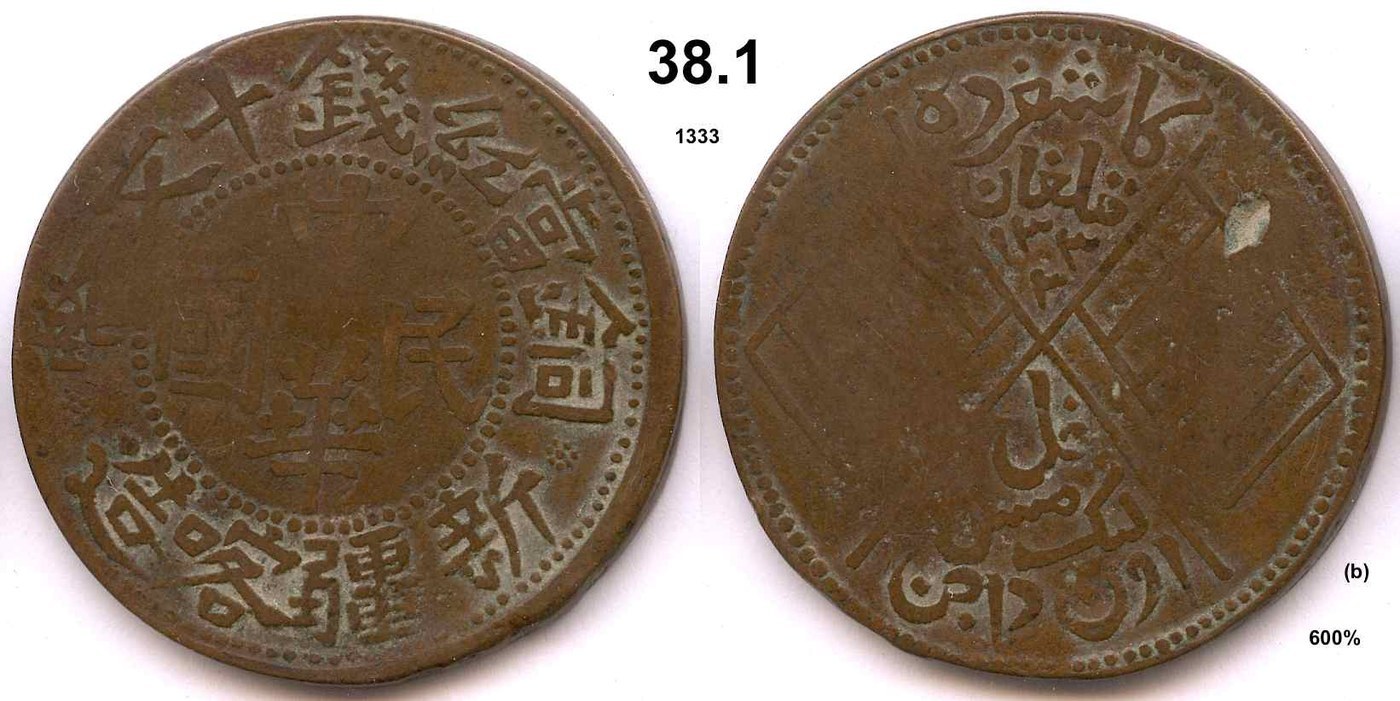
Begin with the coin's basic construction. The Aksu Mint 10 Cash is a round, struck copper coin with no central hole. That alone separates it from the older cast Chinese cash, which are round with a square hole and show soft, cast relief. A struck coin has sharper, die-defined detail and a raised rim; note the reddish-brown to dark copper color rather than the color of any precious metal.
Read the obverse. Look for a ring of Chinese characters running around the outside and a denomination mark at the center expressing the value of ten cash. The script and layout follow the provincial style of Xinjiang coinage rather than the coinage of China's eastern provinces, so the overall look is distinctly regional.
Examine the reverse. Expect additional Chinese characters in a circular arrangement combined with geometric and floral ornament. This decorative treatment is a hallmark of Xinjiang copper coins of the period and, together with the legends, is what you use to confirm a Xinjiang (rather than an eastern-Chinese) origin.
Pin down Aksu specifically and watch for look-alikes. Several Xinjiang mints used similar formats, so attribution to Aksu depends on reading the mint and province references in the legends and matching the coin to catalogued Xinjiang types. Compare diameter, weight, and the exact wording and ornament. Weakly struck or worn examples are common on frontier coppers and can be hard to attribute, so a legible legend is important.
Apply authentication caution. Confirm that the coin is genuinely struck copper with period-consistent wear and surfaces, not a cast reproduction or a cleaned and re-toned piece. Because Xinjiang types are easy to misattribute and scarcer varieties attract fakes, check the legends carefully against reference images and seek specialist opinion before paying a premium for any supposed rare Aksu type.
Frequently asked questions
Which side is the obverse?
Treat the side with the ring of characters around a central denomination mark as the obverse. The reverse typically shows additional characters combined with geometric and floral ornament in a circular layout.
How do I know it is from Aksu and not another Xinjiang mint?
Many Xinjiang mints used similar circular layouts, so attribution rests on reading the mint and province references in the legends and matching the coin to catalogued Xinjiang types. Compare the exact wording, ornament, size, and weight rather than the general layout alone.
How can I tell it apart from an old cast cash coin?
Cast cash are round with a square central hole and show soft, cast relief. The Aksu Mint 10 Cash is struck, has no central hole, shows sharper die detail and a raised rim, and carries a denomination mark rather than only two characters flanking a hole.
Are these coins often faked or misattributed?
Provincial Xinjiang coppers are frequently misattributed and scarcer types can attract reproductions. Verify struck copper fabric and period wear, read the legends against reference images, and get specialist opinion before paying a premium for a rare variety.