
How to Identify the Agathokles Commemorative Tetradrachm for Alexander the Great
A collector's guide to recognizing this Syracusan Alexander-type tetradrachm by its bearded head, enthroned reverse figure, silver fabric, and weight.
Read the full Agathokles Commemorative Tetradrachm for Alexander the Great encyclopedia entry →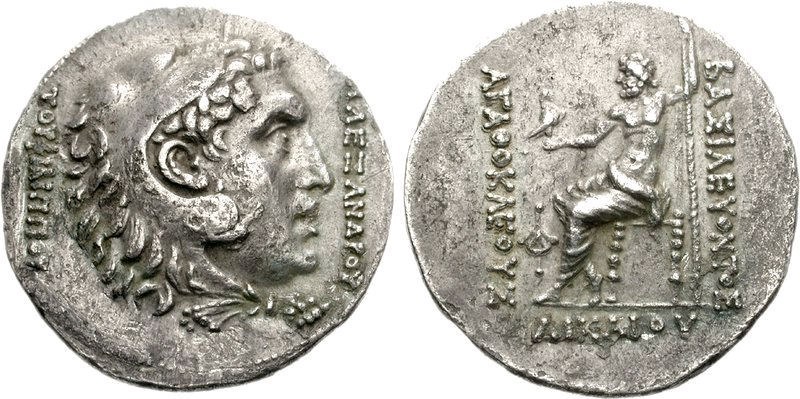
Start with the denomination and metal. This is a tetradrachm of high-grade silver, a large coin on the order of roughly 17 grams and about 25 to 28 mm wide. Weigh and measure any candidate first: much lighter or smaller silver pieces are drachms or fractions, and a wrong weight rules out a full tetradrachm before you even study the types.
Read the obverse. You are looking for a bearded male head in bold Greek relief, filling most of the flan, with a strong profile, flowing hair, and a defined beard. On coins of this Alexander tradition the head is a heroic or divine type, so treat it as a portrait-style head in that tradition rather than trying to name a specific person from the image alone. A beardless youthful head, or a purely local Syracusan type such as a nymph's head surrounded by dolphins, points to a different issue.
Turn to the reverse, which should show a seated figure holding attributes. In the Alexandrine formula the enthroned deity typically holds a long scepter and an outstretched hand or bird, seated on a throne with drapery falling around the legs. Confirm that the figure is seated and equipped with attributes rather than standing, driving a chariot, or replaced by a civic symbol; the enthroned pose is a key diagnostic linking the coin to the Alexander tradition.
Examine fabric and any legends. Genuine strikes of this period are hand-made and slightly irregular: an oval or off-round flan, uneven edges, and centering that can crop part of the design at the rim. Fields may carry Greek letters, monograms, or small symbols; where present these help attribute the coin, but they are often weak or off the flan and should not be invented from wishful reading. Old grey or iridescent toning over metallic silver is normal and reassuring.
Finally, weigh authenticity carefully. Because Alexander-type silver is widely faked, watch for the tell-tale signs of a cast copy: a seam around the edge, a soft or bubbly surface, and a dull, non-metallic tone. Tooled coins show unnaturally sharp, scratchy detail added to worn relief. Alexander-tradition tetradrachms were struck at many mints across the Hellenistic world, so a secure Sicilian attribution to Agathokles rests on style, legends, and symbols; for a significant purchase, rely on specialist cataloguing or third-party certification and documented provenance.
Frequently asked questions
How do I tell this from a local Syracusan tetradrachm?
Local Syracusan types often show a nymph or Arethusa head ringed by dolphins with a chariot reverse. This coin instead follows the Alexander tradition: a bearded heroic head and a seated deity holding attributes. The enthroned reverse figure is the clearest distinction.
How do I confirm it is a tetradrachm and not a smaller coin?
Weigh and measure it. A full tetradrachm sits on the order of roughly 17 grams and about 25 to 28 mm across. Lighter, smaller silver of the same style is a drachm or fraction, so the weight settles the denomination.
The head could be several figures. How should I describe it?
Describe it as a bearded head in the Alexander tradition rather than naming one person from the image alone. On this coinage the obverse is a heroic or divine type, and secure identification depends on style, legends, and attribution rather than the face alone.
What are the main warning signs of a fake?
A seam around the edge, a soft or bubbly surface, and a dull non-metallic tone suggest a cast copy, while unnaturally sharp, scratchy detail on otherwise worn relief suggests tooling. For valuable examples, seek specialist attribution or certification.