
How to Identify the Abdera Griffin Tetradrachm
A Thracian silver tetradrachm from Abdera showing a griffin as the main obverse device, with a reverse inscribed square typically naming a civic magistrate.
Read the full Abdera Griffin Tetradrachm encyclopedia entry →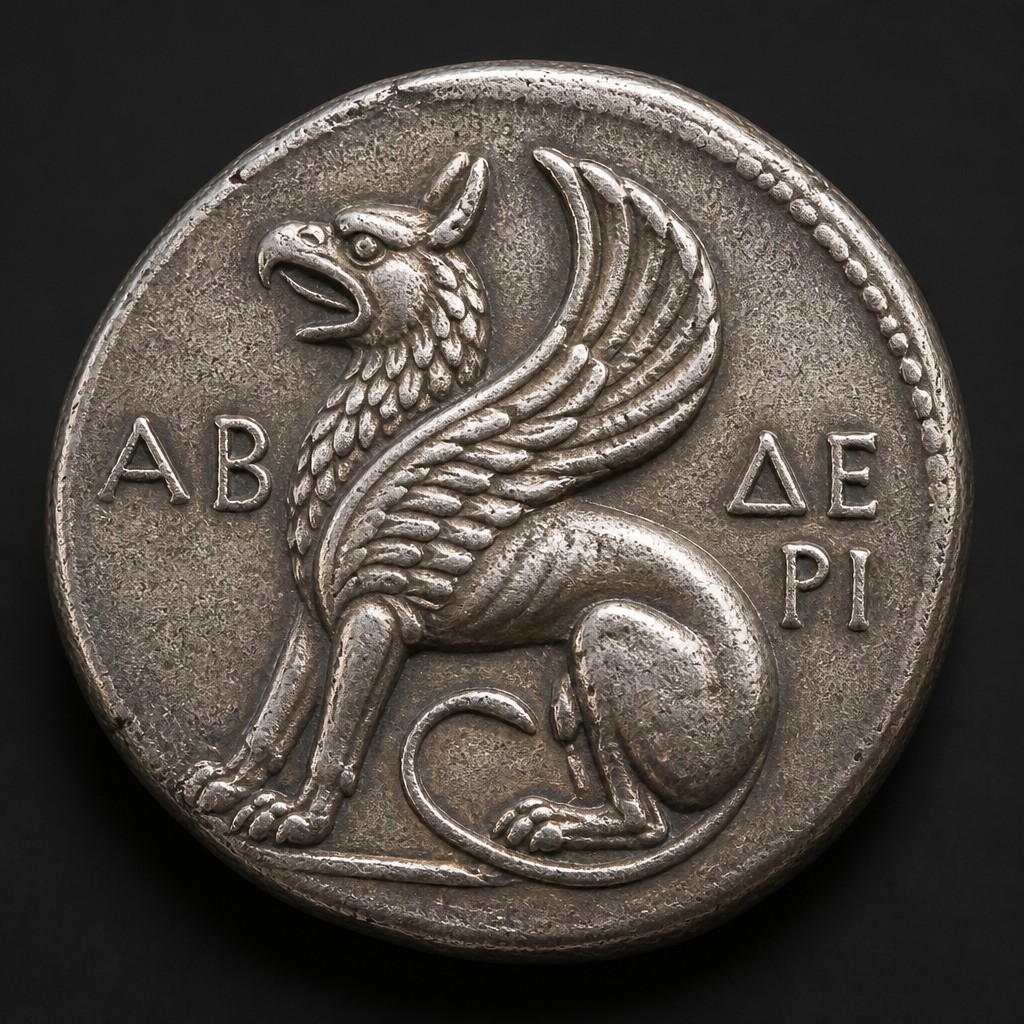
What This Coin Is
This is a silver tetradrachm struck by the Greek colony of Abdera on the coast of Thrace, spanning roughly from the sixth through the fourth centuries BC. Abdera's coinage is notable for its long-running use of the griffin as a civic emblem and for reverse types that record the names of annual magistrates, making the series a valuable record of local civic administration.
Obverse Design
The obverse shows a griffin, a mythical creature combining a lion's body with an eagle's head and wings, typically depicted seated, crouching, or in a springing pose facing left or right. The griffin's pose and style shift gradually over the long run of this coinage, from more archaic, stiffly posed early examples to more naturalistic and dynamic renderings in later issues.
Reverse Design
Early reverse types show a simple incuse square divided into sections, a relatively plain design typical of archaic Greek coinage. Later issues develop this into a more elaborate design featuring an ornamental border enclosing the name of an annual magistrate, often accompanied by a small secondary symbol or object related to that individual, along with the city ethnic ΑΒΔΗΡΙΤΕΩΝ (of the Abderites) in developed form.
Size, Weight, and Metal
Struck in silver, these tetradrachms generally weigh in the range of roughly 12 to 14 grams on the regional weight standard used in Thrace, though this can vary depending on the specific period of issue, with a diameter typically around 24 to 28 millimeters. The edge is plain and hand-struck.
Mint Marks and Where to Find Them
On later, more developed issues, the magistrate's name is inscribed directly around or within the reverse border, making it the primary identifying detail beyond the griffin itself. Earlier issues with a plain incuse square carry less inscriptional information, so attribution then relies more heavily on the griffin's specific pose and style.
Telling It Apart From Similar Coins
The griffin device was used by several ancient mints, including Panticapaeum and Teos, so the specific reverse treatment, whether a plain incuse square or a magistrate-named border, along with the Abdera ethnic when present, is essential for confirming this attribution. Abdera's coinage is also closely related stylistically to Teos, its mother city, since Abdera was founded by settlers from Teos and initially adopted a very similar griffin design before developing its own distinct reverse conventions over time.
Judging Condition at a Glance
On the obverse, check the griffin's wing, head, and legs for sharpness, since these are the highest-relief and most wear-prone areas. On the reverse, legibility of the magistrate's name or the clarity of the incuse square's divisions is the main condition indicator; a coin with a fully legible magistrate name is generally more informative and often more desirable than one where this detail has worn away or struck weakly.
Authenticity Red Flags
Because griffin-type coinage from this era can be found in worn or low-grade condition, forgeries sometimes exploit this by presenting deliberately rough surfaces to mask a lack of genuine die-struck detail. Warning signs include an unnaturally grainy or pitted texture, a visible seam around the edge, garbled or nonsensical lettering where a magistrate's name should appear, and a weight that falls well outside the normal range for genuine Abderite tetradrachms of the relevant period.
Frequently asked questions
Why does Abdera's coinage look similar to that of Teos?
Abdera was founded by colonists from Teos in Asia Minor, and its early coinage adopted a very similar griffin design before gradually developing its own distinct reverse style over time.
What does the reverse inscription usually represent?
On later, more developed issues, the reverse typically names an annual civic magistrate, providing a valuable record for reconstructing the city's administrative history year by year.
How do I tell an early Abdera tetradrachm from a later one?
Early issues generally show a plain incuse square on the reverse with little or no inscription, while later issues add an ornamental border and a named magistrate, alongside a more naturalistic griffin pose on the obverse.
What weight range should I expect?
Genuine examples typically weigh in the range of about 12 to 14 grams, following the regional Thracian weight standard rather than the Attic standard used in many other parts of the Greek world.