How to Identify the 50 Sen (Dragon Type)
A collector's checklist for Japan's Meiji silver dragon 50 sen: reading the faces, dating the kanji, checking size and metal, and spotting fakes.
Read the full 50 Sen (Dragon Type) encyclopedia entry →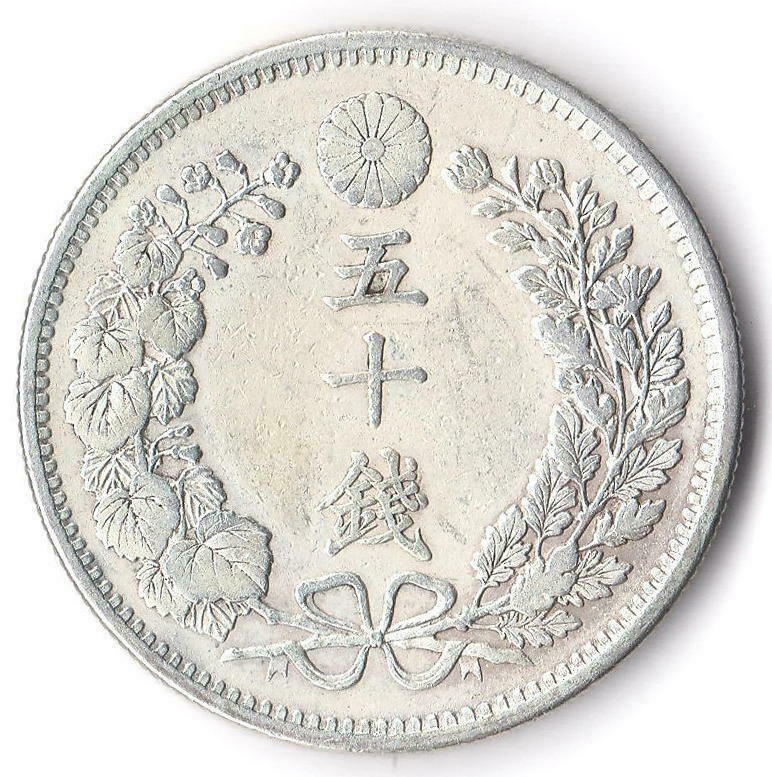
Begin with the overall look and metal. The dragon 50 sen is a round, machine-struck silver coin with a raised rim and crisp relief, roughly the diameter of a large modern silver half-dollar-class piece. A gray-white metal with a soft ring, honest wear on the high points, and no casting seams all point to a genuine struck silver coin rather than a base-metal copy.
Identify the dragon face. A single coiled dragon with scaled body and clawed limbs dominates the field, encircled by kanji and the English denomination "50 SEN". Reading the kanji confirms both country and date: 大日本 ('Great Japan') sits with 明治○年 ('Meiji year ___'). This is your anchor for attribution — the dragon plus the English 'SEN' denomination marks it as Meiji dragon silver, not one of the later, differently-designed sen types.
Turn to the value face. Look for the central sunburst of straight rays carrying 五十錢 (fifty sen), framed by paulownia sprays and floral wreaths with the chrysanthemum crest above. The '五十' (fifty) numeral is the quickest way to separate the 50 sen from its look-alike relatives: the 1 yen, 20 sen, and 10 sen dragons share the same layout but state different values and come in different sizes.
Date and variety come from the era-name kanji. Confirm 明治 (Meiji), then read the year numeral before 年 — here 四 (four) for Meiji 4 = 1871. First-year 1871 pieces exist in more than one die variety, differing in the rendering of the dragon and the sunburst rays, so note fine details if you want to attribute the exact variety. Measuring diameter and weight and comparing them to published specifications helps confirm both denomination and authenticity.
Apply normal authentication caution. Japanese dragon silver is sometimes counterfeited or cast; be wary of pieces with mushy, blurred detail, wrong weight or diameter, seams or file marks on the edge, a dull 'thud' instead of a clear ring, or a magnetic response (genuine coins are non-magnetic silver). For first-year and scarcer-variety examples especially, compare closely against documented specimens and consider professional grading before paying a strong premium.
Frequently asked questions
How do I tell a 50 sen from the similar 1 yen or 20 sen dragon?
All share the dragon-and-sunburst design, so read the value on the wreath face: the 50 sen shows 五十錢 (fifty sen). The coins also differ in diameter and weight, so measuring the piece and comparing to published specs confirms the denomination.
Which numeral tells me it is Meiji 4 (1871)?
After 明治 (Meiji) look for the year numeral before 年 ('year'). The character 四 means four, so 明治四年 is Meiji 4, equal to 1871 — the first year of the type. The legend is read right to left.
What are the fastest signs of a fake?
Look for soft or blurred detail, incorrect weight or diameter, casting seams or file marks on the edge, a dull ring, or any attraction to a magnet. Genuine coins are struck, non-magnetic .800 silver with crisp relief and clean edges.
Do the first-year varieties matter for identification?
Yes for precise attribution. Meiji 4 (1871) 50 sen exist in more than one die variety with small differences in the dragon and the sunburst rays. For common grading you can stop at the date, but note fine details if you want the exact variety.
50 Sen (Dragon Type) identified by the community
Recent 50 Sen (Dragon Type) coins identified with Coin Identifier.