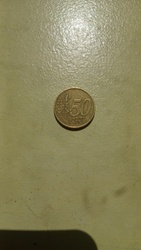
How to Identify the 50 Euro Cent Coin
The 50 Euro Cent coin is a gold-colored, scalloped-edge coin used across the Eurozone, part of the higher-value cent group alongside the 10 and 20 cent pieces.
Read the full 50 Euro Cent Coin encyclopedia entry →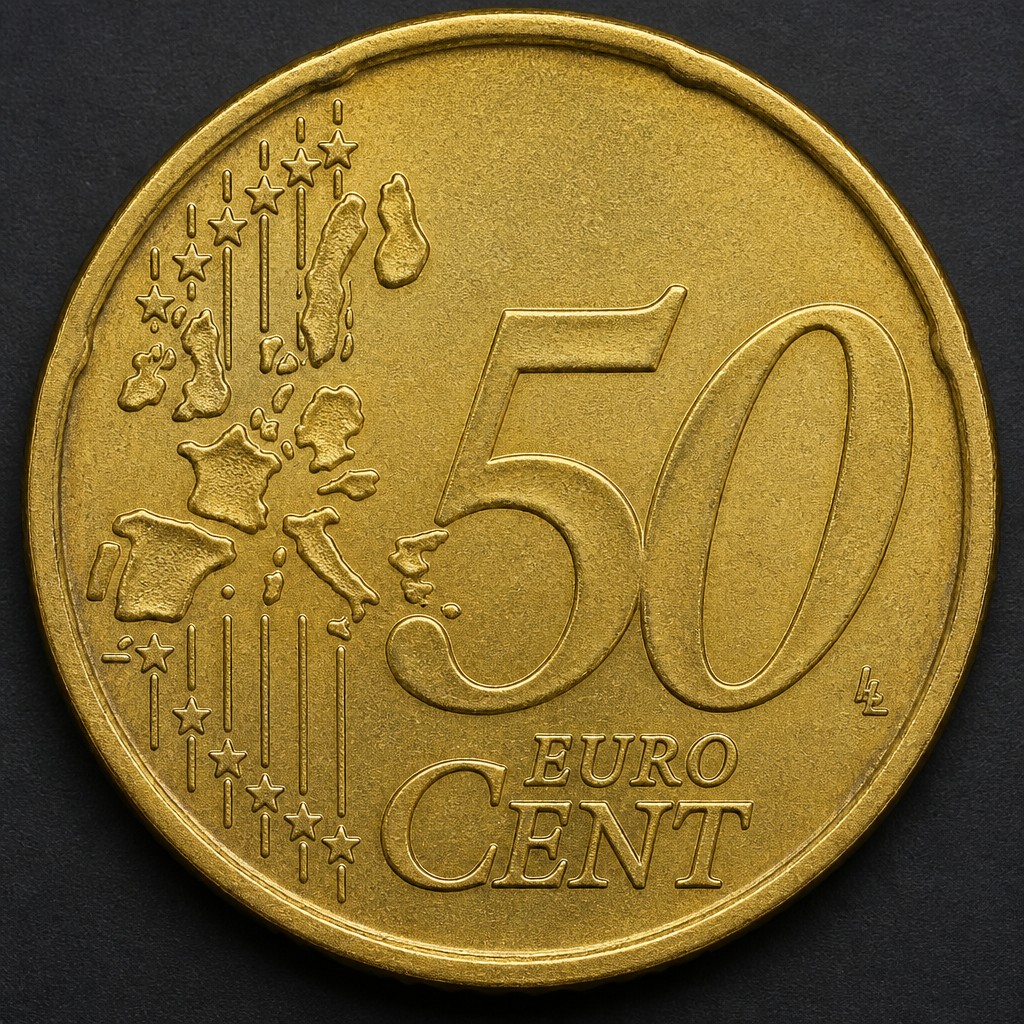
What It Is
The 50 Euro Cent coin belongs to the group of "gold-colored" euro cent denominations (10, 20, and 50 cents) that circulate alongside the copper-colored 1, 2, and 5 cent coins and the bi-metallic 1 and 2 euro coins. It has been in use since the introduction of euro coinage in 2002. As the highest-value coin in its color group, it is a common everyday denomination that most people handling euro cash will encounter regularly.
Common Side Design
The shared European side of the 50 cent coin shows a stylized image often described as representing Europe's place in the world, alongside the denomination "50 EURO CENT" and the ring of twelve stars representing the European Union. The exact common design differs slightly among the 10, 20, and 50 cent group compared to the smaller copper-colored coins.
National Side Design
As with other euro coins, the opposite face carries a design specific to the issuing country, which can include national emblems, notable figures, or symbolic imagery, always bordered by the twelve EU stars.
Size, Weight & Metal
The 50 cent coin measures approximately 24.25mm in diameter and weighs about 7.8 grams. It is struck in a single alloy known as "Nordic gold" (mostly copper with smaller amounts of aluminum, zinc, and tin), which gives it a warm gold-like color despite containing no actual gold.
Edge Shape and Mint Marks
A distinctive identification feature is the coin's edge: the 50 cent (like the 10 and 20 cent) has a smooth edge with fine, evenly spaced notches, sometimes called a "Spanish flower" scalloped shape on the 20 cent, while the 50 cent has a plain edge with fine grooves. Small mint marks or engraver initials may appear in the design field near the date on the national side.
Telling It Apart from Similar Coins
The 50 cent is easily confused with the 20 cent coin due to similar coloring; check the denomination text and the size, since the 50 cent is noticeably larger. Compared to the 10 and 20 cent coins in the same series, the 50 cent typically shares a similar overall design style but is the largest of the three "gold-colored" cent denominations.
Judging Condition at a Glance
Look at the fine lines of the common-side design and the details of the national-side imagery for softness or flattening, which indicates circulation wear. Uncirculated examples retain sharp, crisp edges on lettering and fine design elements.
Authenticity Red Flags
Genuine coins have a consistent Nordic gold color throughout with no plating flakes, correct weight and diameter, and crisp, well-defined edge grooves. Be cautious of coins that appear unusually shiny or brassy in a way inconsistent with genuine Nordic gold, or that show a magnetic response, since counterfeit cent coins are sometimes struck in incorrect base metals.
Frequently asked questions
What metal gives the 50 Euro Cent coin its gold color?
It is struck in 'Nordic gold,' a copper-based alloy with aluminum, zinc, and tin that produces a gold-like appearance without containing any actual gold.
How can I tell the 50 cent apart from the 20 cent coin?
Compare size and denomination text: the 50 cent coin is larger in diameter than the 20 cent and clearly reads '50 EURO CENT.'
Does the 50 cent coin's edge have a special shape?
It has a plain edge with fine grooves, distinct from the scalloped 'Spanish flower' edge used on the 20 cent coin.
Is the national side design permanent or does it change?
Most countries use a fixed, unchanging national design for the 50 cent coin, unlike the 2 Euro coin which frequently features rotating commemorative designs.
50 Euro Cent Coin identified by the community
Recent 50 Euro Cent Coin coins identified with Coin Identifier.