
How to Identify the 5 Yang
A collector's checklist for the late-Joseon 5 Yang: reading the value characters and Gaeguk date, spotting the dragon and taegeuk, and screening for fakes.
Read the full 5 Yang encyclopedia entry →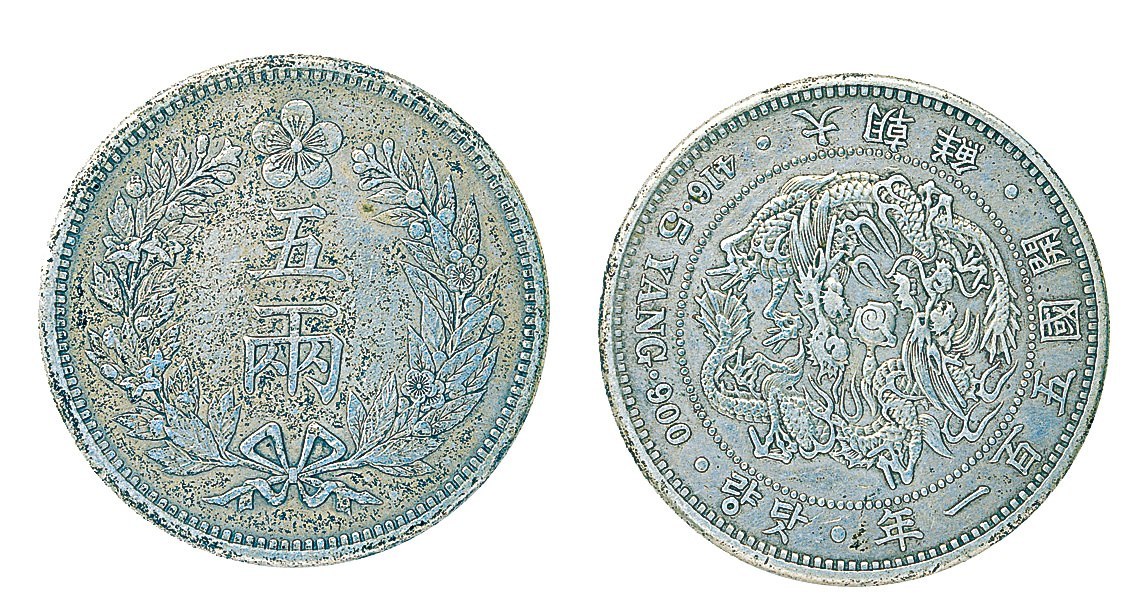
Begin by confirming the coin is a struck reform-era piece, not old cast cash. Korea's traditional coins are round with a central square hole; the 5 Yang instead is a solid struck coin with a chrysanthemum-and-floral design on one face and a coiled dragon amid ornamental characters on the other. The absence of the square hole plus the dragon marks it as late-nineteenth-century reform coinage.
Read the value in Chinese characters. Look for 五兩 (five yang) among the reverse legends; the value is spelled out rather than shown as a Western numeral. Because several denominations in this series share the same dragon-and-floral look, the character value and the coin's diameter are what separate the 5 Yang from the smaller pieces, so verify both.
Date the coin from the Gaeguk (開國) era. Find the era characters and the year numerals, remembering the count starts from 1392; adding the era-year to roughly 1391 gives an approximate Western year. Confirm the country name and look for the taegeuk emblem, which together with the dragon distinguishes a Korean issue from visually similar Chinese or Japanese dragon coins of the period.
Check metal and size as a set. This example is bronze, so expect the color, weight, and wear of a base-metal coin rather than silver; a piece that is unexpectedly heavy, bright, or a different diameter than reference figures deserves scrutiny. Note that Korea's reform denominations were struck in more than one metal, so metal alone does not identify the value.
Apply firm authentication caution. Late-Joseon and Korean Empire coins are heavily reproduced, including modern replicas and altered pieces, and the dragon types are among the most copied. Compare the dragon detail, character forms, and era-year against trusted reference images, weigh and measure the coin, and for any example carrying real value seek certification by a major grading service before trusting the attribution or price.
Frequently asked questions
How do I know it is the 5 Yang and not another denomination?
Read the value characters 五兩 (five yang) in the reverse legend and check the coin's diameter against references. Several yang denominations share the same dragon-and-floral design, so the character value and size are the deciding diagnostics.
How do I read the era-year?
The coin uses the Gaeguk (開國) era, counted from the 1392 founding of the Joseon dynasty. Locate the era characters and year numerals, then add the era-year to about 1391 to approximate the Western calendar date.
How can I tell it from a similar Chinese or Japanese dragon coin?
Look for the Korean country name, the taegeuk (yin-yang) emblem, and the yang value characters. These distinguish the reform-era Korean issue from the dragon coins of Qing China and Meiji Japan, which use different legends and denominations.
How do I check that it is genuine?
Compare the dragon detail, character forms, and era-year to trusted references, and confirm the metal, weight, and diameter match. Because this series is widely faked, have valuable examples authenticated by a major grading service.