
How to Identify the 4 Skilling
A collector's guide to confirming the Danish copper 4 skilling of 1783 by its crown-over-numeral face, ornamental reverse, date, size, and metal.
Read the full 4 Skilling encyclopedia entry →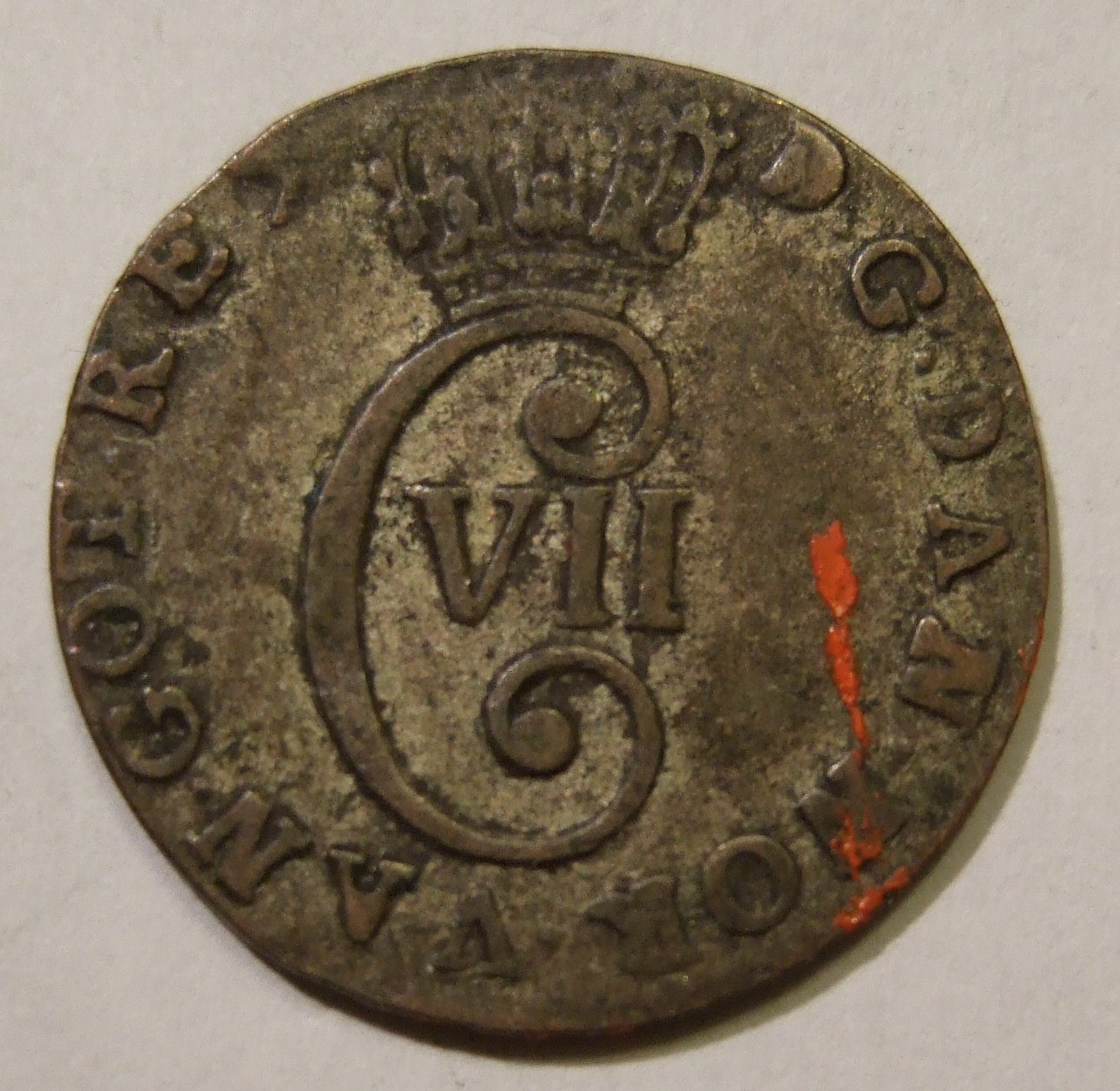
Start With the Date and Denomination
The fastest anchor for this type is the year. A genuine coin of this kind carries the date 1783 within an ornamental circular design on one face. Confirm the 4 skilling denomination as well, since Denmark struck a family of skilling coins in different values, and read any surrounding lettering carefully rather than assuming the value from size alone.
Check the Crown-Over-Numeral Face
One side should show a royal crown set above a numeral. The crown marks the coin as a Danish royal issue of the period. Examine how crisply the crown's arches and the numeral are struck; on this base-metal coinage those high points are usually the first areas to wear, so their sharpness is a good guide to grade.
Read the Ornamental Reverse
The opposite face is filled by an ornamental circular pattern, a decorative rosette-like frame enclosing the date. Confirm that this decorative design and the 1783 date are both present and legible. A coin of similar size that instead shows a monarch's portrait, a shield of arms, or a plain legend without the ornamental frame is a different Danish type.
Confirm Size and Copper Fabric
This is a small, modestly thick copper circulation coin with a brown or reddish-brown tone, not the bright white and heft of silver. Weigh and measure it against reference figures for the type, and be cautious of any example that looks silvery or unusually light or heavy, since that points to a different denomination, a plated piece, or a replica.
Rule Out Look-Alikes and Authentication Cautions
Denmark and Denmark-Norway issued many eighteenth-century copper skilling coins that share a heraldic, low-value look, so distinguish the 4 skilling from the 1, 2, and higher skilling values by denomination and diameter, and separate it from later nineteenth-century skilling coins that carry different designs and dates. Because this is an inexpensive base-metal coin, high-quality forgery is uncommon, but cast copies and re-dated or tooled examples do exist; check for the soft, grainy surfaces and seams of a cast, avoid cleaned or artificially patinated pieces, and match every cue, crown, numeral, ornamental frame, date, denomination, size, and metal, before settling on the identification.
Frequently asked questions
What is the quickest way to confirm the type?
Read the 1783 date inside the ornamental circular design and confirm the 4 skilling denomination, then check that the other face shows a crown above a numeral. Those three cues together identify the coin.
What size and metal should it be?
Expect a small, modestly thick copper coin with a brown or reddish-brown tone. It is not silver, so a bright-white or unusually heavy piece of similar design is a different denomination or a plated copy.
How do I tell it from other Danish skilling coins?
Danish copper skillings came in several values with a similar heraldic look. Read the stated denomination and measure the diameter to separate the 4 skilling from 1, 2, and higher-value skilling coins.
Is it worth authenticating?
For most examples formal authentication is unnecessary, since this common copper coin is rarely faked to a high standard. Focus instead on confirming the date and denomination and on judging surfaces and grade.