How to Identify the 3 Roubles (First All-Russian Coins)
A collector's guide to recognizing the 1982 Soviet 3 Roubles by its three historical coins obverse, XVIII marker, and СССР state-emblem reverse.
Read the full 3 Roubles (First All-Russian Coins) encyclopedia entry →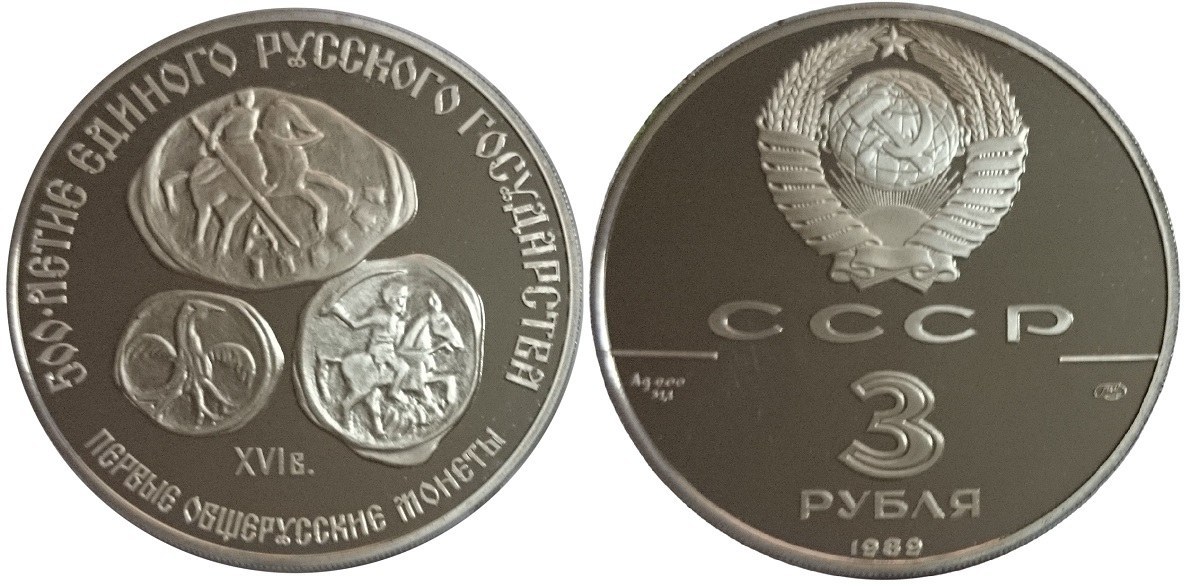
Read the Obverse Design First
The surest identifier is the obverse subject: three historical Russian coins from earlier periods shown together, with Cyrillic text about Russia's first coins and the Roman-numeral marker XVIII for the eighteenth century. Unlike most commemoratives that show a portrait, building, or monument, this type pictures coins as its design, which sets it apart at a glance.
Confirm the Reverse and Denomination
Turn the coin over and check for the Soviet state emblem, the hammer and sickle over a globe within a wheat-ear wreath topped by a star and sunburst. The legend СССР should appear with the denomination written as 3 РУБЛЯ and the date 1982. The word РУБЛЯ (the form used with the number three) and the numeral 3 together confirm the three-rouble face value; if the reverse shows a different emblem or value, it is a different coin.
Check Metal, Size, and Weight
The example here is copper-nickel, a base-metal alloy that is light-toned, non-precious, and non-magnetic. Weigh and measure any candidate and compare against the published specifications for the exact issue, because Soviet 3 Rouble commemoratives of this era exist in more than one composition. A precious-metal collector edition will differ in weight and sometimes diameter from a base-metal strike, so do not assume metal from appearance alone.
Rule Out Look-Alikes
The USSR issued many commemorative roubles with the same style of state-emblem reverse, so the reverse alone will not pin down the type; the three-coins obverse and the 3 РУБЛЯ denomination are what distinguish it. Do not confuse it with 1 Rouble commemoratives or with ordinary circulation roubles bearing different reverse designs. Always match both the obverse subject and the exact denomination and date.
Authentication Cautions
Soviet commemoratives are sometimes cleaned, polished, or offered as later fantasy or replica pieces, and precious-metal editions in particular attract fakes. Favor coins with original surfaces, and be wary of pieces with wrong weight, soft mushy detail, or seams that suggest casting. For higher-value or claimed precious-metal examples, verify composition and consider third-party authentication before paying a premium.
Frequently asked questions
What is the quickest way to recognize this coin?
Look at the obverse: it depicts three historical Russian coins together with the marker XVIII for the eighteenth century. That coins-on-a-coin design, paired with a СССР 3 РУБЛЯ 1982 reverse, identifies the type.
How do I confirm the denomination?
The reverse states the value as 3 РУБЛЯ with the numeral 3 and the date 1982, beneath the USSR state emblem. РУБЛЯ is the grammatical form used with three, confirming a three-rouble face value.
How can I tell base metal from a precious-metal version?
Weigh and measure the coin and compare to the published specs for the exact issue. Base-metal copper-nickel strikes are lighter and non-precious; precious-metal collector editions differ in weight and value, so verify composition before assuming.
Is it worth authenticating?
For ordinary base-metal examples, careful comparison of design, weight, and diameter usually suffices. For any claimed precious-metal edition or high-grade piece, confirm the metal and consider third-party certification, since these attract fakes and cleaned coins.
3 Roubles (First All-Russian Coins) identified by the community
Recent 3 Roubles (First All-Russian Coins) coins identified with Coin Identifier.