
How to Identify the 25 Euro (Bionik)
Identify Austria's 2012 25 euro by its silver ring, purple niobium core, REPUBLIK OSTERREICH legend, and biomimetic shell design.
Read the full 25 Euro (Bionik) encyclopedia entry →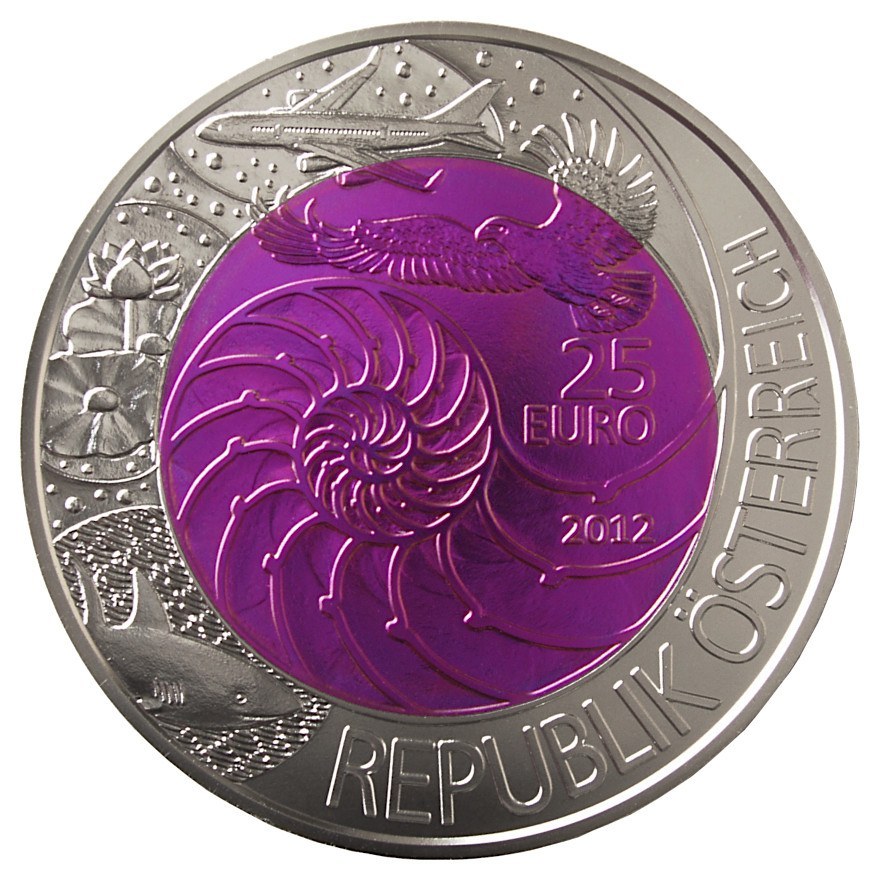
Start with the coin's most obvious feature: its two-tone, bi-metallic look. A genuine piece has a silver outer ring enclosing an inner core of anodized niobium. On the 2012 Bionik issue that core is a distinctive purple-to-magenta. If your coin has this silver-and-colored-core construction and a large format, you are looking at Austria's Silver Niobium Series; the specific color and theme tell you the year.
Read the legends to confirm the type. The obverse carries REPUBLIK ÖSTERREICH and the denomination 25 EURO; the reverse shows the colored center with the biomimetic shell/wave pattern and the date 2012. The combination of the purple niobium core, the organic Bionik imagery, and the 2012 date is what separates this coin from every other year in the series.
Check the physical specifications. These coins are about 34 mm across and weigh roughly 16.5 g total, pairing about 9 g of .900 silver in the ring with about 6.5 g of niobium in the core. The niobium color is intrinsic to the metal — it should look like a deep, slightly iridescent tone within the metal surface, not a raised layer of ink or enamel sitting on top. Under angled light the hue may shift subtly, which is normal for anodized niobium.
Distinguish it from look-alikes. Other issues in the same series share the identical silver-ring-plus-niobium format but differ in color and theme — so do not identify by construction alone; always read the date and note the color. Ordinary colorized or enamel-decorated coins from other mints are painted, which looks and feels different from anodized niobium. Any coin whose color chips, sits proud of the surface, or wears away was not made by the Austrian Mint's niobium process.
For authentication, weigh and measure the coin and inspect the boundary between the silver ring and niobium core, which on a genuine piece is cleanly struck and concentric. Genuine examples come with the Austrian Mint's original case and a numbered certificate of authenticity; the presence of correct packaging supports the identification, and the fine strike detail in both metals should be crisp. If in doubt about a high-value purchase, compare against a documented example of the 2012 Bionik issue.
Frequently asked questions
How do I know it is niobium and not painted color?
Anodized niobium color is part of the metal and looks slightly iridescent under angled light, with no raised or chipping layer. Painted or enamel color sits on the surface and can wear or flake. The 2012 Bionik core is a purple-magenta anodized niobium.
What confirms this is the 2012 Bionik and not another year?
The date 2012, the purple-to-magenta niobium color, and the biomimetic shell/wave imagery together identify it. Other years in the series share the same silver-and-niobium build but use different colors and themes.
What size and weight should a genuine coin be?
About 34 mm in diameter and roughly 16.5 g total, made of an approximately 9 g silver ring around a niobium core of about 6.5 g. Significant deviation is a warning sign.
Does original packaging matter for identification?
Yes. Genuine coins ship in the Austrian Mint's case with a numbered certificate. Correct packaging supports authenticity and provenance, though the coin itself should still show the right metals, color, legends, and specifications.