
How to Identify the 2005 Kansas State Quarter In God We Rust
A well-known 2005 Kansas state quarter die error in which a filled or damaged die dropped the T from TRUST, making the motto read IN GOD WE RUST.
Read the full 2005 Kansas State Quarter In God We Rust encyclopedia entry →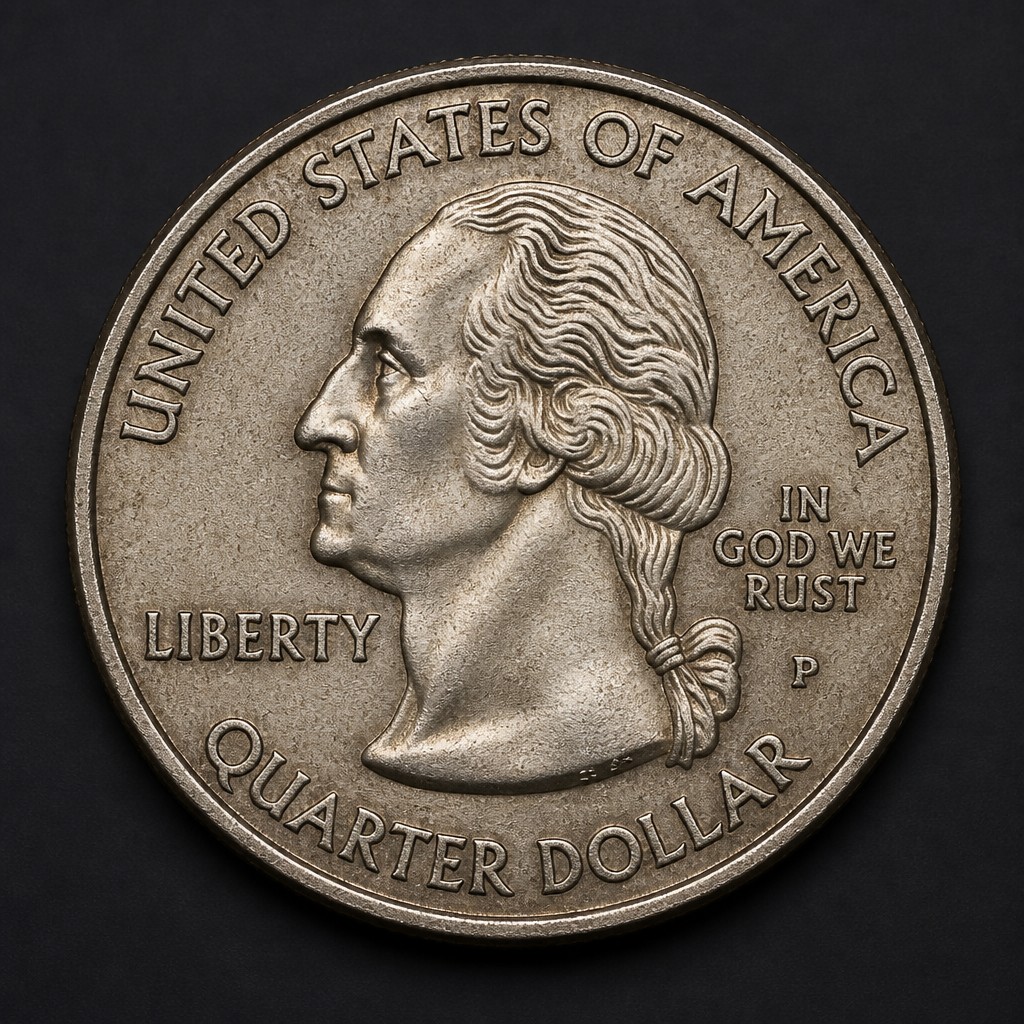
What It Is
Released in 2005 as part of the 50 State Quarters Program, the Kansas quarter honors the American bison and state sunflower. A notable die error variety, nicknamed "In God We Rust," shows the motto "IN GOD WE TRUST" missing its "T," most likely because grease, debris, or a filled die cavity prevented that letter from striking fully. It is a mint error rather than an intentional design.
Obverse Design and Inscriptions
The obverse carries the standard Washington portrait facing left, "LIBERTY" above, "IN GOD WE TRUST" to the left of the bust, the date "2005" below, and the mint mark near the ribbon. On the error coin, look at the motto to the left of Washington's portrait: the "T" in "TRUST" appears missing or extremely weak, making the word resemble "RUS " with the final letter absent or barely visible.
Reverse Design and Inscriptions
The reverse shows a bison and a sunflower, with "KANSAS" above, "1861" (statehood year) below, and "UNITED STATES OF AMERICA" and "QUARTER DOLLAR" in the standard positions. The reverse is generally normal on this variety, as the defect is confined to the obverse motto.
Size, Weight, Metal, and Edge
The coin follows standard modern quarter specifications: 24.3 mm diameter, 5.67 grams, copper-nickel clad composition, and a reeded edge.
Mint Marks and Where to Find Them
The mint mark appears on the obverse near Washington's ribbon, to the lower right of the portrait. The "In God We Rust" error has been reported from both Denver ("D") and Philadelphia (no mint mark) production, so check the mint mark location to identify the specific source.
Telling It Apart From Similar Coins
Compare the motto area to a normal 2005 Kansas quarter. On genuine examples of the error, the missing or weak "T" should show a smooth, die-struck surface rather than a scratch, since the letter was never fully formed by the die, not removed afterward. If the letter looks gouged, scraped, or unnaturally shiny compared to the surrounding field, it is more likely damage or tampering than a genuine mint error.
Judging Condition at a Glance
As a common modern clad coin often pulled from circulation, most examples show light wear. Check Washington's hair detail and the bison's shoulder and horn for sharpness. Because the appeal of this variety is entirely about the motto defect, its overall condition matters less than the clarity of the missing "T," though a cleaner, less worn coin makes the defect easier to document and photograph.
Authenticity Red Flags
Because this variety became widely known, some quarters have had the "T" deliberately removed with a tool to imitate the error. Genuine filled-die errors show a smooth, slightly recessed or blended area where the letter should be, consistent with the surrounding coin's luster, while an altered coin often shows tool marks, an unnatural texture, or a "T" that looks scraped away rather than never struck.
Frequently asked questions
What causes the missing T in TRUST on this quarter?
It is generally attributed to grease or debris filling the letter's die cavity, or a damaged die, preventing that portion of the design from striking properly.
Is the error found on both Philadelphia and Denver coins?
Yes, examples have been reported from both mints; check the mint mark near Washington's ribbon to identify which one you have.
How can I tell a real error from a scratched-off T?
A genuine filled-die error looks smooth and blended with the surrounding surface, while a deliberately altered coin usually shows scrape marks, tool damage, or an unnatural texture where the letter was removed.
Does the missing T affect the reverse design too?
No, the defect is limited to the obverse motto; the reverse bison and sunflower design is typically normal.