
How to Identify the 2004 Wisconsin State Quarter Extra Leaf
A visual guide to the famous 2004-D Wisconsin quarter error varieties, where an extra corn leaf appears in either a high or low position on the reverse.
Read the full 2004 Wisconsin State Quarter Extra Leaf encyclopedia entry →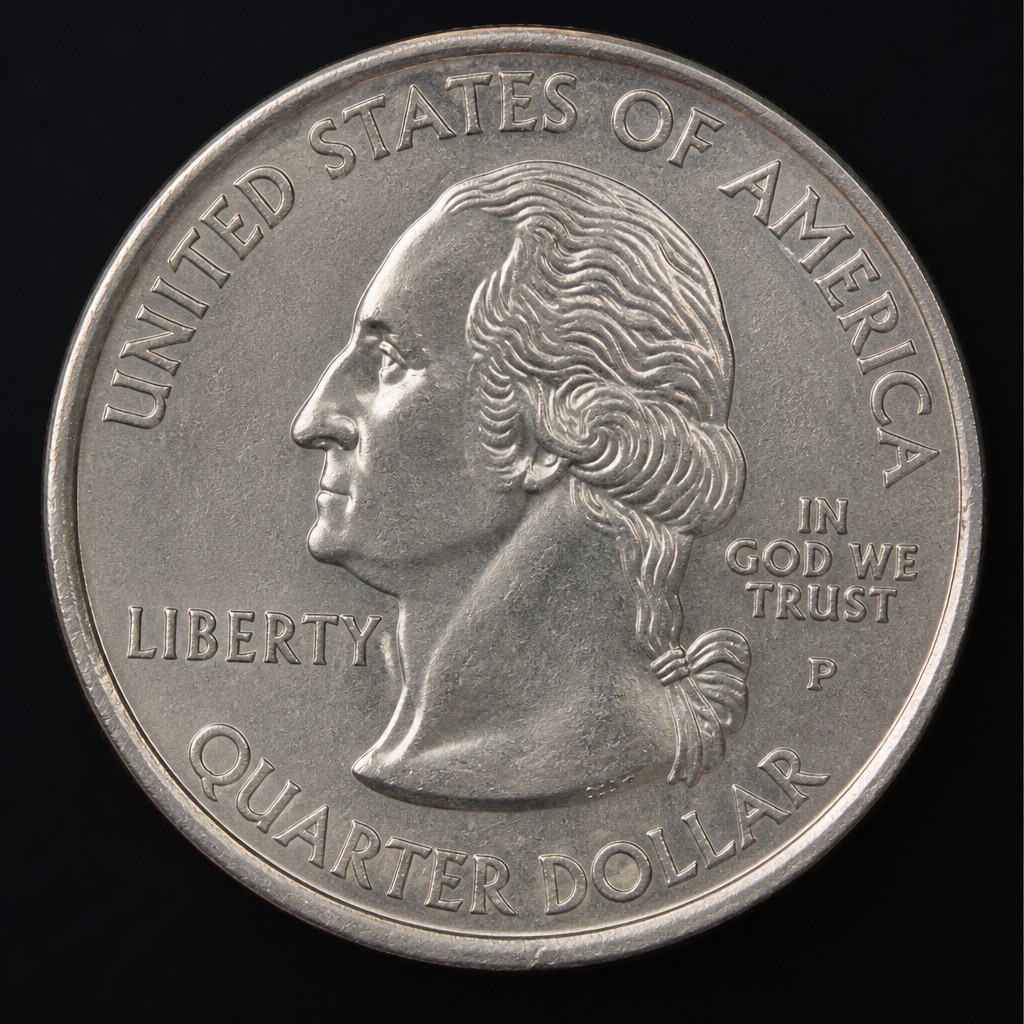
What It Is
The 2004 Wisconsin quarter, part of the 50 State Quarters series, became one of the most talked-about modern U.S. coin errors after collectors discovered examples with an unexplained extra leaf added to the ear of corn on the reverse. These are informally called "Extra Leaf High" and "Extra Leaf Low" varieties.
Obverse (Front)
The obverse carries the standard 1999-2008 State Quarters Washington portrait, with "LIBERTY," "IN GOD WE TRUST," "UNITED STATES OF AMERICA," and the date "2004" arranged as on every issue in the series.
Reverse (Back)
The normal Wisconsin reverse shows a cow's head, a wheel of cheese, and an ear of corn, with "WISCONSIN," the state motto "FORWARD," and "1848" (the year of statehood). On the error varieties, an extra leaf is visible on the corn husk to the left of the cheese wheel, in addition to the two leaves found on a normal die.
Size, Weight, Metal, and Edge
Like all clad State Quarters, it measures 24.3 mm in diameter, weighs 5.67 grams, and has a reeded edge with a visible copper-colored core on the edge.
Mint Marks
The mint mark is on the obverse, right of Washington's ponytail above the date. The known extra leaf varieties were struck at the Denver mint and carry a "D" mint mark.
How to Spot the Extra Leaf
Look closely at the corn on the left side of the design. A normal 2004 Wisconsin quarter shows two leaves pointing outward from the husk. On the "Extra Leaf High" variety, a third leaf points upward toward the cheese wheel; on the "Extra Leaf Low" variety, the extra leaf points down toward the lower rim, nearly touching the field of the design. Comparing side by side with a normal example makes the extra leaf easy to see under magnification.
Telling It Apart From Similar Coins
Because the base design is unique to Wisconsin, there's no confusion with other state quarters. The main task is distinguishing a genuine raised die-cut extra leaf from ordinary mint grease fill, a scratch, or die deterioration, which can create a similar bump but usually looks flatter and less leaf-shaped under a loupe.
Grading at a Glance
Examine Washington's cheek and hairline on the obverse and the cow's head and cheese wheel rim on the reverse for wear. Because these varieties are usually collected in mint state, sharp, lustrous surfaces with no flattening on the extra leaf itself command the most interest.
Authenticity Red Flags
Because genuine examples carry a premium, altered coins exist where a leaf shape has been added by hand engraving or acid etching. Genuine die varieties show leaf details that share the same relief, metal flow, and luster as the rest of the design; an added leaf often looks slightly recessed, has uneven edges, or disrupts the surrounding field's original mint luster.
Frequently asked questions
What causes the extra leaf on the Wisconsin quarter?
The exact cause has been debated for years; theories range from an accidental die gouge to a deliberate addition during die preparation, but the U.S. Mint has never issued an official explanation.
What's the difference between Extra Leaf High and Extra Leaf Low?
The distinction is simply the position of the extra leaf on the corn husk: "High" points up toward the cheese wheel, while "Low" points down toward the coin's lower rim.
Were both varieties struck at Denver?
Yes, the known extra leaf varieties all carry the "D" mint mark from the Denver facility; no confirmed Philadelphia examples have surfaced.
How can I be sure my extra leaf is genuine and not damage?
Genuine varieties show a leaf-shaped raised element that matches the coin's overall luster and strike quality; view it under 10x magnification and compare its shape and relief to verified images before assuming it is the mint variety.