
How to Identify the 2004-D Wisconsin State Quarter Extra Leaf
A Denver-minted Wisconsin state quarter with an unusual extra leaf added to the corn cob on the reverse, occurring in both a 'low leaf' and 'high leaf' form.
Read the full 2004-D Wisconsin State Quarter Extra Leaf encyclopedia entry →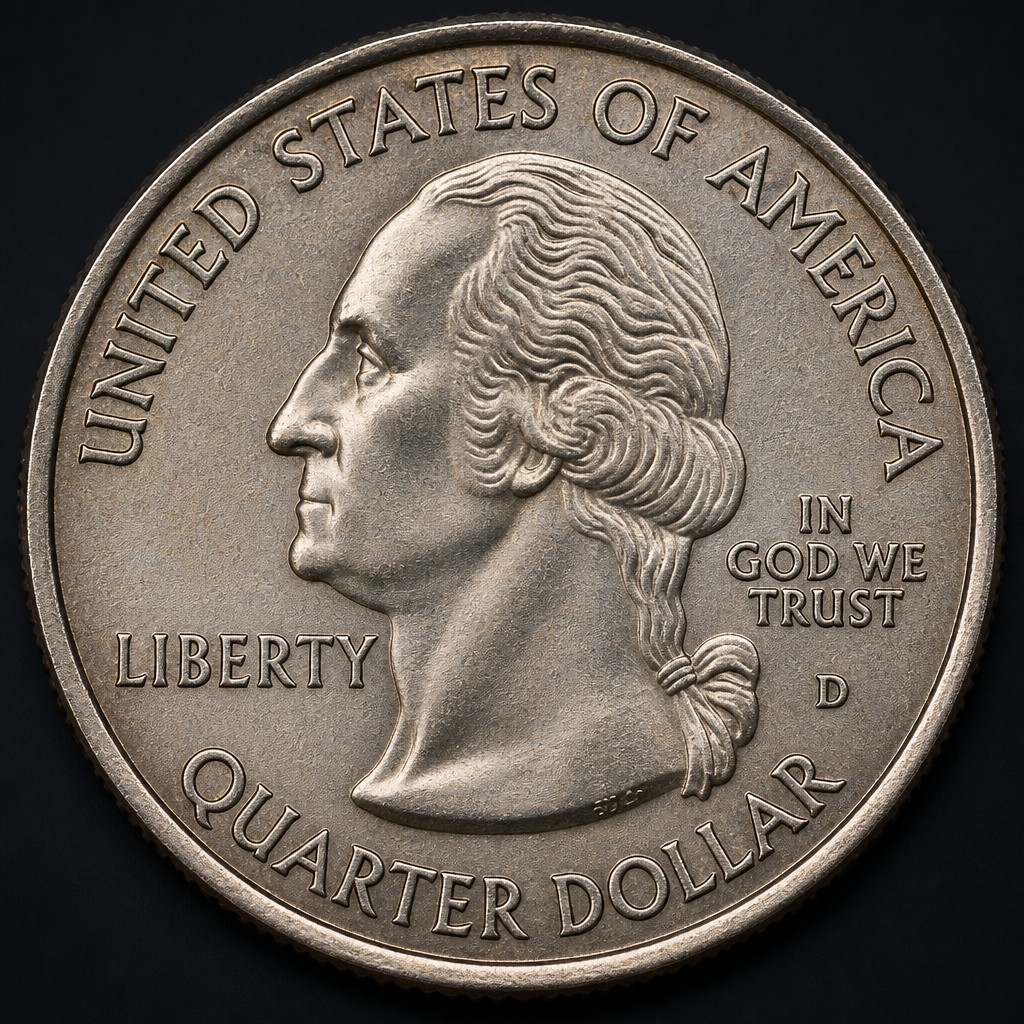
What It Is
Part of the 50 State Quarters Program, the Wisconsin quarter was released in 2004 with a design honoring the state's dairy and agricultural heritage. A small number of Denver-minted coins show an extra leaf on the ear of corn depicted on the reverse, believed to have resulted from a tool mark or added metal on the die rather than an official design change. Two forms are recognized based on where the extra leaf points.
Obverse Design and Inscriptions
The obverse uses the standard Washington quarter portrait facing left, with "LIBERTY" above, "IN GOD WE TRUST" to the left of the portrait, "2004" below, and the mint mark to the right of the ribbon in Washington's hair. This side is identical to every other 2004 quarter and shows no unusual features.
Reverse Design and Inscriptions
The reverse depicts a wheel of cheese, an ear of corn, and a dairy cow, with "WISCONSIN" above, "FORWARD" (the state motto) below the cow, and "1848" (statehood year) beneath that. "UNITED STATES OF AMERICA" and "QUARTER DOLLAR" appear in the standard positions around the rim. The extra leaf is found low on the corn cob's leaf cluster, near the husk area.
Size, Weight, Metal, and Edge
Like all Washington-design quarters of the era, it measures 24.3 mm in diameter, weighs 5.67 grams, and is a copper-nickel clad coin (a copper core with outer layers of 75% copper and 25% nickel). The edge is reeded.
Mint Marks and Where to Find Them
The mint mark "D" for Denver sits on the obverse, to the lower right of Washington's portrait near the ribbon. Both known extra leaf varieties were produced only at the Denver Mint; no Philadelphia examples of the extra leaf have been confirmed.
Telling It Apart From Similar Coins
On a normal Wisconsin quarter, the corn husk shows two leaves. On the "Extra Leaf High" variety, a third leaf appears higher up and points upward toward the top leaf. On the "Extra Leaf Low" variety, the extra leaf appears lower and points downward, closer to the corn kernels. Careful side-by-side comparison with a standard Wisconsin quarter under magnification is the most reliable way to confirm either variety.
Judging Condition at a Glance
Because these are modern clad quarters typically found in circulation, most examples show light to moderate wear. Check the cow's head and the top of the cheese wedge for flatness, and look at the corn leaf detail itself; heavy wear can make the extra leaf harder to distinguish from a die scratch, so a well-preserved, lightly circulated or uncirculated coin makes identification easier.
Authenticity Red Flags
Because these varieties gained wide publicity, some altered coins have surfaces artificially scratched or built up near the corn to mimic an extra leaf. A genuine extra leaf should have the same finish, luster, and metal flow as the rest of the design, not a scraped or gouged appearance. Comparing the suspected leaf's shape and position precisely against reference images for the high and low varieties helps rule out a random die gouge or damage.
Frequently asked questions
What are the two Wisconsin extra leaf varieties?
They are called Extra Leaf High and Extra Leaf Low, referring to whether the extra corn leaf points up toward the top leaf or down toward the kernels.
Were extra leaf quarters made in Philadelphia too?
No, both recognized extra leaf varieties are known only from the Denver Mint, identified by the D mint mark on the obverse.
Could the extra leaf be damage instead of a mint variety?
Yes, random scratches or die gouges can resemble an extra leaf. Comparing the leaf's exact shape and position to known reference images helps distinguish a true variety from damage.
Where exactly is the extra leaf located?
It appears within the corn husk cluster on the reverse, near the existing two leaves, either above them (high) or below them (low).