
How to Identify the 2004-D Wisconsin Extra Leaf High Quarter
A visual guide to the 2004-D Wisconsin quarter's Extra Leaf High variety, where a third corn leaf points upward toward the cheese wheel on the reverse.
Read the full 2004-D Wisconsin Extra Leaf High Quarter encyclopedia entry →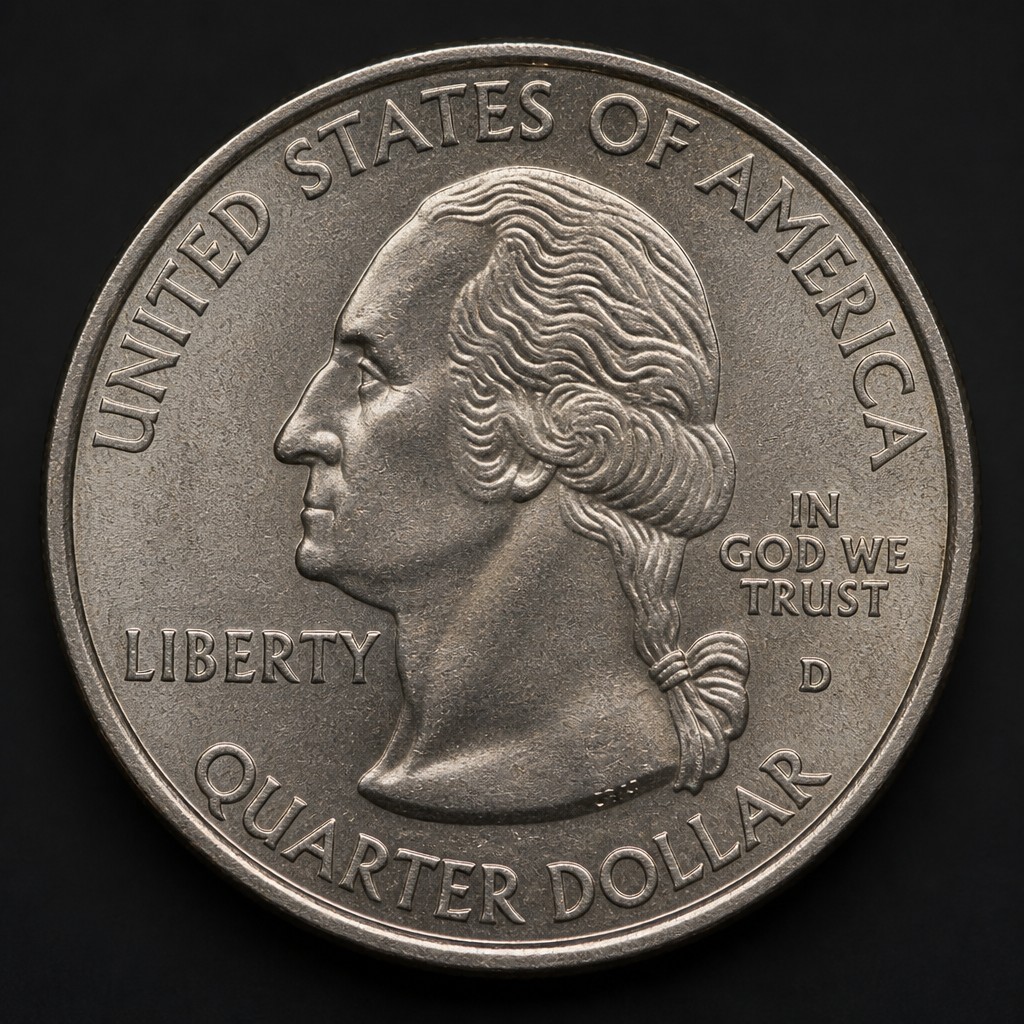
What It Is
The 2004-D Wisconsin Extra Leaf High quarter is one of two well-known error varieties of the Wisconsin State Quarter, both struck at the Denver Mint in 2004. It is distinguished from its sibling variety, Extra Leaf Low, by the position of the extra leaf on the ear of corn shown on the reverse.
Obverse (Front)
The obverse carries the standard 1999-2008 State Quarters Washington portrait, with "LIBERTY," "IN GOD WE TRUST," "UNITED STATES OF AMERICA," and the date "2004."
Reverse (Back)
The normal Wisconsin design shows a cow's head, a wheel of cheese, and an ear of corn, with "WISCONSIN," the motto "FORWARD," and "1848." On the Extra Leaf High variety, an additional leaf appears on the corn husk pointing upward and to the left, toward the cheese wheel, positioned above the two normal leaves.
Size, Weight, Metal, and Edge
It measures 24.3 mm in diameter, weighs 5.67 grams, and has a reeded edge with a visible copper-colored core, consistent with all clad-era quarters.
Mint Marks
The mint mark "D" appears on the obverse to the right of Washington's ponytail, confirming a Denver Mint strike; no confirmed Philadelphia examples of this variety exist.
How to Spot the High Leaf Specifically
Examine the corn on the left side of the reverse under magnification. On a normal coin, two leaves point outward from the husk. On the High variety, the extra leaf angles upward, nearly touching or pointing toward the cheese wheel above it. This is the key distinguishing feature versus the Low variety, where the extra leaf instead points downward toward the lower rim of the coin.
Telling It Apart From Similar Coins
Since the Wisconsin design is unique among State Quarters, confusion is limited to distinguishing High from Low leaf placement, and to ruling out die chips, grease-filled dies, or scratches that can mimic an extra leaf but typically look flatter, less defined, or inconsistent with the coin's overall relief and luster.
Grading at a Glance
Check Washington's cheek and hairline on the obverse and the cow's head and cheese rim on the reverse for wear. Because this variety is prized mainly in higher mint-state grades, look for full original luster and a sharply struck, well-defined extra leaf free of nicks or scuffing.
Authenticity Red Flags
Given the premium attached to genuine examples, watch for hand-added or engraved "leaves" applied to ordinary Wisconsin quarters. A genuine die-struck leaf shares the same relief height, luster, and metal flow as the rest of the coin's design; an artificially added leaf often looks recessed, has rough or uneven edges, or disrupts the surrounding field's original mint texture.
Frequently asked questions
How do I tell Extra Leaf High from Extra Leaf Low?
Look at the direction the extra leaf points: on the High variety it angles upward toward the cheese wheel, while on the Low variety it points downward toward the coin's lower rim.
Was this variety struck at more than one mint?
No, confirmed examples all carry the "D" mint mark from the Denver Mint.
What causes the extra leaf?
The precise cause is still debated among researchers, with theories ranging from an accidental die gouge to a deliberate alteration during die preparation; no official Mint explanation has been confirmed.
How can I confirm my coin's extra leaf is genuine?
Compare it under magnification to verified reference images and check that the leaf's relief, luster, and surface texture match the rest of the coin; a leaf that looks hand-added, scratched, or recessed relative to the surrounding field is a red flag.