
How to Identify the 20 Para
A collector's guide to confirming the 1974 Yugoslav 20 Para by its numeral-and-date face, six-flame state emblem, small size, and base-metal color.
Read the full 20 Para encyclopedia entry →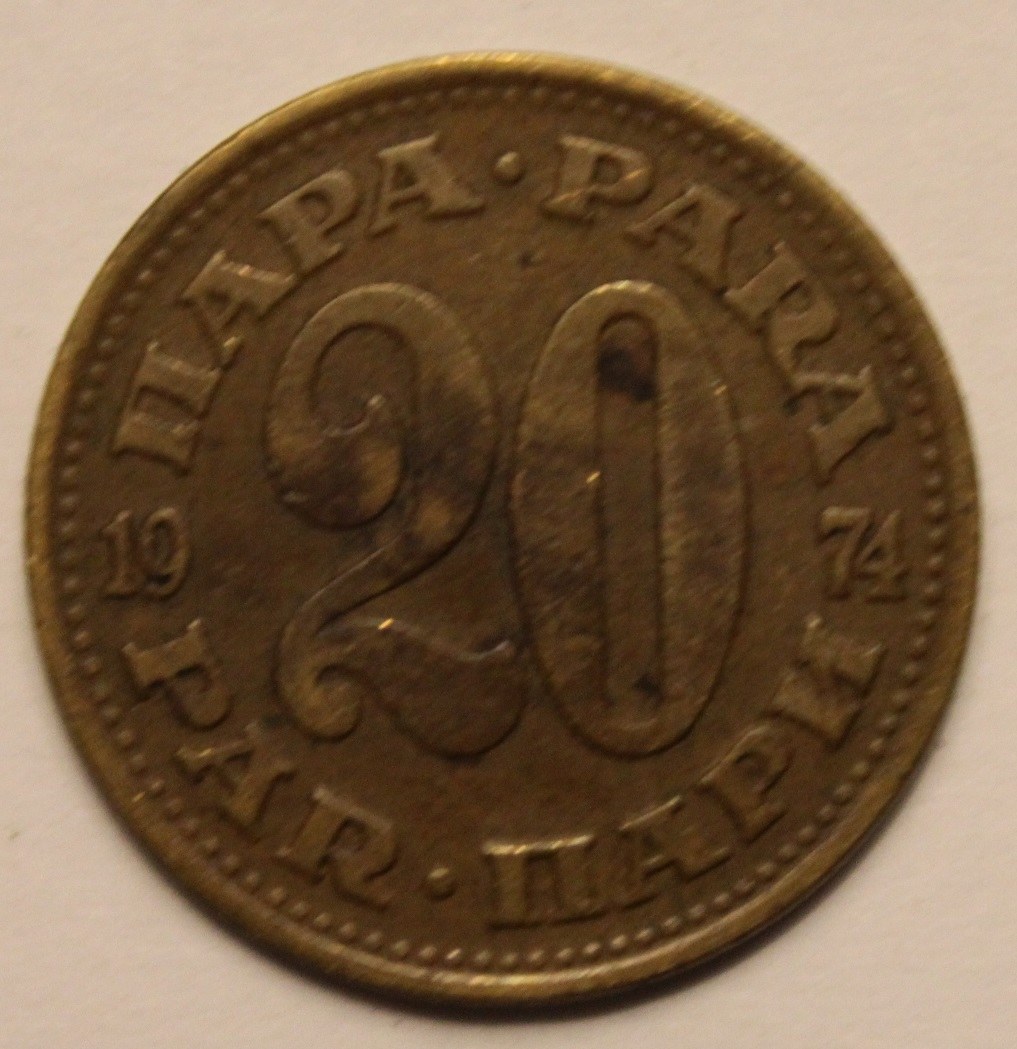
Read the Value Side First
One face should show a large numeral 20 with the word para and a date, here 1974. Confirm both the value and the year on this side. The unit word may appear in Latin or Cyrillic script and can look garbled when the lettering is worn, so focus on the clear numeral 20 and the four-digit date as your primary anchors.
Confirm the State Emblem
The opposite face must carry the Yugoslav socialist state emblem, a group of torches whose flames combine into a single flame, surrounded by ears of wheat and crowned by a star, usually with the date 1943. This emblem is the decisive marker of a Socialist Federal Republic of Yugoslavia issue. If the reverse instead shows a royal crown, a monarch's portrait, or a different national arms, you have a coin of another country or era.
Check Size, Metal, and Weight
Expect a small coin, roughly 18 mm in diameter, struck in a base metal with a yellowish, brass-like color. It should feel light and non-precious. A white nickel tone, a much larger diameter, or a heavy, dense feel would point to a different denomination or country rather than this small para piece.
Separate It From Look-Alikes
Yugoslavia issued several similar base-metal para and dinar coins in the same period that share the state emblem but differ in the numeral and size, such as 10 para, 50 para, and the dinar values. Always read the numeral and the unit word together: only the value 20 with para and the 1974 date identifies this exact coin. Also distinguish it from later coins of the successor states, which carry different emblems.
Authentication Notes
As a common, low-value circulation coin, the 20 Para is rarely counterfeited, so authentication is seldom a concern. The main practical checks are matching the numeral, date, emblem, size, and metal color to reference images, and judging condition. Avoid cleaning the coin, since scrubbing base metal leaves marks that reduce what little collector value it holds.
Frequently asked questions
How do I know it is a Yugoslav coin and not another country's?
Look for the socialist state emblem of merged torch flames within wheat and a star, typically with the date 1943. That emblem specifically marks a Socialist Federal Republic of Yugoslavia issue.
What size and metal should it be?
It is a small coin about 18 mm across, struck in a base metal with a yellowish, brass-like tone. It should feel light; a large or heavy white-metal coin is a different type.
How do I tell it from other Yugoslav para coins?
Read the numeral with the unit word. This coin shows 20 para with the 1974 date, while related pieces like 10 or 50 para share the emblem but differ in the numeral and size.
Does this coin need authentication?
Rarely. It is a common, low-value circulation coin that is seldom faked, so matching the design, size, and metal to reference images is usually enough to confirm it.