
How to Identify the 20 Francs Napoleon
A collector's guide to reading a French 20-franc gold Napoleon — portrait, wreathed reverse, size, fineness and mint marks — and avoiding fakes.
Read the full 20 Francs Napoleon encyclopedia entry →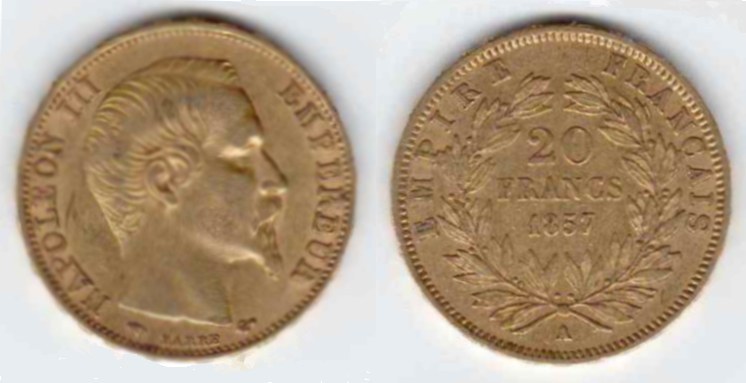
Begin with the physical measurements, because they are the fastest authenticity screen. A genuine 20 Francs Napoleon is small — about 21 mm across — and weighs close to 6.45 grams in 0.900 fine gold. It should feel dense for its size, show a warm yellow-gold colour, and be completely non-magnetic. A coin that is oversized, thin, light, or attracted to a magnet does not match the standard.
Read the obverse. This type shows a left-facing profile of Napoleon III with the name NAPOLEON in the legend. Note whether the head is bare (uncrowned) or laureate: the bare head belongs to the earlier issues around 1853–1860, including the 1857 example here, while a laurel wreath on the portrait indicates an 1861-or-later striking. The surrounding titles and the exact wording change through the reign and help narrow the date.
Turn to the reverse. You should see the denomination 20 FRANCS and the date framed by a wreath, with imperial legend text around the rim. Look near the date and within the legend for a small mint mark letter and an accompanying privy or engraver's symbol; these identify the mint that struck the coin and are part of a correct French issue. Also inspect the edge — genuine coins have a lettered or reeded edge, never a plain smooth one.
Frequently asked questions
What size and weight should a real 20 Francs Napoleon be?
About 21 mm in diameter and roughly 6.45 grams, struck in 0.900 fine gold. Measuring the coin and checking it against these figures is the simplest first test; noticeable deviation suggests a fake or a different coin.
How do I tell which year and ruler my Napoleon is?
Read the obverse name and portrait and the reverse date. This example names NAPOLEON with a bare-head portrait of Napoleon III and is dated 1857; a laureate (wreathed) head points to 1861 or later within his reign.
Where is the mint mark on a gold Napoleon?
Look on the reverse near the date and within the legend for a small letter marking the mint, usually alongside a tiny privy or engraver's symbol. These marks, together with the date, distinguish the various strikings.
How can I avoid counterfeit gold Napoleons?
Check weight, diameter, fineness, colour, magnetism, and the lettered or reeded edge, and be wary of prices well below gold value. Because these coins are widely faked, have any doubtful piece verified by a reputable dealer or grading service.