
How to Identify the 20 Francs (Leopold II)
A collector's guide to confirming the Belgian gold 20 francs of Leopold II by its bearded portrait, crowned arms, size, and Latin Monetary Union gold weight.
Read the full 20 Francs (Leopold II) encyclopedia entry →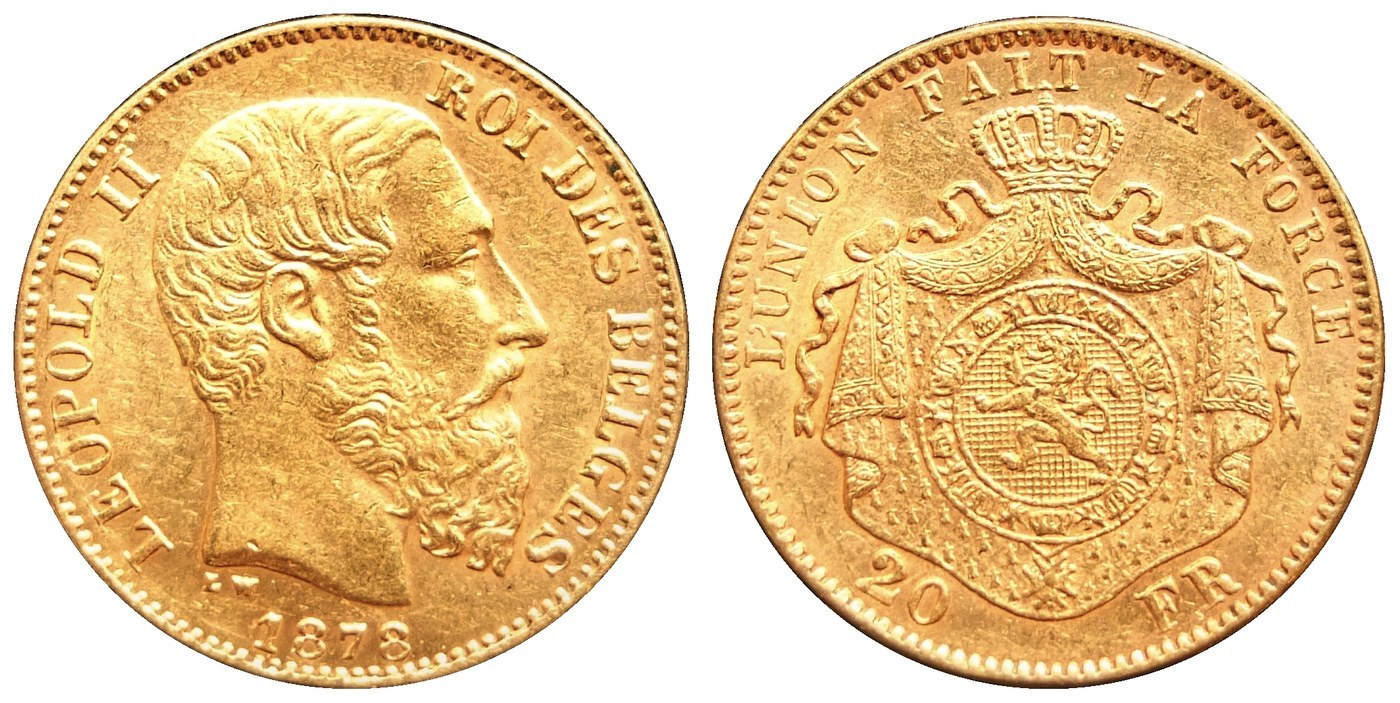
Read the Portrait First
Start with the obverse. A genuine Leopold II 20 francs shows the king in profile facing left as a mature man with distinctive curly hair and a full beard, encircled by a legend naming him king of the Belgians. The bearded, older-man portrait is the single most useful cue: it separates Leopold II from the clean-shaven or differently styled busts of Leopold I and of Belgium's later monarchs.
Confirm the Reverse Arms and Value
Turn the coin over and look for the crowned Belgian coat of arms, a shield with the rampant lion set within a laurel or oak wreath, together with the value 20 FR and a date such as 1878. If the reverse shows a seated figure, a plain denomination without the crowned shield, or a wreath without arms, you are looking at a different coin or country. The crown-over-shield-in-wreath layout is the signature of this type.
Check Size, Weight, and Metal
This is a small but dense gold coin: about 21 mm in diameter, roughly 6.45 grams total, struck in .900 fine gold. It should show a warm yellow-gold color, feel heavy for its small size, and be completely non-magnetic. A coin of this design that is oversized, lightweight, pale, or attracted to a magnet is a red flag for a fake or a gold-plated base-metal copy.
Note the Language Variety and Rule Out Look-Alikes
Belgian coins carry either French (BELGIQUE) or Dutch (BELGIE) legends; both are authentic and simply reflect the country's two languages. Do not mistake the same-sized French, Swiss, or Italian 20-franc gold coins for this issue: they share the Latin Monetary Union weight but show different rulers and reverses, so always match the Belgian arms and the Leopold II portrait together, not size alone.
Authentication Cautions
Because these are gold, they attract counterfeits, altered dates, and pieces removed from jewelry. Weigh and measure the coin, inspect the rim for solder marks or a mount scar, and compare the portrait and arms to trusted reference images, watching for soft detail, wrong weight, or seams that suggest a cast copy. Cleaning and polishing hurt value, so favor coins with original surfaces, and for any higher-value example consider third-party authentication.
Frequently asked questions
How do I tell Leopold II coins from Leopold I coins?
Look at the portrait. Leopold II is shown as an older man with curly hair and a full beard, while Leopold I is depicted differently. The bearded, mature bust and the reign dates 1865 to 1909 point to Leopold II.
What size and weight should it be?
Expect about 21 mm across and roughly 6.45 grams of .900 fine gold. It should feel dense for its small size, look warm gold, and be non-magnetic. A light, oversized, or magnetic piece is suspect.
Is a French-text coin different from a Dutch-text one?
No. Belgium struck these with either French (BELGIQUE) or Dutch (BELGIE) legends. Both are genuine official varieties of the same coin, reflecting the country's two languages rather than any difference in value or authenticity.
Should I have it authenticated?
For anything beyond a well-worn common date, yes. As a gold coin it is faked and sometimes ex-jewelry, so verify weight and diameter, check the rim for mount marks, and consider third-party certification for higher-value pieces.