
How to Identify the 20 Drachmai
A collector's guide to confirming the 1884 Greek gold 20 Drachmai of George I by its portrait, crowned arms, denomination, and small gold format.
Read the full 20 Drachmai encyclopedia entry →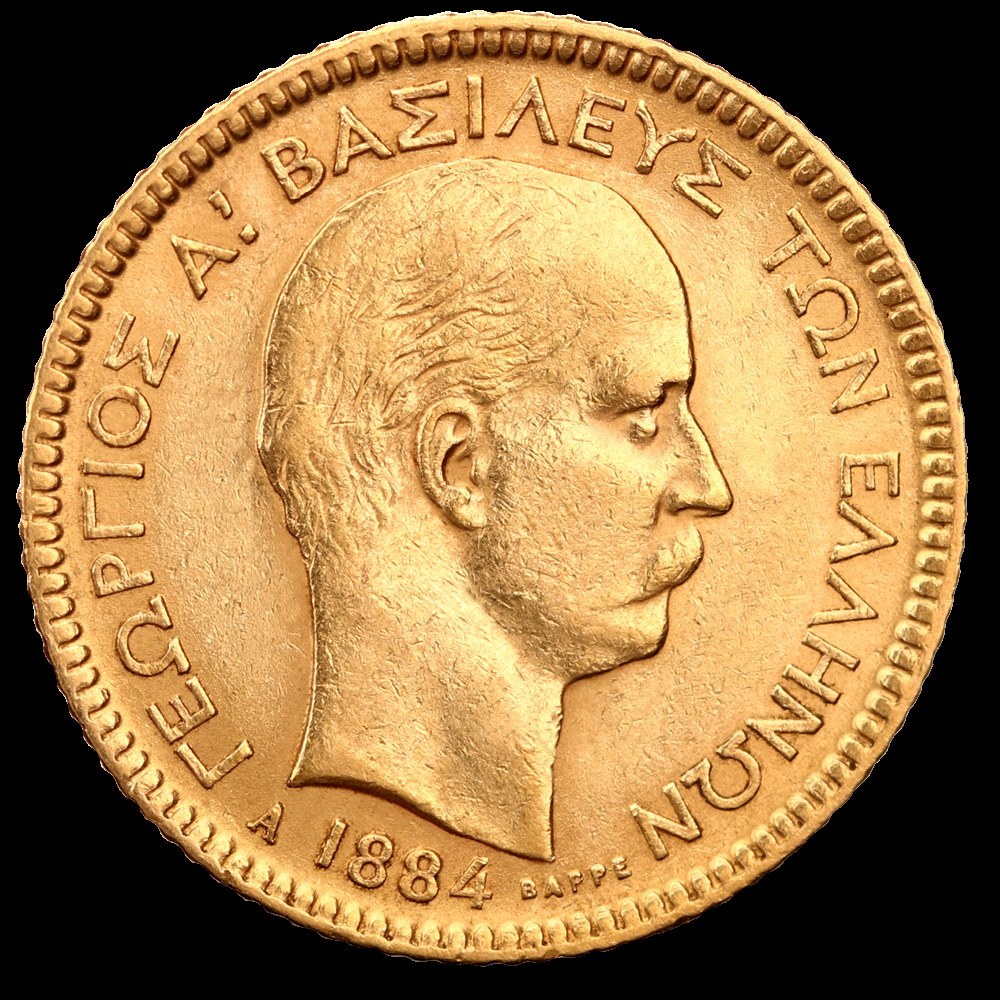
Read the Portrait and Legend
Start with the obverse. A genuine coin of this type shows the bare-headed bust of King George I facing right, encircled by a Greek legend naming him king of the Hellenes. Identifying the specific ruler and the right-facing direction of the portrait is the fastest way to separate this issue from other Greek or European gold coins.
Confirm the Reverse and Denomination
The reverse must show the crowned Greek royal coat of arms, a cross shield supported on either side and topped by a royal crown, with the value written in Greek as 20 ΔΡΑΧΜΑΙ and the date 1884. If the reverse shows a wreath, a standing figure, or a value in francs or another currency, it is a different coin, not this Greek type.
Check Size, Weight, and Metal
This is a small Latin Monetary Union gold coin, about 21 mm in diameter and roughly 6.45 grams of .900 fine gold. It should feel notably dense for its size, show a warm yellow gold color, and be completely non-magnetic. A lightweight, pale, or magnetic piece of this design is an immediate warning sign.
Look for Mint and Privy Marks
Because the type was struck at Paris, expect small marks in the reverse field near the date, such as a mint letter and tiny engraver or cornucopia and other privy symbols used by the French mint. These marks are normal and expected; their absence, or crude imitations of them, can indicate a counterfeit or a coin of a different origin.
Rule Out Look-Alikes and Fakes
Many European nations issued 20-unit gold coins of nearly identical size and weight under the Latin Monetary Union, so always read the Greek legend and denomination rather than judging by size alone. As a scarce gold type, the 1884 20 Drachmai is also faked and was sometimes mounted as jewelry; check for solder traces, filed edges, wrong weight, and soft cast detail. For any higher-value example, favor coins with original surfaces and consider third-party authentication.
Frequently asked questions
How do I confirm it is Greek and not another country's 20-unit gold?
Read the legends. This coin names George I in Greek and states the value as 20 ΔΡΑΧΜΑΙ. Many Latin Monetary Union coins share its size and weight but name a different ruler and currency.
What size and weight should it be?
Expect a small gold coin of about 21 mm and roughly 6.45 grams of .900 fine gold. It should feel dense and heavy for its diameter and be non-magnetic; a light or magnetic piece is suspect.
What do the small marks near the date mean?
They are mint and privy marks from the Paris mint that struck the type. Small letters and symbols beside the date are normal; crude or missing marks can point to a counterfeit.
Should I have it authenticated?
For anything beyond a low-grade example, yes. As a scarce gold coin it is faked and was often mounted, so verifying weight, diameter, and detail, or using certification, protects your purchase.