
How to Identify the 2 Rigsdaler (Gold)
Step-by-step checks for Denmark's gold 2 rigsdaler — portrait, arms, metal, mint mark, and the authentication cautions a gold striking demands.
Read the full 2 Rigsdaler (Gold) encyclopedia entry →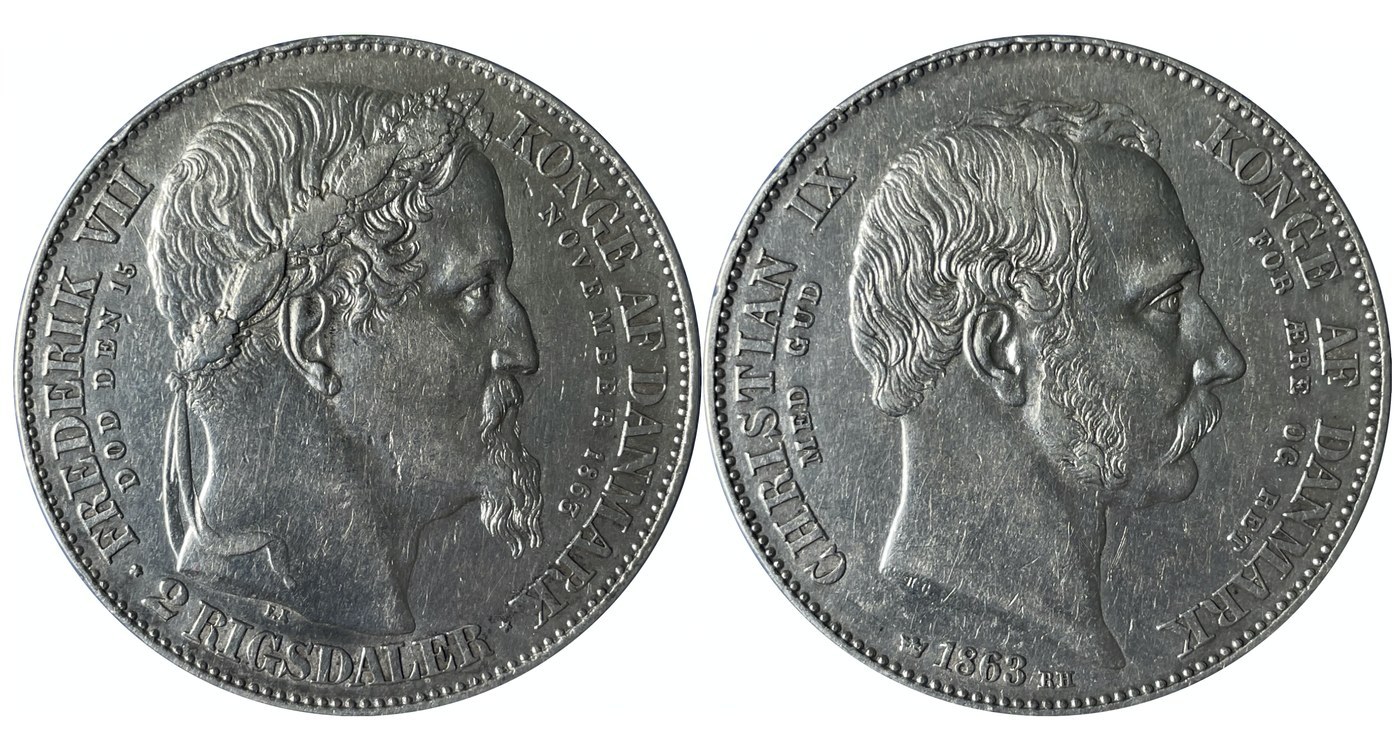
Start with the two-sided diagnostic. The obverse should show a right-facing bearded bust of Christian IX with a Latin-style legend naming him and his titles. The reverse should show the crowned Danish coat of arms — a quartered shield with lions and hearts — inside decorative scrollwork, with the denomination and the date 1863. If either side is missing these elements, you are looking at a different Danish coin or another ruler.
Next confirm the metal. Gold reads as a warm, even yellow that does not tone grey or black the way old silver does. A gold coin is also markedly denser, so it feels heavy for its size. Weigh and measure the piece and compare against catalogue data; a gold striking will not match the published weight of the ordinary silver 2 rigsdaler, and that mismatch is expected — the ordinary coin was silver.
Check the small marks. Copenhagen-struck Danish coins of this era typically carry a heart mint mark, often with mint-master initials near the arms. Read the denomination legend carefully to confirm it states two rigsdaler and not a fraction or a different value. The date must read 1863.
Beware of look-alikes and fakes. Watch for gilded silver coins passed off as gold (a magnet won't help, but weight, density, and any wear showing white metal underneath will), for mount or solder marks on the edge from jewelry use, and for cast copies with soft, mushy detail. Because a true gold striking is scarce and valuable, do not rely on a seller's description alone.
For anything of this value, get independent authentication and grading from a reputable coin service before buying or selling. Confirm weight, diameter, and metal, and cross-check against recent auction appearances of the same type.
Frequently asked questions
How can I tell a gold striking from a gilded silver coin?
Weigh and measure it: gold is much denser, so a genuine gold piece is heavy for its size. Gilding can also wear at the high points to reveal white metal underneath. When value is significant, have it professionally tested.
What mint mark should I look for?
Danish coins of this period were struck in Copenhagen, traditionally marked with a small heart, often accompanied by mint-master initials near the coat of arms.
Which side identifies the ruler?
The obverse. It shows the right-facing bust of Christian IX with a legend giving his name and titles; the reverse shows the royal arms and denomination.
Should I clean it before identifying?
No. Cleaning can scratch the surface and reduce value. Identify and photograph it as-is, and leave any conservation to a professional.