
How to Identify the 2 Litai
A collector's guide to confirming Lithuania's 1991 2 litai by its LITAI sunburst denomination, mounted-knight Vytis emblem, date, size, and white base-metal format.
Read the full 2 Litai encyclopedia entry →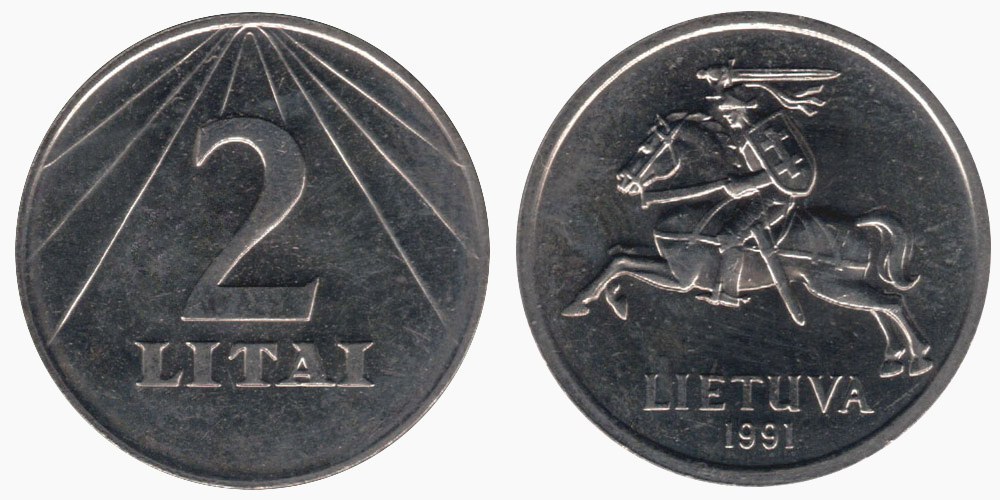
Read the Denomination in the Sunburst
Start with the value side. A genuine coin of this type shows 2 LITAI set inside a field of straight radiating lines that fan outward like a sunburst. The word LITAI, the plural of litas, immediately places the coin as Lithuanian rather than a ruble, centai, or other currency, and the numeral 2 separates it from its 1 litas and 5 litai siblings.
Confirm the Vytis on the Other Side
The opposite face should carry the Vytis: an armored knight on a galloping horse, facing left and raising a sword. This is Lithuania's national coat of arms and the single most distinctive feature of the type. If your coin lacks the mounted knight, or shows a Soviet emblem, a portrait, or a different national arms, it is not this issue.
Check the Date, Size, and Metal
Look for the 1991 date in the design. The coin is a modest circulation size struck in a hard, white base metal with a pale nickel tone, not the bright heavy feel of silver. Weigh the value, size, and metal together: the 1 litas and 5 litai of the same series share the Vytis and sunburst styling, so the stated LITAI numeral and the diameter are what tell the denominations apart.
Rule Out Look-Alikes
Distinguish this from Lithuania's small aluminum centai of the same early-1990s period, which are lighter, smaller, and denominated in centai rather than litai. Also separate it from the later litas and litai coins introduced from 1993 onward, which carry different designs and dates. The 1991 date combined with the sunburst LITAI value and the Vytis is the fingerprint of this specific first-issue type.
Authentication Cautions
As a modest base-metal coin, it is not a common target for counterfeiting, so the practical concerns are correct attribution and grade rather than forgery. Confirm the exact denomination and date rather than assuming from the shared design family, and judge condition by the sharpness of the knight, horse, and sword and by clean fields in the radiating sunburst. Avoid cleaning, which harms even inexpensive coins, and match every cue, the LITAI value, the sunburst, the Vytis, the 1991 date, the size, and the white metal, before settling on the identification.
Frequently asked questions
How do I tell the 2 litai from the 1 litas and 5 litai?
Read the LITAI numeral and measure the coin. All three 1991 coins share the Vytis knight and the radiating sunburst styling, so the stated value and the diameter are what distinguish the 2 litai from its companions.
How do I separate it from the aluminum centai?
Check the denomination and metal. The centai are lighter, smaller aluminum coins denominated in centai, while this piece is a heavier white base-metal coin marked LITAI. The wording and heft tell them apart.
What confirms it is Lithuanian rather than another country?
The Vytis, an armored knight on horseback with a sword, is Lithuania's coat of arms, and the LITAI denomination is the Lithuanian currency. Together they positively identify the coin as Lithuanian.
Is it worth authenticating?
Usually not formally. As an affordable base-metal coin it is rarely faked, so effort is better spent confirming the exact date and denomination and assessing grade than on professional authentication.