
How to Identify the 2 Kroner
Confirm an 1875 Danish silver 2 Kroner by its crown size and silver heft, the crowned Danish arms, the 2 KRONER value, and the Copenhagen heart mintmark.
Read the full 2 Kroner encyclopedia entry →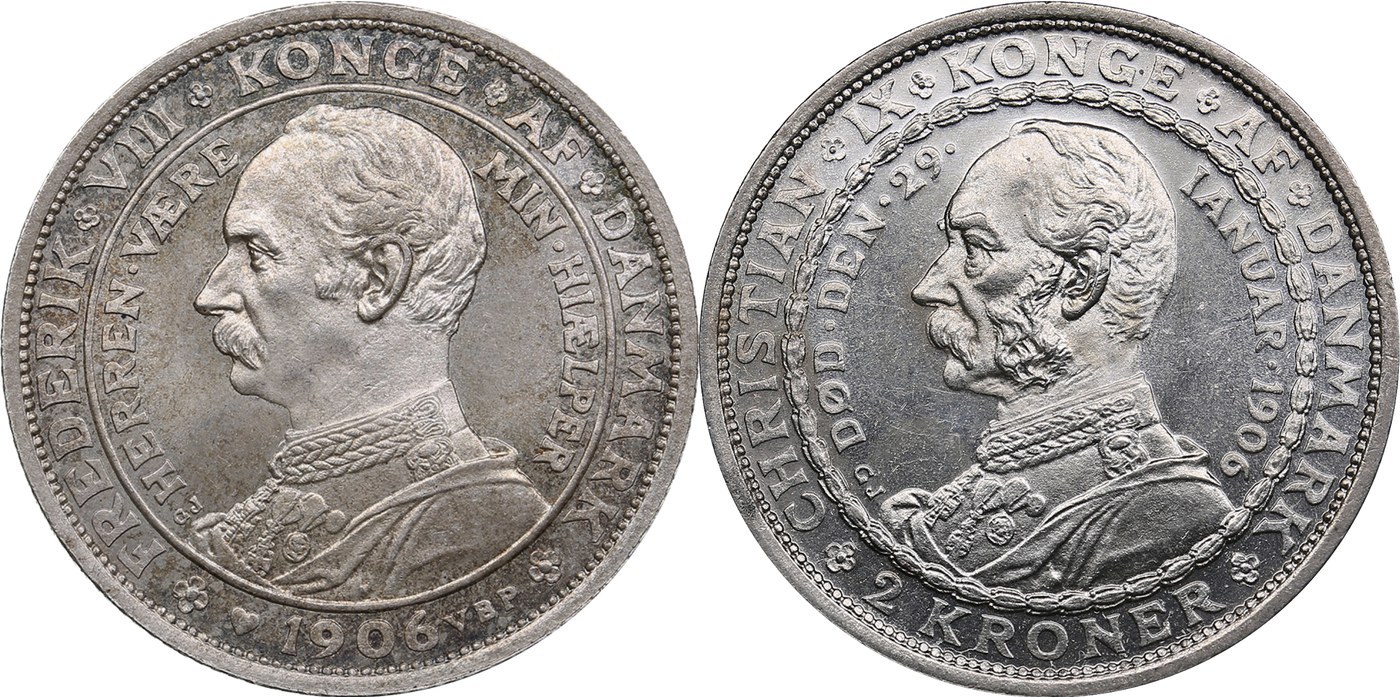
Start with size and metal. The 2 Kroner is a large 'crown' coin, on the order of 31 mm across and about 15 grams of high-grade (roughly 80%) silver, so it has real weight in the hand and the bright, coolly reflective look of a substantial silver piece. A coin much smaller or lighter is more likely the 1 Krone, and one with a dull grey base-metal tone or any response to a magnet is not a genuine silver 2 Kroner. Silver tones to a soft grey rather than turning yellow.
Read the arms side closely. This face shows the crowned Danish coat of arms — the shield of the kingdom beneath a royal crown. The opposite face is dominated by the denomination written out as 2 KRONER, with the date 1875 and Danish inscriptions, and the type also carries the right-facing portrait and legend of King Christian IX. Copy out the exact wording of the legends and the value, since these confirm both the denomination and the reign.
Check for the mint marks. Danish coins of this era were struck at Copenhagen, which used a small heart symbol, placed with the initials of the mintmaster and engraver near the arms or the value. Finding the heart mark and initials is a useful confirmation of a genuine Copenhagen striking and helps separate the coin from foreign look-alikes of similar size.
Distinguish it from look-alikes. The 1 Krone is a smaller, lighter silver coin of the same series; later-dated 2 Kroner and the many commemorative 2 Kroner (royal jubilees, weddings and successions) share the denomination but carry different portraits, dates and inscriptions. Match the date, the value statement and the design together rather than relying on the '2 Kroner' wording alone, because the plain 1875 circulation type is a distinct issue from the commemoratives.
Finally, weigh authentication against value. Genuine struck coins show crisp heraldic detail and sharp lettering even when worn, while cast fakes tend to have grainy surfaces, soft or mushy legends, and sometimes an edge seam. Check that the weight and diameter fall in the expected range, and for any piece of real value, confirm it with a knowledgeable dealer or a recognised grading service.
Frequently asked questions
How do I tell the 2 Kroner from the 1 Krone?
Size and weight are the quickest guide: the 2 Kroner is the larger, heavier 'crown' coin at about 31 mm and roughly 15 grams, while the 1 Krone is noticeably smaller and lighter. Confirm by reading the value, which is spelled out as 2 KRONER or 1 KRONE.
Where is the mintmark on the coin?
Look for a small heart symbol, the mark of the Copenhagen mint, placed near the arms or the value along with the initials of the mintmaster and engraver. It confirms a genuine Danish striking of the period.
How can I tell an 1875 circulation coin from a commemorative 2 Kroner?
Match the date and design together. The plain 1875 type shows the crowned Danish arms and the value 2 KRONER, while commemorative 2 Kroner carry different portraits, scenes, dates and inscriptions marking specific royal events. The denomination alone is not enough.
Is my 1875 2 Kroner likely to be faked?
Common early Danish silver is faked less often than famous rarities, but forgeries and cast copies exist. Grainy surfaces, soft lettering, an edge seam, or a weight and diameter outside the expected range are warning signs, and any valuable piece should be confirmed by a recognised grading service.