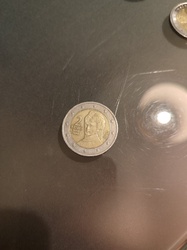
How to Identify the 2 Euro Coin
The 2 Euro coin is the highest-value circulating euro coin, identifiable by its silver-colored outer ring, gold-colored center, and lettered edge that often carries a national motto or symbol.
Read the full 2 Euro Coin encyclopedia entry →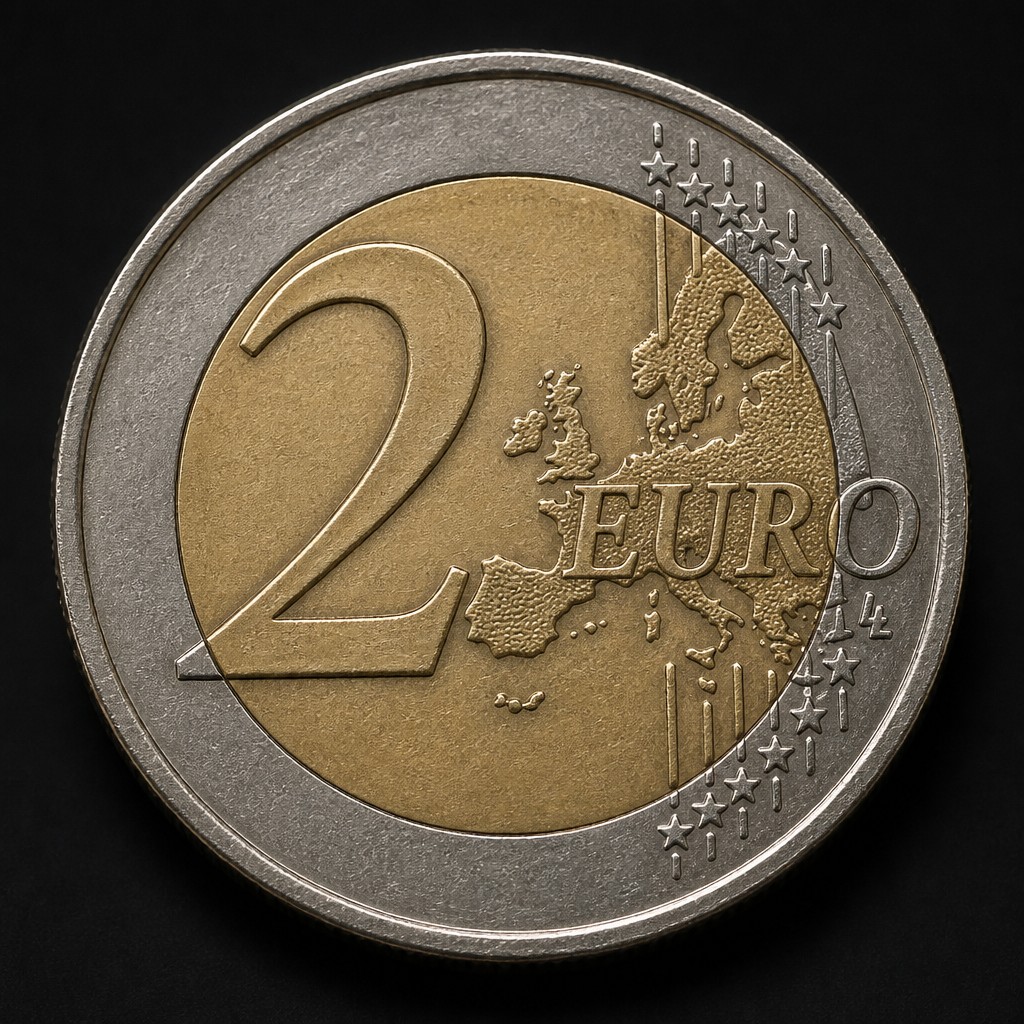
What It Is
The 2 Euro coin is the largest and highest-denomination coin used in everyday circulation across the Eurozone. Introduced alongside the rest of the euro coin series in 2002, it is a popular canvas for commemorative designs, with member states regularly issuing special 2 Euro coins to mark historical anniversaries and events. Because of this, collectors often build entire collections just around 2 Euro commemorative issues, making accurate identification of the specific national design and year especially useful for this denomination.
Common Side Design
The shared European side displays a map of Europe (updated in 2007 to reflect EU enlargement) with the denomination "2 EURO" and the ring of twelve gold or silver stars representing the European Union.
National Side Design
The opposite face carries a design selected by the issuing country, which may be a permanent national design or, especially with this denomination, a rotating commemorative design issued in limited runs for a particular year. Regardless of the artwork, the twelve EU stars remain part of the border design.
Size, Weight & Metal
The 2 Euro coin measures 25.75mm in diameter and weighs 8.5 grams, noticeably larger and heavier than the 1 Euro coin. It is bi-metallic with the colors reversed from the 1 Euro: an outer ring of copper-nickel (silver-white color) surrounding an inner core of nickel-brass (gold-yellow color).
Edge and Mint Marks
A signature feature of the 2 Euro coin is its finely engraved edge, which usually carries lettering, a national motto, small national symbols, or a repeating pattern unique to the issuing country — a strong anti-counterfeiting measure. Small mint marks or engraver initials may also appear in the design field on the national side near the date.
Telling It Apart from Similar Coins
The reversed metal placement compared to the 1 Euro coin (silver ring/gold center versus gold ring/silver center) is the clearest way to distinguish the two at a glance. The larger diameter and heavier weight of the 2 Euro also help separate it from smaller euro denominations.
Judging Condition at a Glance
For standard circulating types, wear appears first on the highest points of the national design and on the fine details of the map on the common side. For commemorative 2 Euro coins, collectors pay close attention to the sharpness of intricate design elements, since these coins are often produced in higher relief or with more detailed artwork than standard national designs.
Authenticity Red Flags
Check that the edge lettering or pattern matches the known design for that country and year, as an incorrect, missing, or poorly executed edge inscription is a common giveaway on counterfeits. Also verify the bi-metallic join is clean and precise, with no discoloration, gaps, or evidence of the center disc being glued or pressed in rather than properly bonded. Weigh the coin if possible, since counterfeit 2 Euro pieces sometimes use incorrect alloys that produce a noticeably different weight or an unusual magnetic response compared to the genuine copper-nickel and nickel-brass combination.
Frequently asked questions
How is the 2 Euro coin different in appearance from the 1 Euro coin?
The colors are reversed: the 2 Euro has a silver-colored outer ring and gold-colored center, while the 1 Euro has a gold-colored outer ring and silver-colored center; the 2 Euro is also larger and heavier.
Why do some 2 Euro coins have unusual designs?
Many countries issue commemorative 2 Euro coins featuring special designs to mark anniversaries or historical events, while still keeping the standard size, weight, and common European side.
What is significant about the edge of the 2 Euro coin?
The edge typically carries fine lettering, a motto, or symbols specific to the issuing country, which serves both as a national touch and an anti-counterfeiting feature.
Does the 2 Euro coin's national side ever change?
Yes, especially for commemorative issues; unlike most 1 Euro and smaller coins, 2 Euro coins are frequently used for limited-run special designs alongside a country's regular design.
2 Euro Coin identified by the community
Recent 2 Euro Coin coins identified with Coin Identifier.