
How to Identify the 2 Escudos
Spot a Spanish gold 2 Escudos by its crowned castles-and-lions arms, warm gold color, ~6.7 g weight, and cob-style hammered strike.
Read the full 2 Escudos encyclopedia entry →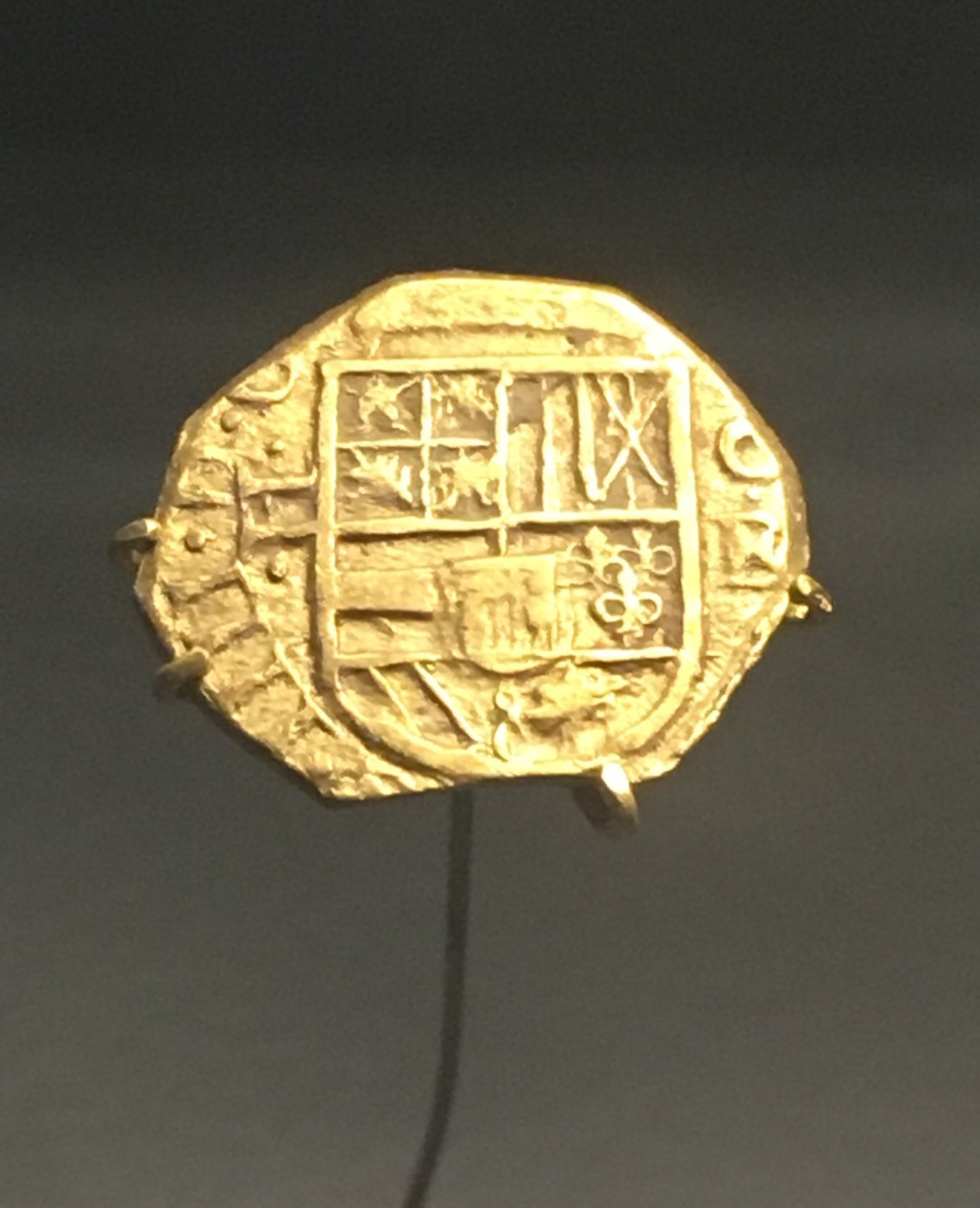
Start with the heraldry, because it is the most reliable diagnostic. A Spanish 2 Escudos of the 1600s carries a crowned coat of arms composed of castles (Castile) and rampant lions (Leon), usually in a quartered shield, matching the observed coin. The surrounding Latin legend names the king with a Christian invocation and often lists the crown's titles; letters may be abbreviated or run off the edge on hand-struck pieces.
Check metal and size next. The coin should be a warm, rich yellow consistent with high-purity gold, not the paler or pinkish tone of low-karat alloy, and it should feel dense for its size. A full 2 Escudos is small, generally around 20 to 22 millimeters, and weighs close to 6.7 grams. A piece that is much lighter than expected, magnetic, or oddly colored warrants caution.
Expect an irregular strike. Because most 1600s examples are cobs, edges are often uneven, the design is frequently off-center, and part of the legend or the date may be missing entirely. This is normal and helps distinguish a genuine period coin from a too-perfect modern copy. Machine-made 'milled' 2 Escudos also exist and are neatly round; both are legitimate depending on the mint and year.
Look for mint marks and assayer initials in the fields beside the shield or cross. These small letters identify the mint, such as S for Seville or M for Mexico, and the assayer responsible, and are key to attributing the coin. Where a date survives, it is usually placed in the legend, though on cobs it is commonly weak or absent.
Finally, be alert to look-alikes and fakes. Cast copies show a grainy surface, soft mushy details, and often a seam around the edge; genuine struck coins have sharper relief even when worn. Because the doubloon is heavily faked, treat an unattributed piece with skepticism and rely on weight, dimensions, and, for anything of value, certification by a recognized grading service.
Frequently asked questions
What is the single best clue that a coin is a Spanish 2 Escudos?
The crowned heraldic shield of castles and lions is the strongest clue. Combined with a warm gold color, a weight near 6.7 grams, and a small diameter, it points firmly to a Spanish gold escudo denomination.
How can I tell a 2 Escudos from the larger 4 or 8 Escudos?
Weight and size are the main separators. The 2 Escudos is about 6.7 grams and roughly 20 to 22 millimeters, while 4 and 8 Escudos are proportionally larger and heavier. The heraldic designs are similar, so measuring is essential.
Are irregular, non-round examples genuine?
Often yes. Hand-struck cobs are naturally irregular, off-center, and clipped. Irregular shape alone is not a warning sign; grainy cast surfaces, edge seams, and wrong weight are the real red flags.
Do I need the coin authenticated before buying or selling?
For anything beyond nominal value, yes. Gold doubloons are widely counterfeited, so certification from a recognized grading service, or solid provenance such as documented shipwreck salvage, protects both buyer and seller.