
How to Identify the 1987 Loon Dollar (Aureate)
Canada's 1987 "Loonie" replaced the silver Voyageur dollar with an 11-sided, aureate-bronze-plated coin featuring a common loon on the reverse, becoming an instantly recognizable national symbol.
Read the full 1987 Loon Dollar (Aureate) encyclopedia entry →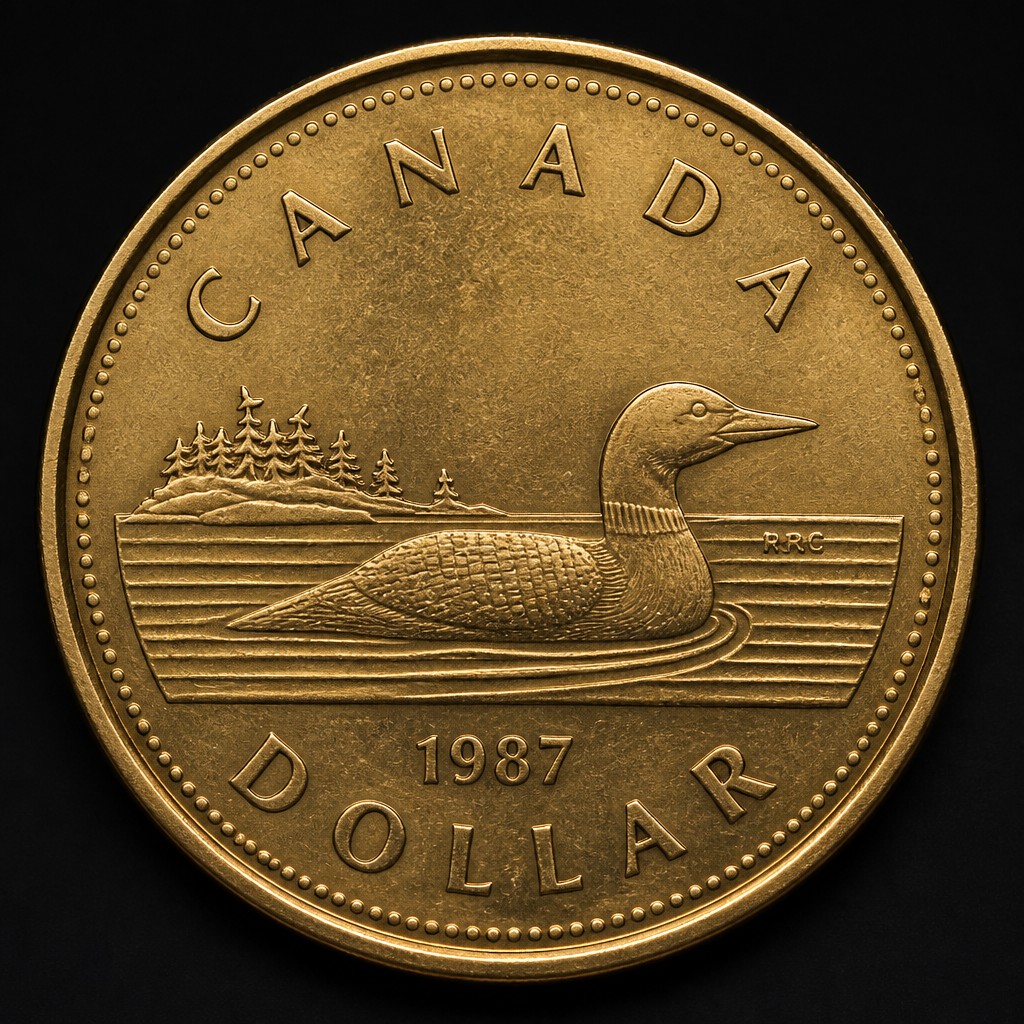
What It Is
The 1987 dollar coin, universally nicknamed the "Loonie," marked a major redesign of Canada's dollar coinage. It replaced the larger round silver-colored Voyageur dollar with a smaller, distinctively shaped, gold-colored coin, largely because the original master dies for the Voyageur reverse had gone missing, prompting the Mint to introduce an entirely new design.
Obverse Design
The obverse carries the standard Queen Elizabeth II portrait used on Canadian coinage of the mid-1980s, with the legend "ELIZABETH II D G REGINA" and the date "1987" below.
Reverse Design
The reverse, designed by wildlife artist Robert-Ralph Carmichael, shows a common loon swimming on water, with "CANADA" and "DOLLAR" arranged around the rim. This simple, naturalistic wildlife scene became one of the most recognizable coin designs in Canadian history.
Size, Weight & Metal
The coin is 11-sided (an undecagon) rather than round, measuring about 26.5 mm across flats, and weighs approximately 7 grams. It is struck in nickel plated with aureate bronze (a gold-colored brass-like coating), giving it the golden appearance that led to its "Loonie" nickname, despite containing no gold.
Mint Marks
Loonies were struck at the Royal Canadian Mint's facilities and do not carry a distinguishing mintmark on standard circulation issues; identification relies on the date, the 11-sided shape, and the loon reverse design.
Telling It Apart from Similar Coins
The 11-sided shape and gold-toned aureate finish make the Loonie easy to distinguish from the earlier round, silver-colored Voyageur dollar at a glance. Within Loonie-only comparisons, collectors look at the date and any special commemorative reverse variants issued in later years, since only the loon design was used in 1987 itself.
Why the Design Changed Suddenly
The abrupt switch from the Voyageur dollar to the loon design is a useful historical marker for identification purposes: any Canadian dollar dated 1987 or later that is round and silver-colored with the canoe scene would be inconsistent with the known transition and should be examined closely, since the Mint moved fully to the 11-sided aureate format starting with this issue.
Judging Condition at a Glance
Wear appears first on the loon's body and the water ripples closest to it, as well as on the Queen's cheek and hair on the obverse. Because the coin's aureate plating can wear thin with heavy circulation, look for a duller, more brassy or worn appearance on well-circulated examples versus a bright, even golden luster on coins in higher grades.
Authenticity Red Flags
Because the coin is not gold despite its color, weight and plating consistency matter more than precious-metal testing. Watch for a coin that is significantly under or overweight, has uneven or flaking plating revealing a different-colored metal underneath, or shows a shape that isn't a clean, consistent 11-sided outline. Soft, poorly defined loon feather detail or blurry lettering can also indicate a low-quality counterfeit rather than an official Mint strike.
Frequently asked questions
Why is the 1987 dollar called the "Loonie"?
Because its reverse design shows a common loon, and the nickname stuck even though the coin contains no actual gold.
What replaced the Voyageur dollar design?
Reportedly after the master dies for the Voyageur reverse were lost in transit, the Mint introduced the loon design as a new standard dollar coin in 1987.
What metal is the Loonie made of?
It's nickel plated with aureate bronze, giving it a gold-like color without any actual gold content.
Why is the coin 11-sided instead of round?
The eleven-sided shape helps people distinguish it by feel and appearance from other coins, particularly the quarter.
Does the 1987 Loonie have a mintmark?
No, standard circulation Loonies from the Royal Canadian Mint do not carry a separate mintmark.