
How to Identify the 1982 Copper/Zinc Transition Lincoln Cent
A guide to the 1982 Lincoln cent, the year the Mint switched from bronze to copper-plated zinc, and how to tell the two compositions and date sizes apart.
Read the full 1982 Copper/Zinc Transition Lincoln Cent encyclopedia entry →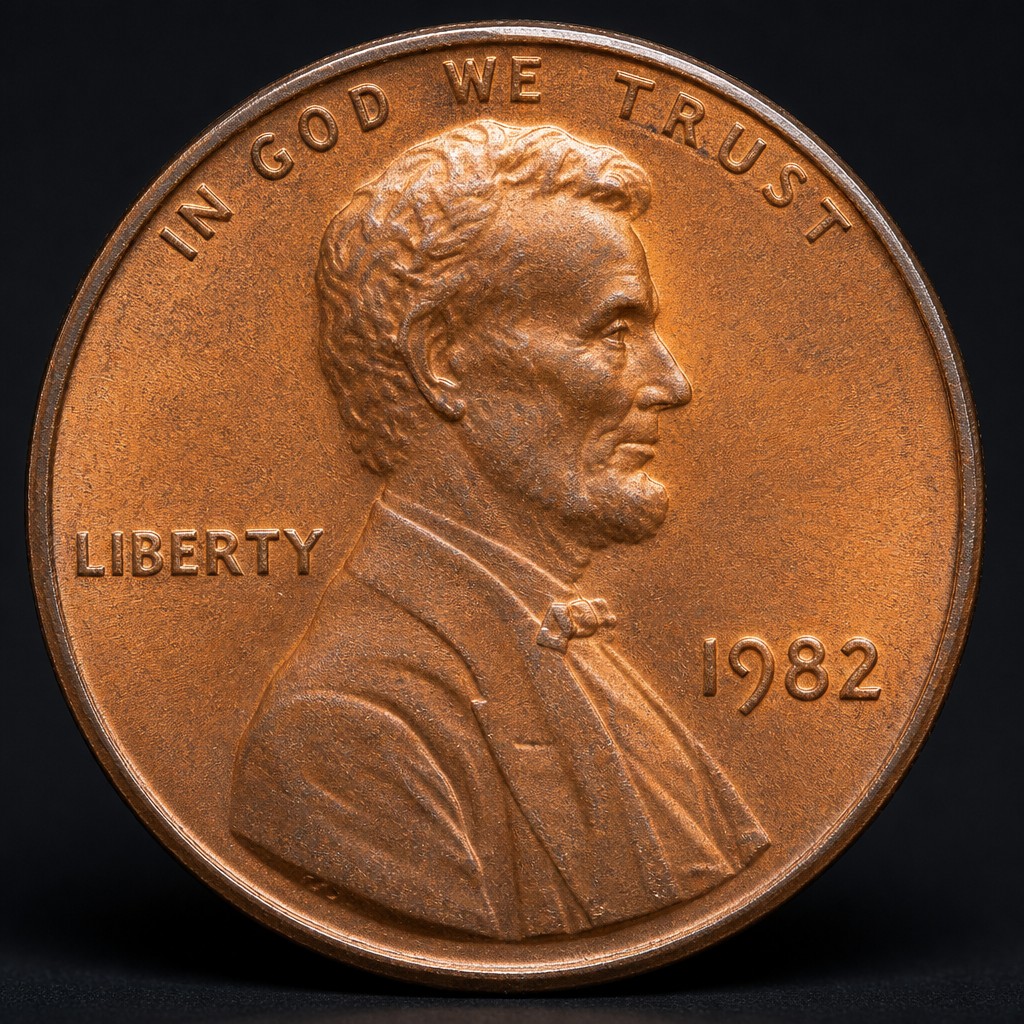
What It Is
1982 was a transition year for the Lincoln cent: partway through the year, the U.S. Mint changed the coin's composition from 95% copper bronze to a copper-plated zinc core, in order to cut material costs. Because the changeover happened mid-year and combined with an unrelated change in the date's lettering size, 1982 cents exist in several distinct combinations that collectors track closely.
Obverse Design
The obverse shows the standard Lincoln Memorial cent design: Lincoln's portrait facing right, "IN GOD WE TRUST" above, "LIBERTY" to the left, and the date to the right, unchanged in basic layout from other years in the series.
Reverse Design
The reverse depicts the Lincoln Memorial building with "UNITED STATES OF AMERICA," "E PLURIBUS UNUM," and "ONE CENT" surrounding it.
Size, Weight, Metal, and Edge
This is the key identifying feature for 1982 cents. Bronze cents (95% copper, 5% tin and zinc) weigh about 3.11 grams, while the newer copper-plated zinc cents (97.5% zinc core with a thin copper plating) weigh about 2.5 grams. Both types share the same 19mm diameter and plain edge, so a simple, accurate scale is the most reliable way to tell them apart.
Mint Marks
1982 cents were struck at both Philadelphia (no mint mark) and Denver (a small "D" to the right of the date), and both mints produced coins in both metal compositions during the changeover.
Telling It Apart from Similar Coins
In addition to the metal change, 1982 also saw a shift in the size of the date's lettering: Large Date, with taller, more widely spaced numerals, and Small Date, with smaller, more tightly spaced numerals where the top of the "1" appears more pointed. Combined with the two metal types and two mint locations, this creates several recognized combinations from a single year. Comparing weight first (to sort bronze from zinc) and then date size (to sort Large Date from Small Date) is the most systematic way to identify a specific 1982 cent.
Judging Condition at a Glance
Zinc-core cents are more prone to environmental damage, including surface pitting, spotting, and corrosion where the thin copper plating has been compromised, especially in coins exposed to moisture. Bronze cents wear more evenly and develop a smoother, natural patina. Check Lincoln's cheek and the Memorial's columns for wear, and inspect the surface closely for any plating blisters or discoloration characteristic of zinc-core coins.
Authenticity Red Flags
Because certain 1982 varieties (particularly certain Denver-mint combinations) are scarcer than others, be cautious of added or altered mint marks, and always verify a claimed variety with an accurate weight measurement rather than sight alone, since the visual difference between bronze and zinc cents can be subtle when a coin is toned or lightly circulated. A coin claimed to be bronze but weighing close to 2.5 grams, or vice versa, cannot be genuine as claimed.
Frequently asked questions
How do I tell if my 1982 cent is bronze or zinc?
Weigh it. Bronze cents weigh about 3.11 grams, while copper-plated zinc cents weigh about 2.5 grams; this is the most reliable way to tell the two apart.
What is the difference between Large Date and Small Date 1982 cents?
Large Date numerals are taller and more widely spaced, while Small Date numerals are smaller and more tightly spaced, with a more pointed top on the '1.'
Why are there so many varieties of the 1982 cent?
The Mint changed the cent's metal composition from bronze to copper-plated zinc mid-year, and this happened alongside an unrelated change in date lettering size, producing multiple combinations.
Do zinc-core 1982 cents damage differently than bronze ones?
Yes, zinc-core cents are more prone to surface pitting, spotting, and plating damage from moisture exposure, while bronze cents tend to wear more evenly and develop a smoother patina.