
How to Identify the 1976 Montreal Olympics Silver Coin Series
Canada's 1976 Olympic silver coin program spanned 28 different $5 and $10 pieces issued 1973-1976, sold mostly in sets, each honoring a different Olympic sport or symbol.
Read the full 1976 Montreal Olympics Silver Coin Series encyclopedia entry →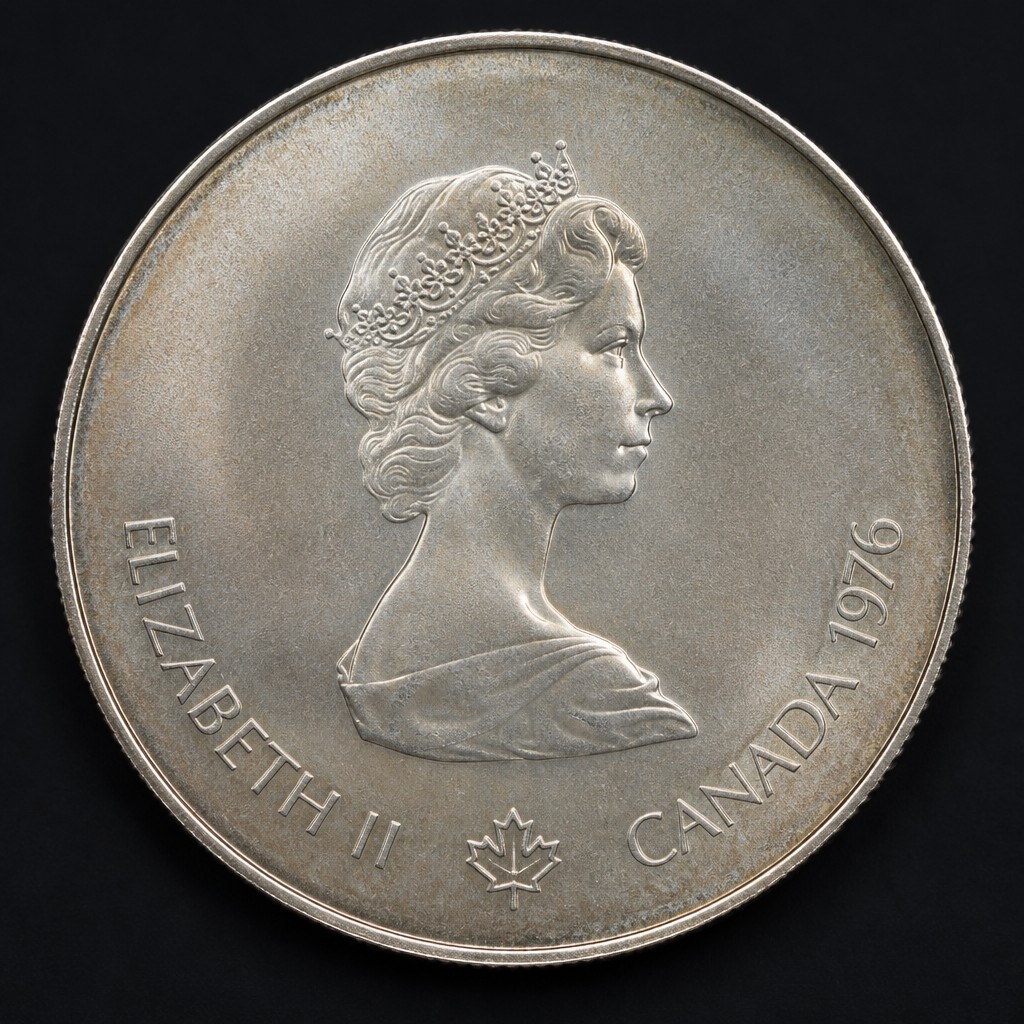
What It Is
The Montreal Olympics coin program was the Royal Canadian Mint's largest commemorative undertaking to that point. Between 1973 and 1976, the Mint released 28 different silver coins in two denominations, $5 and $10, spread across seven annual series of four coins each. They were sold mainly in cased proof and proof-like sets to collectors around the world, financing part of the 1976 Montreal Games.
Obverse Design
Every coin in the series shares the same obverse: a portrait of Queen Elizabeth II. Early issues (1973-74) use the Arnold Machin portrait already familiar from circulating Canadian coinage, showing the Queen wearing a tiara. The legend reads "ELIZABETH II" with "CANADA" and the denomination and date arranged around the rim.
Reverse Design
This is where the set gets interesting for identification, since each coin carries a unique reverse. Themes include Olympic symbols (the flame, rings, and map of the world), sporting venues (Montreal's skyline and stadium), and individual sports such as canoeing, sailing, swimming, track and field, wrestling, boxing, and cycling. Because 28 distinct dies exist, identifying a specific coin means matching the reverse artwork and the small denomination/date to a checklist rather than relying on a single generic design.
Size, Weight & Metal
The $5 coins are struck in 92.5% or 93.3% silver (composition varies slightly by year) and weigh approximately 24.3 grams with a diameter near 38 mm. The $10 coins are larger and heavier, roughly 48.6 grams and 45 mm, in the same silver fineness range. Both denominations have a plain, reeded, or lettered edge depending on the specific issue year, so edge treatment can help narrow down which sub-series a coin belongs to.
Mint Marks & Packaging
These coins carry no separate mintmark since all were struck at the Royal Canadian Mint in Ottawa or Winnipeg. Instead, identification relies on the date (1973 through 1976) stamped on the obverse and the reverse motif. Most surviving examples come from original Royal Canadian Mint cases with certificates of authenticity, velvet-lined boxes, and outer sleeves, which are useful supporting evidence but not required for the coin itself to be genuine.
Telling It Apart from Similar Coins
Because the design family is large, confusion usually happens between different years' sports themes rather than with other countries' coins. Compare the specific reverse scene against a checklist of the 28 issues, note the date, and check the denomination ($5 versus $10) alongside the coin's diameter, since the two denominations are visibly different sizes.
Judging Condition at a Glance
Most surviving pieces are proof or brilliant uncirculated, sold directly to collectors and rarely circulated. Look for hairline scratches from case handling, sliding marks from movement inside plastic capsules, and any haze or milky toning from long-term poor storage. Cameo contrast (frosted design against a mirror field) on true proofs is a sign of an original, well-preserved strike.
Authenticity Red Flags
Because these are silver bullion-content coins, watch for coins that feel unusually light, have soft or mushy design details (a sign of a cast copy rather than a struck coin), or show a magnetic response, since genuine silver issues are not magnetic. Mismatched cases, missing certificates, or packaging that doesn't match the coin's date are worth noting but don't by themselves confirm a problem.
Frequently asked questions
How many coins are in the 1976 Montreal Olympics silver set?
There are 28 different coins total: seven yearly series of four designs each, split between $5 and $10 denominations, issued from 1973 through 1976.
What metal are these coins made of?
They are struck in sterling or similar silver alloys, generally in the 92.5%-93.3% fineness range, not base metal.
Do these coins have mintmarks?
No. All were produced by the Royal Canadian Mint, so there is no separate mintmark to look for; identification relies on date and reverse design.
How can I tell which of the 28 designs I have?
Check the date and denomination first, then match the reverse artwork (a specific sport, symbol, or venue) against a checklist of the series.
Were these coins meant to circulate?
No, they were sold as collector and proof issues to help fund the Montreal Olympics and were not intended for everyday circulation.