
How to Identify the 1974 Aluminum Cent
A factual guide to the extremely rare 1974 aluminum cent pattern, an experimental coin never released to circulation, covering its design, weight, and legal status.
Read the full 1974 Aluminum Cent encyclopedia entry →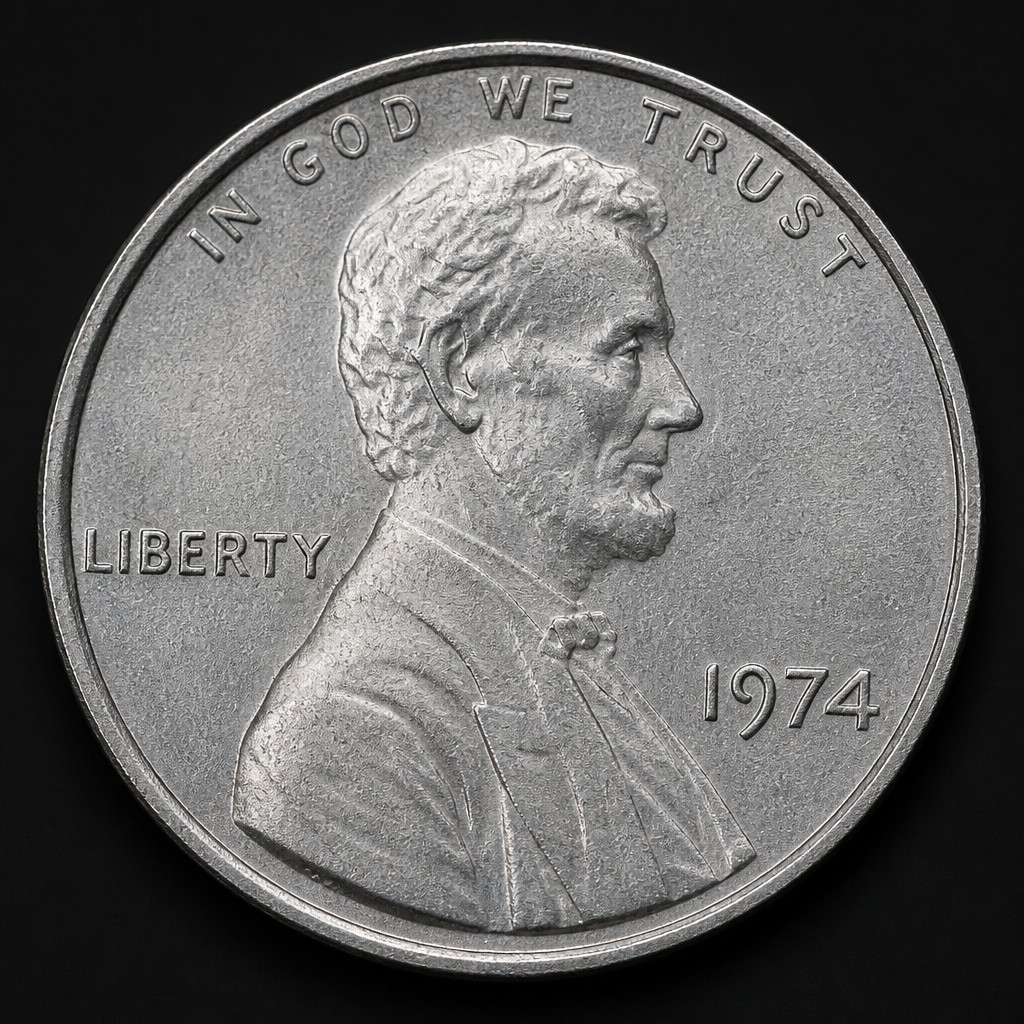
What It Is
The 1974 aluminum cent was an experimental pattern coin proposed by the U.S. Mint in response to rising copper prices in the early 1970s, which threatened to make the cent's metal worth more than its face value. Test pieces were struck in aluminum in 1973 and 1974 to evaluate whether the composition could replace bronze, but the plan was abandoned and the coin was never officially released into circulation.
Obverse Design
The obverse uses the standard Lincoln Memorial cent design of the era: Abraham Lincoln facing right, "IN GOD WE TRUST" above, "LIBERTY" to the left, and the date to the right, identical in layout to regular-issue cents from the period.
Reverse Design
The reverse shows the Lincoln Memorial building, with "UNITED STATES OF AMERICA," "E PLURIBUS UNUM," and "ONE CENT" around it, matching the design used on ordinary Lincoln cents from 1959 to 2008.
Size, Weight, Metal, and Edge
What sets this piece apart is its metal: it was struck in an aluminum alloy rather than the standard bronze, giving it a pale, silvery-gray color and a dramatically lighter weight of well under one gram, compared to about 3.11 grams for a normal bronze cent of the era. The diameter and edge match a normal cent.
Mint Marks
Specimens are known from both the Philadelphia and Denver Mints; a Denver-struck example would carry a small "D" mint mark to the left of the Memorial building on the reverse, while Philadelphia strikes show no mint mark.
Telling It Apart from Similar Coins
The most reliable identifier is weight: a genuine aluminum cent weighs a small fraction of a normal bronze or copper-plated zinc cent, and its silvery-gray color also differs noticeably from the reddish-brown or dull orange tones of ordinary cents. Because the coin was never released, virtually all confirmed genuine specimens are already accounted for in institutional or documented private hands, following a widely reported legal dispute over ownership of one example.
Judging Condition at a Glance
Because so few specimens exist and their history is closely documented, condition assessment for this coin is far less relevant than provenance and authentication; any evaluation should focus first on confirming the piece's origin and legitimacy rather than assigning a typical circulated or uncirculated grade.
Authenticity Red Flags
This is one of the most heavily counterfeited or misrepresented pattern coins due to its fame and value. Common issues include ordinary cents plated or coated to look silvery-gray, cast copies with soft or mushy detail, and coins claiming an aluminum composition that, when weighed, come in far closer to the standard bronze or zinc cent weight. Given the coin's documented rarity and the fact that the U.S. government has asserted ownership over surviving examples in past legal proceedings, any purported specimen warrants a high degree of caution and verification before being accepted as genuine.
Frequently asked questions
Why was an aluminum cent ever made?
The Mint tested aluminum as a cheaper substitute for copper in the early 1970s because rising copper prices threatened to make cents cost more to produce than their face value.
Was the aluminum cent ever officially released?
No, the idea was scrapped and the coin never entered circulation; only a small number of test pieces are known to exist.
How much does a genuine 1974 aluminum cent weigh?
It weighs well under one gram, far lighter than a standard bronze cent of the era, which weighs about 3.11 grams.
Is it legal to own a 1974 aluminum cent?
Surviving specimens have been the subject of legal disputes, with the government asserting they remain U.S. property; ownership of any example should be treated as a serious, well-documented legal question rather than a simple collectible.