
How to Identify the 1972 Doubled Die Lincoln Cent
A guide to spotting the famous 1972 doubled die obverse Lincoln cent, where strong doubling appears in the date and lettering, and how to tell it apart from ordinary machine doubling.
Read the full 1972 Doubled Die Lincoln Cent encyclopedia entry →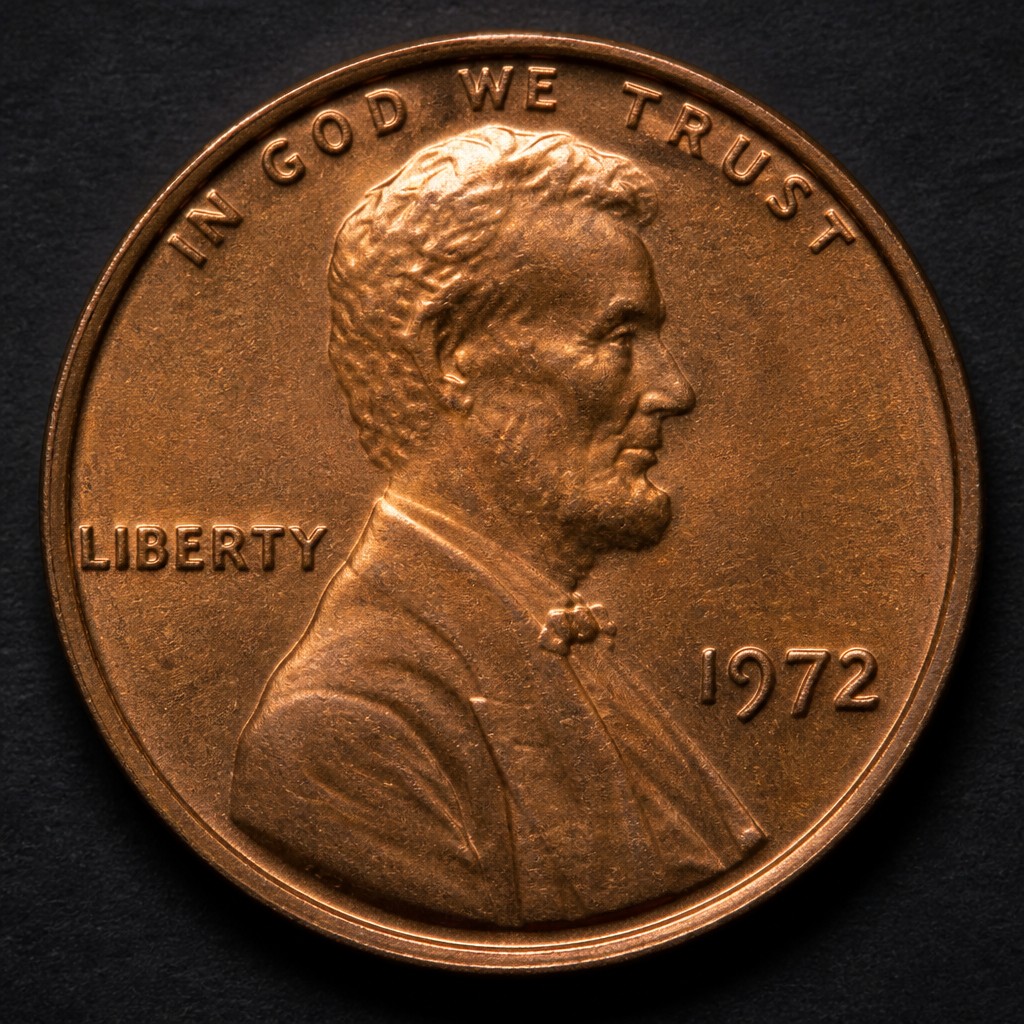
What It Is
The 1972 Doubled Die Obverse (DDO) is a well-known die variety of the Lincoln Memorial cent, created when the obverse working die received two hub impressions at slightly different angles or positions during the die-making process. Because the doubling is baked into the die itself, every coin struck from that die shows the same doubling, and all confirmed examples of the strongest, most collected variety come from the Philadelphia Mint.
Obverse Design
The base design is the standard Memorial cent obverse: Lincoln facing right, "IN GOD WE TRUST" above his head, "LIBERTY" to the left, and the date to the right. On the doubled die, "LIBERTY," "IN GOD WE TRUST," and the date "1972" all show clear, separated doubling, with a distinct rounded second outline running alongside the primary design elements rather than a blurry, shifted smear.
Reverse Design
The reverse is the standard Lincoln Memorial building design used from 1959 to 2008, showing the Memorial's columns and steps, with "ONE CENT" below and "UNITED STATES OF AMERICA" arched above. The reverse die was not affected and shows no doubling on this variety.
Size, Weight, and Metal
As a pre-1982 cent, it is struck in the older 95% copper bronze alloy, with the remaining 5% made up of tin and zinc. It weighs about 3.11 grams, measures 19 mm across, and has a plain edge, making it noticeably heavier than the copper-plated zinc cents made from 1982 onward.
Mint Marks
There is no mint mark on the recognized 1972 doubled die, confirming a Philadelphia strike; 1972 cents bearing a "D" for Denver are a different, unrelated die and do not carry this doubling.
Telling It Apart From Machine Doubling
This is the most important distinction for this coin. Genuine doubled-die doubling shows a rounded, separated, shelf-like second image with consistent depth and clarity across the lettering and date, because it comes from an actual doubled hub impression. Machine doubling, also called strike doubling, is far more common and worth little; it happens when a loose or worn die shifts slightly during striking, producing a flat, shallow, shaved-looking shift on raised elements only, without the rounded separation that defines a true doubled die.
Judging Condition
Grade it like any Lincoln Memorial cent: check Lincoln's cheek, hair, and coat lines for the smoothing and loss of detail that comes with wear. Because doubled-die varieties draw more collector interest, sharper, less-worn examples where the doubling is still crisp and undamaged are generally considered more desirable than heavily worn pieces.
Authenticity Red Flags
Because genuine 1972 doubled dies are actively sought after, ordinary machine-doubled 1972 cents are sometimes mislabeled or misidentified as the true doubled-die variety. Compare the doubling pattern carefully against reliable reference photos of the known die before concluding a coin is the genuine article, and be cautious of coins where doubling appears on only some letters, or in a pattern that doesn't match the documented variety.
Frequently asked questions
Which mint struck the 1972 doubled die cent?
Philadelphia; it has no mint mark.
How is doubling different from machine doubling?
True doubled-die doubling looks rounded and separated; machine doubling looks flat and shaved, with no real separation.
What metal is a 1972 cent made of?
95% copper bronze alloy, since the zinc-core cent didn't start until 1982.
Is every 1972 cent with fuzzy lettering a doubled die?
No, fuzzy or shifted lettering is often just machine doubling or wear, not the true die variety.