
How to Identify the 1960 Large Date over Small Date Lincoln Cent
A Lincoln Memorial Cent variety where a small-date style numeral appears combined with or beneath a large-date punch, distinguishing it from the standard Large Date and Small Date varieties of 1960.
Read the full 1960 Large Date over Small Date Lincoln Cent encyclopedia entry →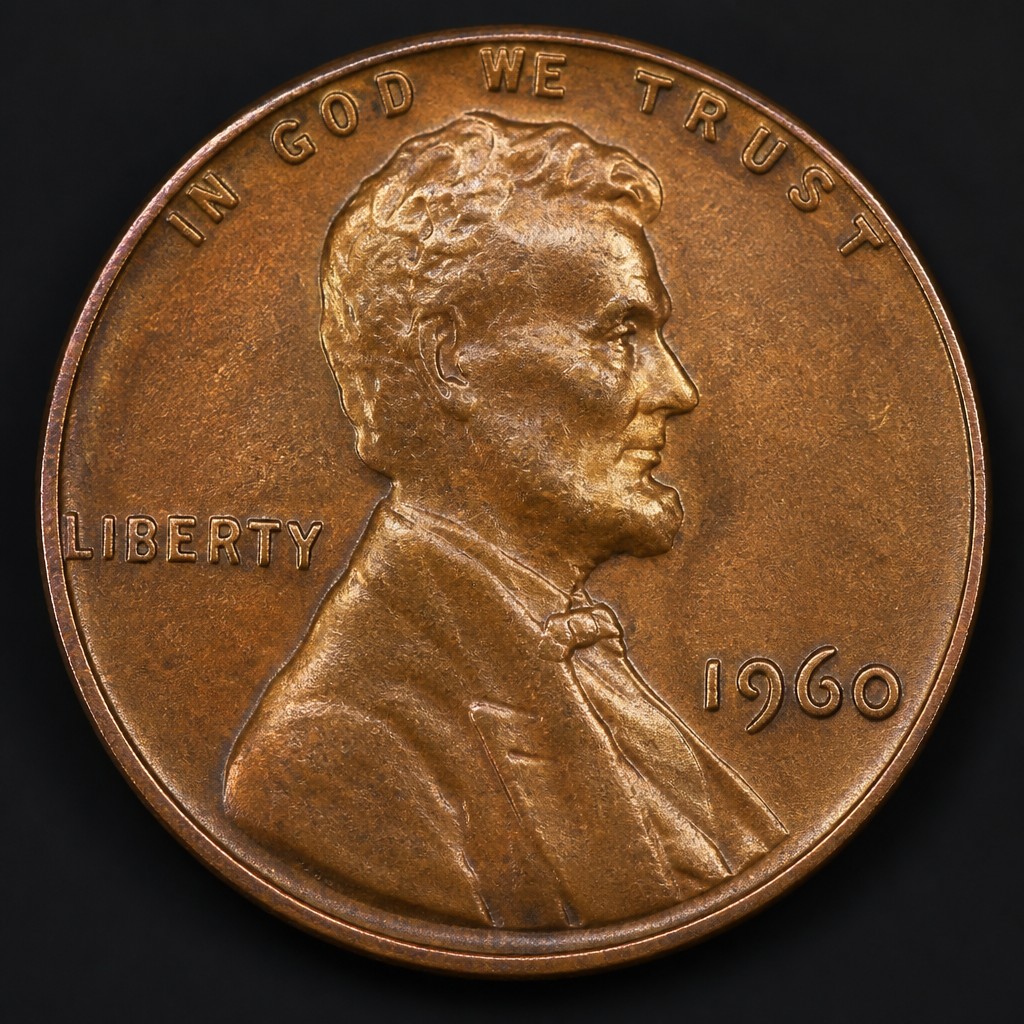
What It Is
The 1960 Lincoln Cent is known for two distinct date-size varieties, Large Date and Small Date, caused by different date logotype punches used that year at the Philadelphia and Denver mints. The "Large Date over Small Date" describes examples where evidence of both punch styles appears on the same die, typically as a large date with remnants of an underlying small date visible on close inspection.
Obverse Design and Inscriptions
The obverse shows Lincoln's portrait facing right, with "IN GOD WE TRUST" above, "LIBERTY" to the left, and the date to the right. The key identifying feature is the size and shape of the numerals in "1960," particularly the "6" and "0," which differ noticeably between the large and small date punches.
Reverse Design and Inscriptions
The reverse depicts the Lincoln Memorial building, with "UNITED STATES OF AMERICA," "E PLURIBUS UNUM," and "ONE CENT" arranged around and below it, a design used from 1959 through 2008. This side of the coin does not vary based on the date size and offers no help in distinguishing the variety.
Size, Weight, Metal, and Edge
The coin measures 19 mm in diameter and weighs 3.11 grams, made of a bronze alloy of 95% copper with 5% tin and zinc. The edge is plain.
Mint Marks and Where to Find Them
The mint mark, when present, sits on the obverse just below the date. No mint mark indicates Philadelphia, while "D" indicates Denver. Both Large Date and Small Date varieties, and reported overlap examples, are known from each mint, so check the mint mark separately from the date-size comparison.
Telling It Apart From Similar Coins
On the Large Date variety, the "6" has a rounded, open bowl and the "0" is wider and taller; on the Small Date, the numerals are noticeably more compact and the "6" appears thinner. For a genuine "Large Date over Small Date," look for doubling or an extra outline within the numerals, especially the "9" and "6," suggesting the die shows evidence of both punch sizes rather than a single, uniform style. Side-by-side comparison with reference images of standard Large Date and Small Date 1960 cents is the most reliable way to identify this overlap.
Judging Condition at a Glance
Check Lincoln's cheek, coat, and hair for smoothing from wear, and examine the Memorial building's columns on the reverse for sharpness. Because the key identifying feature is in the date's fine details, a well-struck coin with minimal wear makes distinguishing date sizes and any overlap doubling much easier than a worn example.
Authenticity Red Flags
Because Small Date 1960 cents (especially from Philadelphia) are more sought after than Large Date examples, be cautious of coins where the date area shows signs of tooling or alteration meant to make a Large Date numeral resemble a Small Date, or vice versa. A genuine variety shows natural, die-struck numeral shapes consistent with the rest of the coin's strike, not scratched or reshaped digits.
Frequently asked questions
What is the difference between Large Date and Small Date 1960 cents?
The two varieties use different date-size punches; the Large Date numerals are noticeably bigger and rounder, especially the 6 and 0, while the Small Date numerals are more compact and thinner.
Which is rarer, Large Date or Small Date?
The Small Date variety, particularly from Philadelphia, is generally considered scarcer and more sought after than the Large Date variety.
Where is the mint mark on a 1960 cent?
It is located on the obverse just below the date, with no letter for Philadelphia and a D for Denver.
How can I compare date sizes accurately?
Place the coin side by side with reference images of confirmed Large Date and Small Date 1960 cents and compare the shape and size of the numerals, especially the 6 and 9.