
How to Identify the 1955 Poor Man's Doubled Die Lincoln Cent
A modest doubling variety on the 1955 Lincoln cent, prized as an affordable alternative to the famous 1955 Doubled Die Obverse for collectors who want a visible doubling effect without the high price tag.
Read the full 1955 Poor Man's Doubled Die Lincoln Cent encyclopedia entry →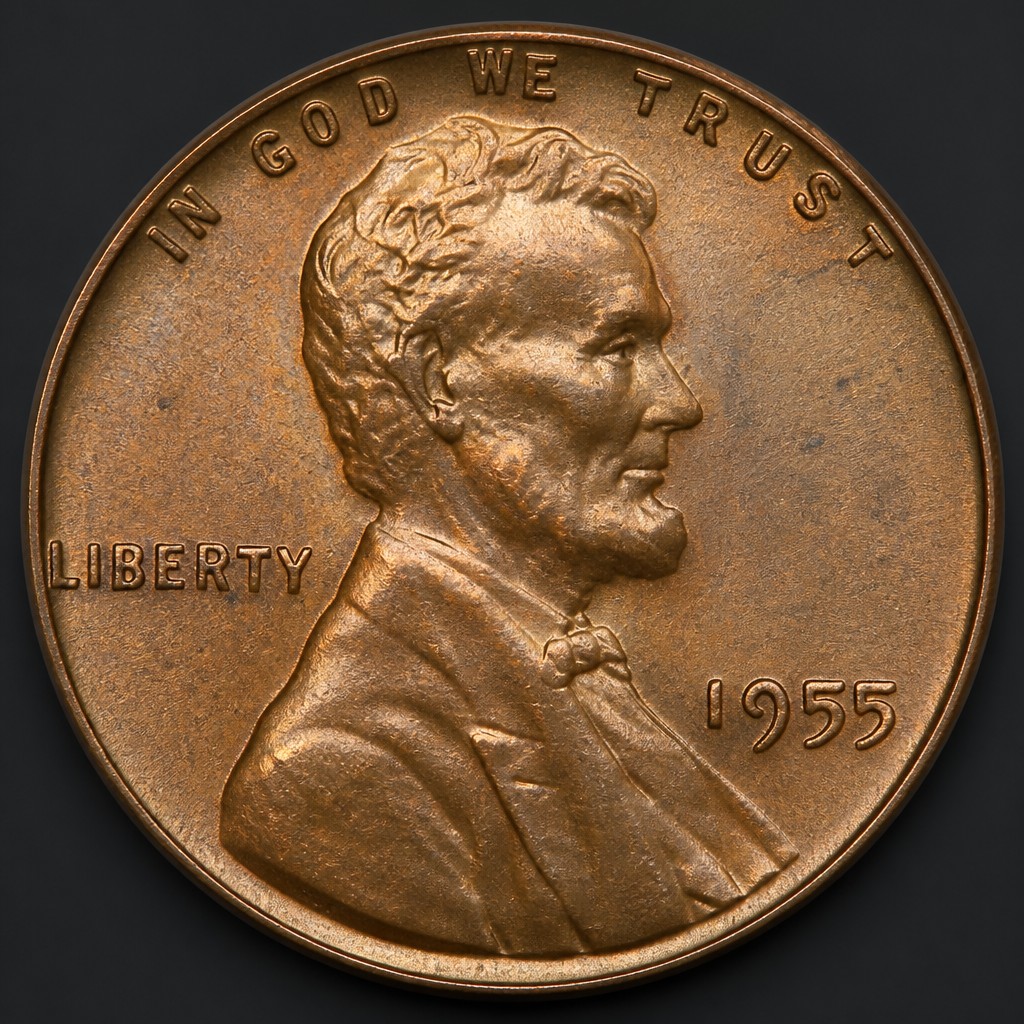
What This Coin Is
The 1955 Poor Man's Doubled Die is a lesser doubled-die variety struck the same year as the legendary and far more valuable 1955 Doubled Die Obverse cent, but produced from a different, less dramatically doubled working die. It earned its nickname because it lets budget-minded collectors own a genuine 1955 doubling variety at a fraction of the cost of the famous dramatic doubled-die piece.
Obverse Design & Inscriptions
The obverse features the standard Lincoln portrait, "IN GOD WE TRUST," "LIBERTY," and the date. On this variety, look for mild doubling in the date and lettering rather than the bold, easily seen shelf-like doubling that defines the famous 1955 DDO; the effect here is more subtle and often requires magnification to appreciate fully.
Reverse Design & Inscriptions
The reverse shows the standard wheat ears design with "ONE CENT" and "UNITED STATES OF AMERICA," without any doubling attributed to this particular variety, since the doubling in question occurs on the obverse working die.
Size, Weight, Metal & Edge
This coin uses the standard bronze alloy cent composition of the era, weighing about 3.11 grams, with the usual diameter and plain edge for a Lincoln cent. There is nothing unusual about its physical specifications; identification rests entirely on the doubling seen in the design.
Mint Marks & Where to Find Them
Check beneath the date for a mint mark; a blank space indicates Philadelphia, which is where this variety, like the famous 1955 DDO, was struck. There is no mint mark variety confusion here since the doubling die is specific to Philadelphia-struck coins of this date.
Telling It Apart From Similar Coins
The key distinction from the famous 1955 Doubled Die Obverse is the strength of the doubling: the true DDO shows dramatic, unmistakable doubling of the date and legend visible to the naked eye, while the Poor Man's variety shows a milder, secondary doubling that is easier to overlook and often best confirmed under magnification by comparing against reference photos of the specific doubled-die variety.
Judging Condition at a Glance
Because collector interest centers on the doubling itself rather than pristine condition, coins with moderate circulation wear are still collectible as long as the doubling remains identifiable. Sharper, less worn examples with the doubling still clearly visible under magnification command more attention among variety specialists.
Authenticity Red Flags
Doubling caused by machine damage, strike doubling, or mechanical shift can superficially resemble a true doubled die but has a flat, shelf-like or smeared look rather than the rounded, separated doubling produced by a genuine hubbing error. Comparing a suspected coin against published photographs of this specific variety, ideally with magnification, is the most reliable way to avoid misidentifying ordinary machine doubling as this variety.
Frequently asked questions
How does this differ from the famous 1955 Doubled Die cent?
The doubling on this variety is much milder and less obvious, making it far less valuable but still a genuine, collectible doubled-die error from the same year.
Do I need magnification to see the doubling?
Usually yes — the effect is subtler than the dramatic doubling on the famous 1955 DDO, so a loupe helps confirm it.
Where was this variety struck?
Philadelphia, identifiable by the absence of a mint mark below the date, the same mint that produced the famous 1955 DDO.
Can ordinary machine doubling be mistaken for this variety?
Yes, so it's important to compare against reference images of this specific doubled die rather than assuming any minor doubling qualifies.