
How to Identify the 1955 Doubled Die Lincoln Cent
A guide to spotting the dramatic doubling on the date and lettering of the 1955 doubled die obverse cent, plus how to rule out common machine-doubling look-alikes.
Read the full 1955 Doubled Die Lincoln Cent encyclopedia entry →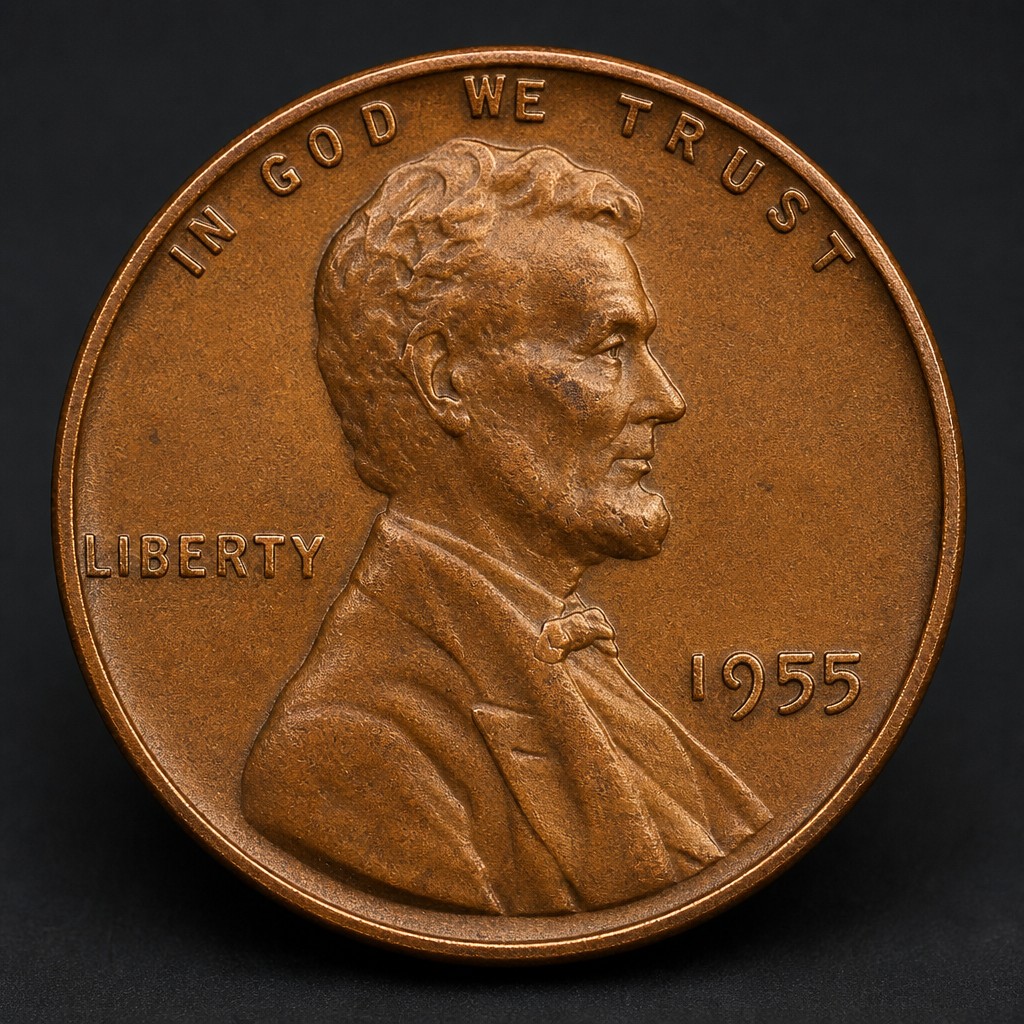
What It Is
The 1955 Doubled Die Obverse cent resulted from a die-making error in which the working die received two misaligned hub impressions, creating strong, plainly visible doubling on part of the design. It is one of the most famous and easily recognized doubled die errors in U.S. coinage.
Obverse (Front)
The doubling is concentrated on the date "1955" and the words "LIBERTY" and "IN GOD WE TRUST." Genuine examples show clear separation between the two images, giving the numerals and letters a bold, shadowed, almost 3-D appearance rather than a blurry or shelf-like smear. Lincoln's portrait itself does not show the doubling.
Reverse (Back)
The reverse is the standard wheat-ears design of the era, with "ONE CENT" and "UNITED STATES OF AMERICA," and shows no doubling; the error is limited to the obverse die.
Size, Weight, Metal, and Edge
The coin is bronze, 19 mm in diameter, about 3.11 grams, with a plain edge, matching all other bronze Lincoln cents of the period.
Mint Marks
This doubled die is known only from the Philadelphia Mint, so genuine examples carry no mint mark below the date. A coin with a "D" or "S" mint mark is not this variety, regardless of any doubling present.
Telling It Apart from Similar Coins
The key distinction is between true die doubling and ordinary "machine doubling" (also called strike doubling), which is common on many coins and creates a flat, shelf-like, low ridge next to letters rather than a fully separated second image. On the genuine 1955 doubled die, both images of each letter and digit have full, rounded, distinct outlines; on machine doubling, the secondary image looks smeared, flat, and lacks the same rounded depth.
Judging Condition at a Glance
Grade this coin the same way as any Wheat cent: check Lincoln's cheek, jaw, and hair for wear, and look at the wheat stalks on the reverse for flattening. Because collectors value the doubling itself, coins are often assessed both for the sharpness of the doubling and for overall surface preservation.
Authenticity Red Flags
Because genuine examples are valuable, look out for coins with artificially induced doubling from machine doubling being misrepresented as the true error, and for added mint marks (since the variety should show none). Comparing the pattern of doubling directly against reference images of the "LIBERTY," "IN GOD WE TRUST," and date positions is the most reliable way to confirm a genuine example, since the doubling pattern of a true doubled die is consistent from coin to coin.
Frequently asked questions
What parts of the coin show the doubling?
The date and the words 'LIBERTY' and 'IN GOD WE TRUST' on the obverse show strong, clearly separated doubling; the reverse and Lincoln's portrait are normal.
How is this different from ordinary machine doubling seen on many coins?
True doubled dies show two complete, rounded, separated images, while machine doubling produces a flat, shelf-like smear next to the original letters.
Does this variety exist with a mint mark?
No, it was struck only at the Philadelphia Mint, so genuine examples have no mint mark below the date.
What metal and size is this coin?
It is a standard bronze Lincoln cent, 19 mm in diameter and about 3.11 grams, with a plain edge.