
How to Identify the 1950-D Jefferson Nickel
A look at the low-mintage 1950-D Jefferson Nickel, including its design, mint mark placement, and how to judge its condition.
Read the full 1950-D Jefferson Nickel encyclopedia entry →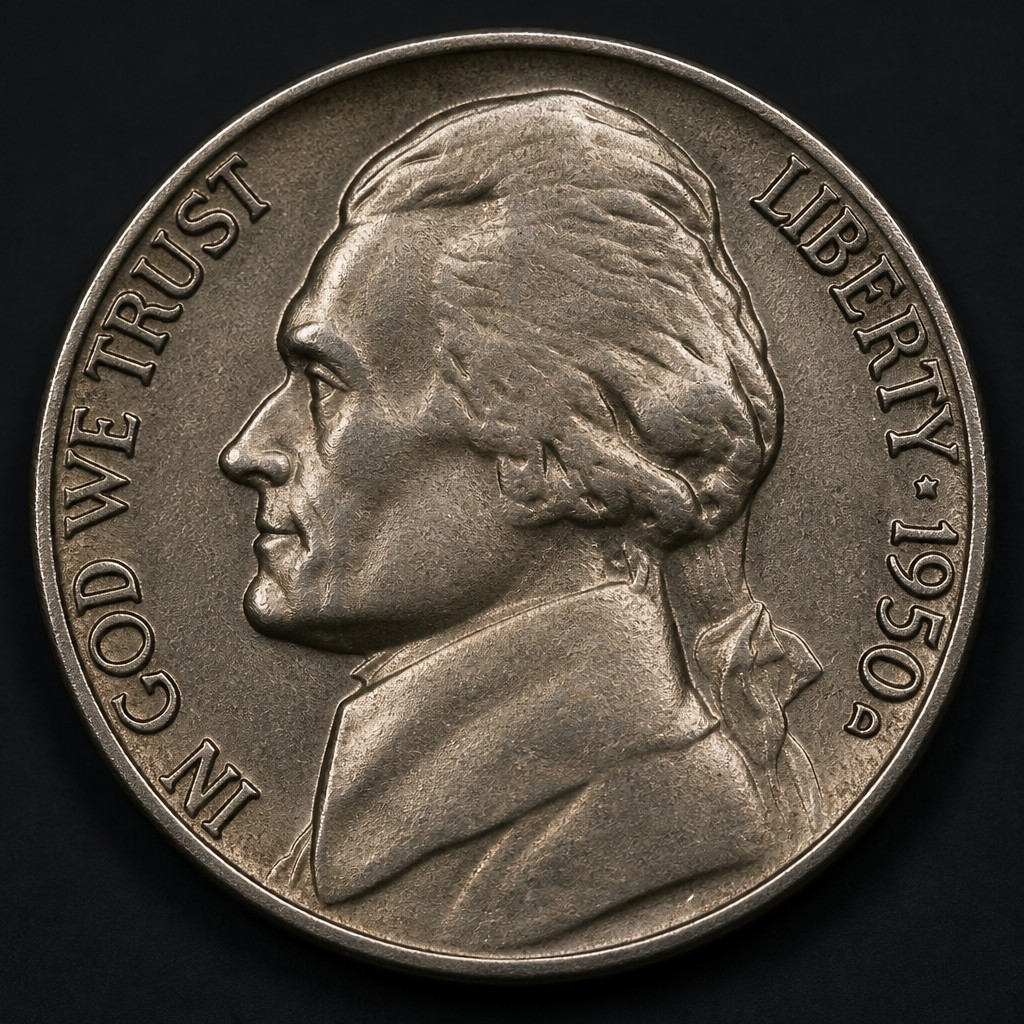
What It Is
The 1950-D Jefferson Nickel is a regular-issue five-cent piece from the Denver Mint that became famous for having the lowest mintage of any circulating Jefferson Nickel struck for general use. Its low production run was publicized at the time it was released, so many rolls and even full mint-sealed bags were saved by the public, but it remains a popular and frequently sought date for collectors assembling the series by date and mint mark.
Obverse Design
The obverse portrays Thomas Jefferson in profile facing left, based on a bust by French sculptor Jean-Antoine Houdon. LIBERTY is inscribed along the left rim, IN GOD WE TRUST curves along the right rim, and the date sits at the lower right near the shoulder truncation.
Reverse Design
The reverse shows Jefferson's home, Monticello, with MONTICELLO and FIVE CENTS lettered beneath it. E PLURIBUS UNUM appears just above the building's roofline, and UNITED STATES OF AMERICA arches around the top rim.
Size, Weight, Metal, Edge
The coin is 21.2mm in diameter, weighs 5.00 grams, and is composed of 75% copper and 25% nickel. The edge is plain, without reeding.
Mint Marks
For nickels struck before 1968, the mint mark sits on the reverse, to the right of the Monticello building near its base. On a 1950-D, look for a small "D" in that spot; coins without a mint mark from this era were struck in Philadelphia, since Philadelphia did not use a mint mark until 1980.
Telling It Apart from Similar Coins
Because the small "D" mint mark is set against a plain field, compare it carefully to the date to make sure both are original and consistent with each other rather than added later. Some buyers confuse a well-struck 1950-D with other low-mintage Denver nickels of the era, so always verify the full date and mint mark together rather than relying on mintage reputation alone or judging the coin from a distance.
Grading at a Glance
Wear first shows on Jefferson's cheekbone and along his jawline on the obverse. On the reverse, collectors pay close attention to the steps of Monticello; a coin with all six steps fully separated and unworn earns a "Full Steps" designation, which is scarcer than an otherwise similar coin with blended, mushy, or worn step lines, even among coins of the same date and grade in other respects.
Authenticity Red Flags
Because the date's low mintage drew public attention early on, watch for a mint mark that has been added to a common Philadelphia coin, or one that looks re-cut, oversized, or oddly placed compared to genuine examples. Also be cautious of coins that have been cleaned or polished to simulate an uncirculated look; cleaning typically leaves hairline scratches, an unnaturally bright and flat luster, and a loss of the natural, slightly frosty texture seen on original mint-state coins.
Frequently asked questions
Where is the mint mark on a 1950-D Jefferson Nickel?
On the reverse, to the right of the Monticello building, near its base.
Why is the 1950-D considered a key date?
It has the lowest mintage of any regular Jefferson Nickel, though heavy hoarding at the time means many survive in mint state.
What metal is a 1950-D nickel made of?
Standard 75% copper and 25% nickel, the same alloy used for the series outside the 1942-1945 wartime years.
How do I know if the steps on Monticello are 'Full Steps'?
Look for all the horizontal step lines below the building fully separated and unbroken by wear or a weak strike.