
How to Identify the 1949 Newfoundland Silver Dollar (Matthew ship)
A commemorative Canadian dollar marking Newfoundland's 1949 entry into Confederation, its reverse depicting John Cabot's ship the Matthew under full sail.
Read the full 1949 Newfoundland Silver Dollar (Matthew ship) encyclopedia entry →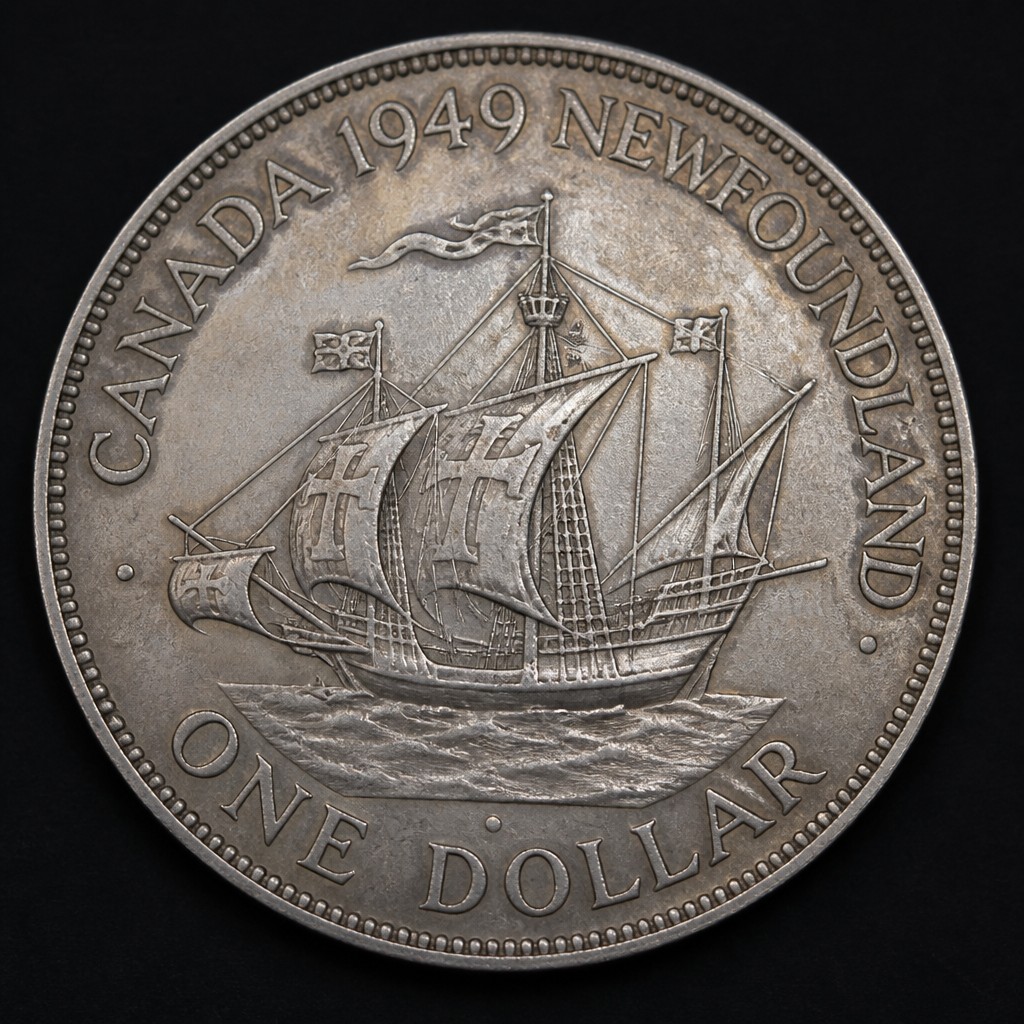
What Is This Coin?
This coin commemorates Newfoundland officially joining Canadian Confederation on March 31, 1949, becoming the country's tenth province. Its reverse honors Newfoundland's seafaring history through a depiction of John Cabot's exploration ship. It stands out among Canadian commemorative dollars for celebrating a specific province's union with the country rather than a national anniversary or royal event.
Obverse Design
The obverse shows King George VI's portrait facing left. By this date, the royal title had been shortened following Indian independence, so the legend reads "GEORGIVS VI DEI GRATIA REX" without the earlier "ET IND IMP" (Emperor of India) wording found on coins from 1947 and before — a useful clue for dating a worn George VI coin.
Reverse Design
The reverse depicts the sailing ship Matthew, associated with John Cabot's 15th-century voyage to Newfoundland, shown under full sail on open water. "NEWFOUNDLAND" and the date "1949" appear around the design, along with "CANADA" identifying the issuing country. The ship is rendered with visible masts, sails, and hull lines, giving the design a strong nautical character that sets it apart from the more abstract or heraldic commemoratives used in other years.
Size, Weight & Metal
The coin is struck in .800 fine silver, weighing approximately 23.33 grams with a diameter of 36 mm and a reeded edge, consistent with other Canadian silver dollars of the period. Its heft and bright silver color when uncirculated are good general confirmations that a coin belongs to this large-format commemorative dollar family rather than a smaller circulating denomination.
Mint Marks & Where to Find Them
No mint mark appears; it was produced at the Royal Canadian Mint. As with other commemorative dollars of this era, there is no mint designation to check, so identification depends entirely on the pictorial reverse and inscriptions.
Telling It Apart From Similar Coins
The sailing ship design is unique to this issue, distinguishing it clearly from the Voyageur canoe, Parliament Buildings, or other commemorative reverses used in neighboring years. The obverse legend change (removal of "IND IMP") also helps separate this and other post-1948 George VI coins from earlier issues in the reign. If the reverse is illegible from wear, the "NEWFOUNDLAND" wording (rather than a scene tied to a national anniversary) is the clearest confirmation of which commemorative dollar you're holding.
Judging Condition at a Glance
Wear shows first on the ship's sails and rigging detail, along with the king's hair on the obverse. A coin with crisp, well-defined sail texture and rigging lines indicates better preservation, while heavily circulated coins show a flattened, less detailed ship.
Authenticity Red Flags
Look out for blurred or indistinct sail and rigging detail, which can indicate a cast counterfeit, along with incorrect weight, diameter, or poorly formed edge reeding. As with other mid-century Canadian silver dollars, genuine pieces show crisp, well-struck lettering and consistent surface texture across the design. Checking the obverse legend wording against the correct post-1948 form is an easy secondary check that can flag an obverse mismatched to a fabricated reverse.
Frequently asked questions
What historical event does this coin mark?
It commemorates Newfoundland joining Canadian Confederation in 1949, becoming the tenth Canadian province.
What ship is shown on the reverse?
The reverse depicts the Matthew, the ship associated with John Cabot's late-15th-century voyage to Newfoundland's shores.
Why does the king's title look different from earlier George VI coins?
Following Indian independence in 1947, the 'Emperor of India' wording was dropped from the royal title, so coins from 1948 onward have a shortened legend.
What is this coin made of?
It's struck in .800 fine silver, the standard composition used for Canadian silver dollars of this period.