
How to Identify the 1944 Steel Lincoln Cent
A rare error coin struck on leftover zinc-coated steel planchets after the Mint had returned to bronze cent production in 1944, the mirror-image mistake of the famous 1943 copper cent.
Read the full 1944 Steel Lincoln Cent encyclopedia entry →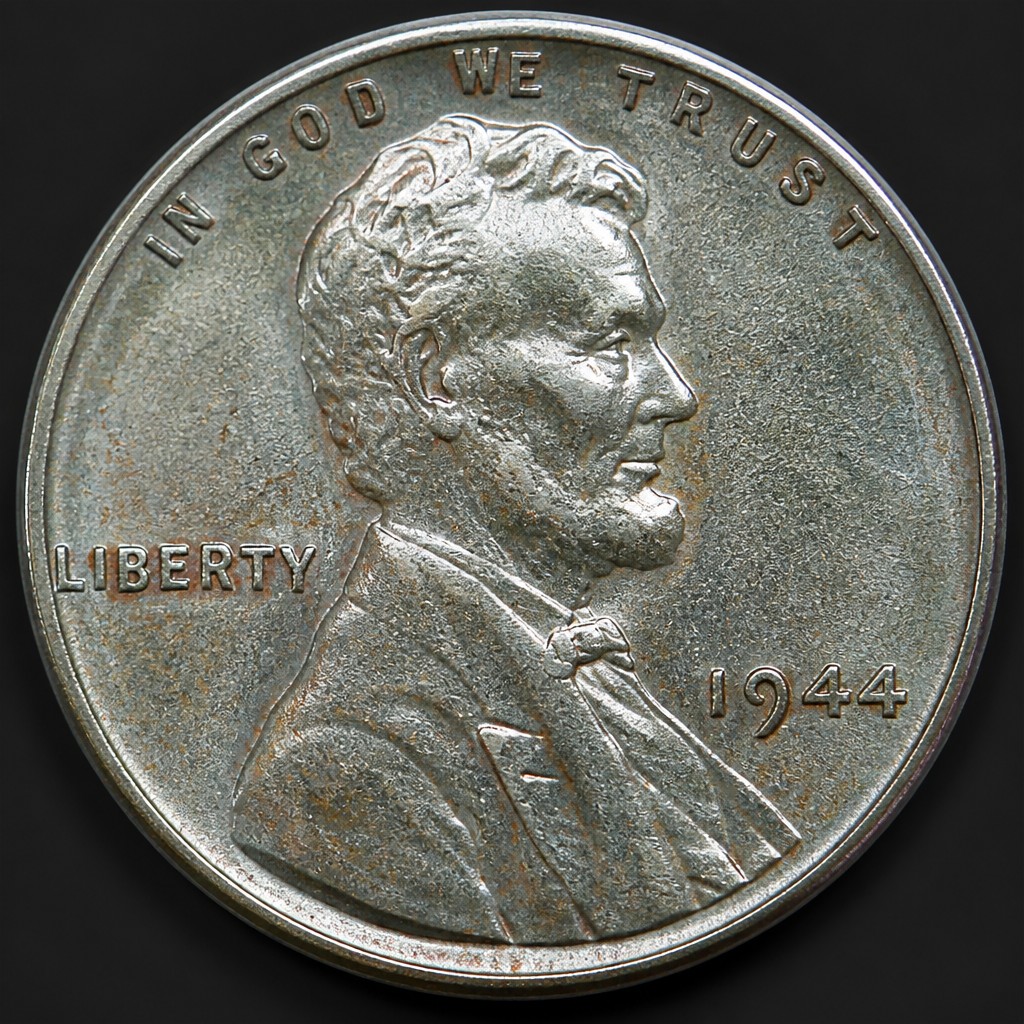
What This Coin Is
After striking 1943 cents in zinc-coated steel to save copper for the war, the Mint returned to a bronze-alloy composition for 1944. A small number of leftover steel planchets from 1943 were mistakenly struck with 1944 dies, producing the 1944 steel cent — a rare transitional error coin that mirrors the more famous 1943 bronze cent in reverse.
Obverse Design & Inscriptions
The obverse shows the standard right-facing Lincoln portrait with "IN GOD WE TRUST" above, "LIBERTY" to the left, and the date "1944" to the right, identical in design to normal 1944 bronze cents.
Reverse Design & Inscriptions
The reverse displays the familiar wheat ears flanking "ONE CENT" and "UNITED STATES OF AMERICA." As with the 1943 copper error, the design itself is entirely ordinary; only the underlying metal sets this coin apart.
Size, Weight, Metal & Edge
A genuine 1944 steel cent weighs close to 2.7 grams, the standard weight for steel-planchet cents, versus about 3.11 grams for a normal 1944 bronze cent. The coin is also noticeably lighter gray in color compared to the reddish-brown or golden-brown tone typical of bronze cents, and it will respond strongly to a magnet.
Mint Marks & Where to Find Them
Check below the date for a "D" or "S" mint mark, or no mark at all for a Philadelphia strike. Genuine steel-planchet errors dated 1944 have been documented from more than one mint, though in each case only a small number are known to exist.
Telling It Apart From Similar Coins
The magnet test is decisive: genuine 1944 steel cents are magnetic, while normal bronze 1944 cents are not. Because some fakes are made by copper-plating a genuine 1943 steel cent and altering the date, or plating a modern steel item and stamping fake dies, careful examination of the date digits and a weight check are both necessary alongside the magnet test.
Judging Condition at a Glance
As with any rare error coin, originality of surfaces matters more than pristine condition. Look for even, undisturbed steel-gray coloring consistent with age, since steel cents are prone to rust and corrosion over time; heavy pitting or flaking zinc coating can affect both appearance and authentication.
Authenticity Red Flags
Because genuine examples are rare and valuable, any coin claimed to be a 1944 steel cent should be checked with a magnet, weighed precisely, and examined for signs of an altered date or artificial plating before being accepted as genuine. Professional third-party grading and authentication is strongly recommended given the long history of deceptive alterations involving this date.
Frequently asked questions
How do I quickly check a 1944 cent for this error?
Use a magnet — a genuine steel-planchet 1944 cent will be strongly attracted, while normal bronze 1944 cents will not respond at all.
What color should a genuine 1944 steel cent be?
A light gray tone similar to a 1943 steel cent, rather than the reddish or golden-brown color typical of bronze cents.
How much should it weigh?
Approximately 2.7 grams, matching standard steel cent weight, versus about 3.11 grams for a normal bronze 1944 cent.
Are copper-colored 1944 cents ever valuable?
Normal bronze 1944 cents are common and not an error; the valuable variety is the steel-colored, magnetic version struck on a leftover 1943 planchet.