
How to Identify the 1943 'V' Victory Nickel (tombac)
A Second World War-era Canadian five-cent coin struck in brass-colored tombac with a distinctive twelve-sided shape and a patriotic 'V for Victory' reverse encoding a Morse code message around the rim.
Read the full 1943 'V' Victory Nickel (tombac) encyclopedia entry →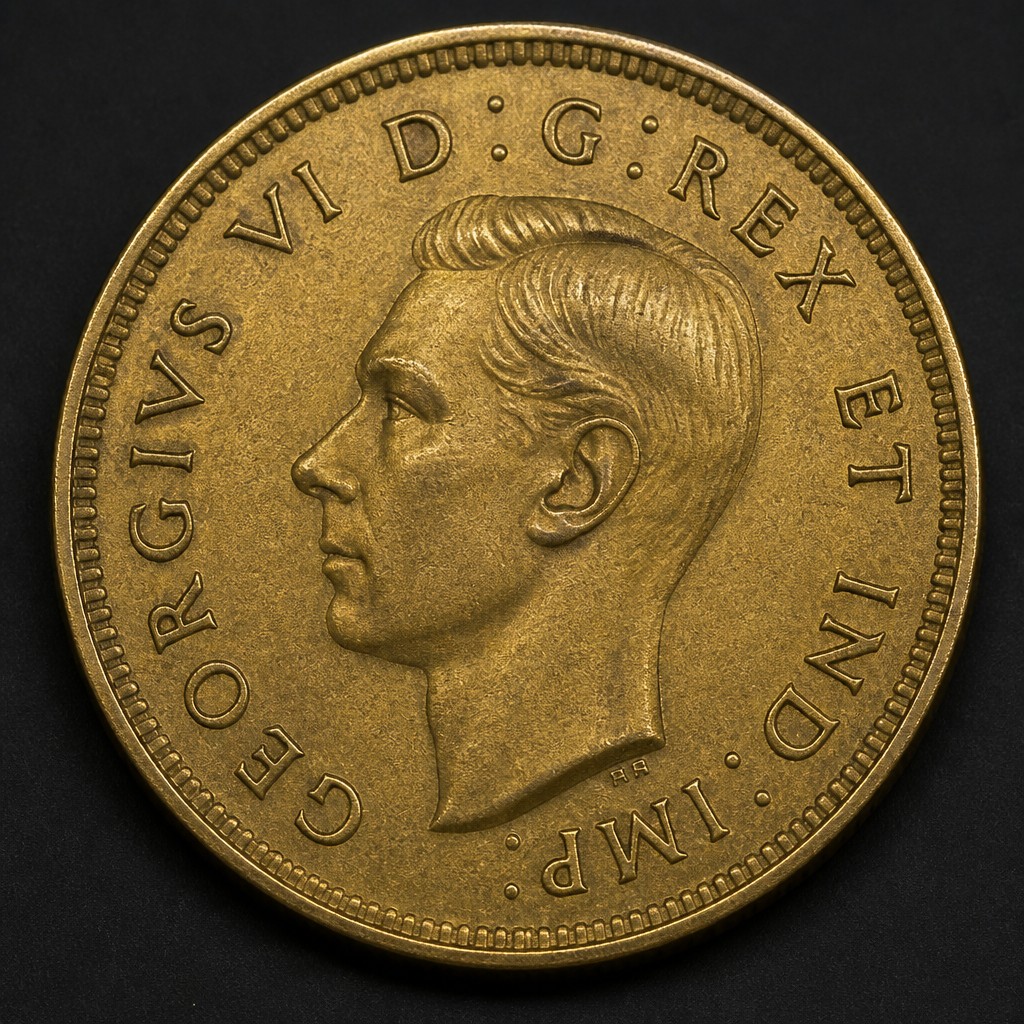
What It Is
Issued during the Second World War, this five-cent coin reflects Canada's wartime effort to conserve strategic metals. Nickel was needed for military production, so the mint changed the coin's shape and composition and adopted a bold "V for Victory" design intended to boost morale on the home front.
Obverse Design
The obverse carries the portrait of King George VI with the wartime-era legend GEORGIVS VI DEI GRATIA REX ET INDIAE IMPERATOR.
Reverse Design
The reverse features a large "V" alongside a torch, with CANADA and the date arranged around it. Its most famous detail is a ring of dots and dashes running around the rim on both sides of the coin, spelling out the Morse code message "WE WIN WHEN WE WORK WILLINGLY," a distinctive wartime touch unique to this design.
Size, Weight, Metal & Edge
Unlike the round nickel coins before and after it, this piece is struck in a twelve-sided (dodecagon) shape. The 1943 issue is made of tombac, a brass-like copper-zinc alloy with a warm, golden-brass color, quite different from the grey tone of ordinary nickel coins. Later wartime years (from late 1944 into 1945) kept the same twelve-sided V design but switched to chromium-plated steel instead.
Mint Marks
Produced at the Royal Canadian Mint in Ottawa, this coin carries no mintmark.
Telling It Apart From Similar Coins
The twelve-sided shape immediately separates this coin from every round Canadian nickel before or after the war years. To tell the 1943 tombac version from the 1944-45 steel version of the same V design, use a magnet: tombac is non-magnetic and typically tones to a darker, bronze-like brown over time, while the chrome-plated steel version is magnetic and keeps a brighter silvery look. It should also not be confused with the 1942 twelve-sided tombac nickel, which shares the same shape and metal but still carries the older beaver reverse rather than the V design.
Judging Condition
Wear appears first on the raised ridge of the large V and on the torch's flame detail. Because tombac coins tone unevenly with age, an attractive golden surface with even coloring is more desirable than a blotchy or heavily discolored one.
Authenticity Red Flags
Because tombac naturally darkens over time, be cautious of coins that have been aggressively cleaned or polished to restore a bright golden look, as this can hide actual wear and damage the surface. Confirm the twelve-sided shape and dimensions match published specifications, and use a simple magnet test to help verify whether a coin is the non-magnetic tombac type or the magnetic steel type from later war years.
Frequently asked questions
Why is the coin twelve-sided instead of round?
Canada changed the shape during the Second World War partly to make the wartime nickel coins easily distinguishable by touch and sight from regular coinage.
What does the Morse code around the rim say?
It spells out 'WE WIN WHEN WE WORK WILLINGLY,' a patriotic wartime slogan encoded in dots and dashes.
What is tombac?
Tombac is a copper-zinc alloy with a brass-like golden color, used for Canadian five-cent coins in 1942 and 1943 to conserve nickel for the war effort.
How do I tell a 1943 tombac coin from the 1944-45 steel version?
Use a magnet: tombac is non-magnetic with a golden-brown tone, while the later chrome-plated steel version is magnetic and more silvery.
Does it have a mintmark?
No, it was struck at the Royal Canadian Mint in Ottawa without a mintmark.