
How to Identify the 1943 Steel Cent
A guide to the 1943 Steel Cent, the zinc-coated wartime cent, covering its silvery appearance, magnetic properties, weight, and how to tell a genuine steel cent from an altered or copper cent.
Read the full 1943 Steel Cent encyclopedia entry →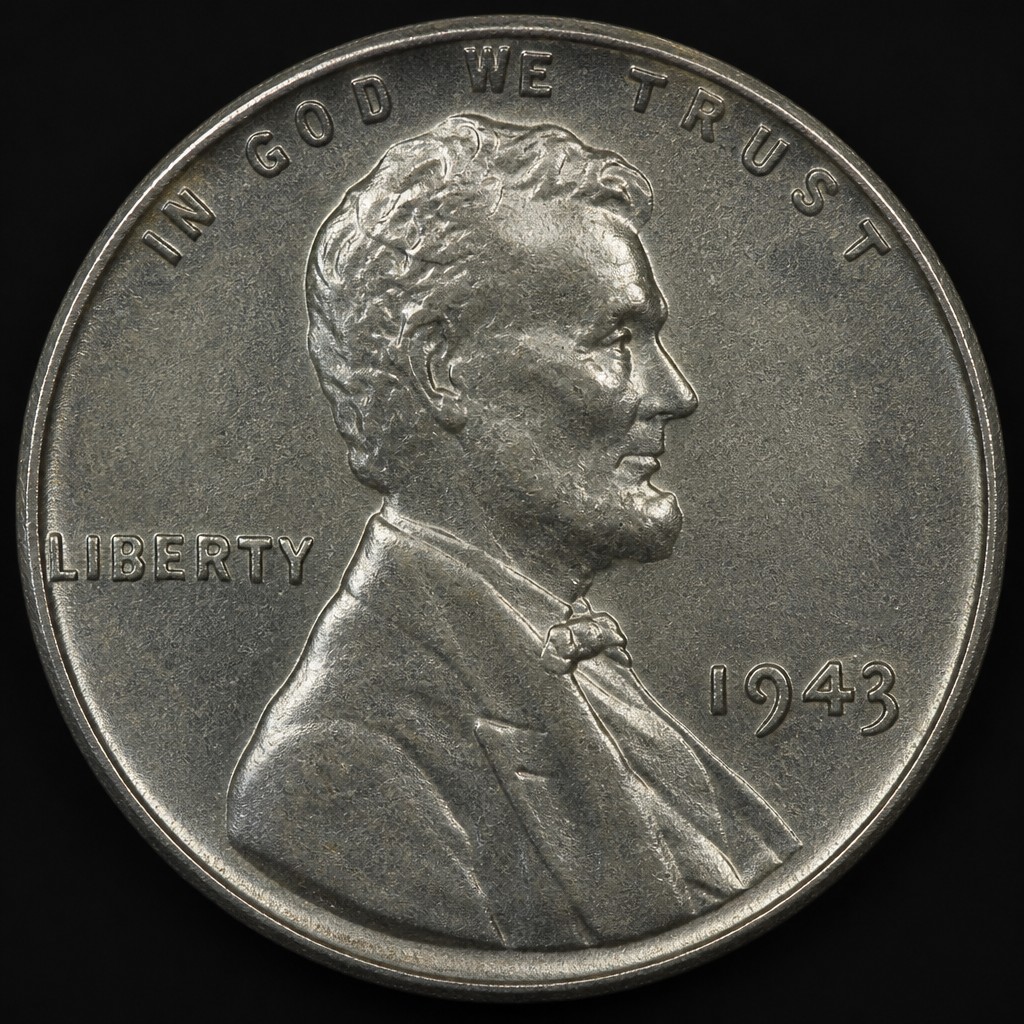
What Is the 1943 Steel Cent?
The 1943 Steel Cent was produced for a single year during World War II, when copper was diverted to military production needs. The US Mint substituted low-carbon steel coated with zinc for the standard cent composition, resulting in a coin that looks noticeably different from any Lincoln cent made before or after.
Obverse Design
The obverse retains the standard Lincoln Wheat Cent portrait used since 1909: a right-facing bust of Abraham Lincoln with "IN GOD WE TRUST" above, "LIBERTY" to the left, and the date and mint mark (if any) to the right.
Reverse Design
The reverse matches the Wheat Cent reverse used at the time, showing two wheat stalks framing "ONE CENT" and "UNITED STATES OF AMERICA," with "E PLURIBUS UNUM" in small letters near the top.
Appearance, Size, Weight, and Metal
The most obvious identification feature is color: the zinc coating gives the coin a bright silvery-gray appearance rather than the typical reddish-brown or tan of a copper cent, closer in look to a dime or nickel at a glance despite being cent-sized (19 mm). The steel core also makes the coin noticeably lighter than a standard bronze cent and, unlike any other US cent, magnetic, so a simple magnet test will make a genuine steel cent visibly attract and stick.
Mint Marks
As with other Lincoln cents of the period, the mint mark appears below the date on the obverse: no letter for Philadelphia, "D" for Denver, and "S" for San Francisco, all three of which struck steel cents in 1943.
Telling It Apart from Similar Coins
Because the zinc coating can tone or wear over time, some steel cents darken to a dull gray or develop rust-colored spots if the coating is scratched or corroded, which can make a well-worn example look superficially similar to a discolored copper cent; the magnet test resolves this immediately since copper cents are never magnetic. Steel cents should also not be confused with later copper-plated zinc cents (used from 1982 onward for other dates), which are copper-colored on the surface and non-magnetic.
Judging Condition
Grade is assessed the same way as other Wheat Cents, by the sharpness of Lincoln's hair and coat detail and the clarity of the wheat stalks, but with extra attention to the surface: because the thin zinc coating is prone to spotting, streaking, or rust-toned discoloration, especially on coins that were stored improperly, finding an example with clean, bright original surfaces is more difficult than finding one with acceptable sharpness alone.
Authenticity Red Flags
The best-known counterfeit-adjacent issue with this coin is not a 1943 steel cent pretending to be something else, but the reverse: genuine 1943 bronze (copper) cents are extremely rare mint errors, and many copper-colored "1943" cents in circulation are actually copper-plated or altered steel cents, or 1948 cents with the last digit reworked to look like a 3. Any copper-colored 1943-dated cent should be checked with a magnet (genuine bronze is non-magnetic, while a plated steel cent or the underlying steel would still attract) and weighed, since a real bronze cent weighs more than a steel cent, before assuming it is a genuine rare error.
Frequently asked questions
Why is the 1943 cent silver-colored instead of copper?
During World War II, copper was needed for military production, so the US Mint struck 1943 cents in zinc-coated steel instead, giving them a bright silvery-gray appearance.
How can I quickly confirm a coin is a genuine steel cent?
Steel cents are magnetic, so a simple magnet test causing the coin to attract and stick is a fast, reliable check; standard copper or copper-plated cents will not respond to a magnet in the same way.
What does it mean if I find a copper-colored 1943 cent?
Genuine 1943 bronze cents are extremely rare mint errors; most copper-colored '1943' cents are copper-plated steel cents or altered dates (often from 1948) and should be checked with a magnet and a scale before assuming rarity.
Why do some steel cents look rusty or spotted?
The thin zinc coating on the steel core can corrode or wear through over time, especially with improper storage, leading to dull gray toning or rust-colored spotting on the surface.