
How to Identify the 1943 Copper Lincoln Cent
An extremely rare error coin struck in bronze instead of the regular zinc-coated steel used for 1943 cents, created when leftover bronze planchets from 1942 were accidentally fed into the presses.
Read the full 1943 Copper Lincoln Cent encyclopedia entry →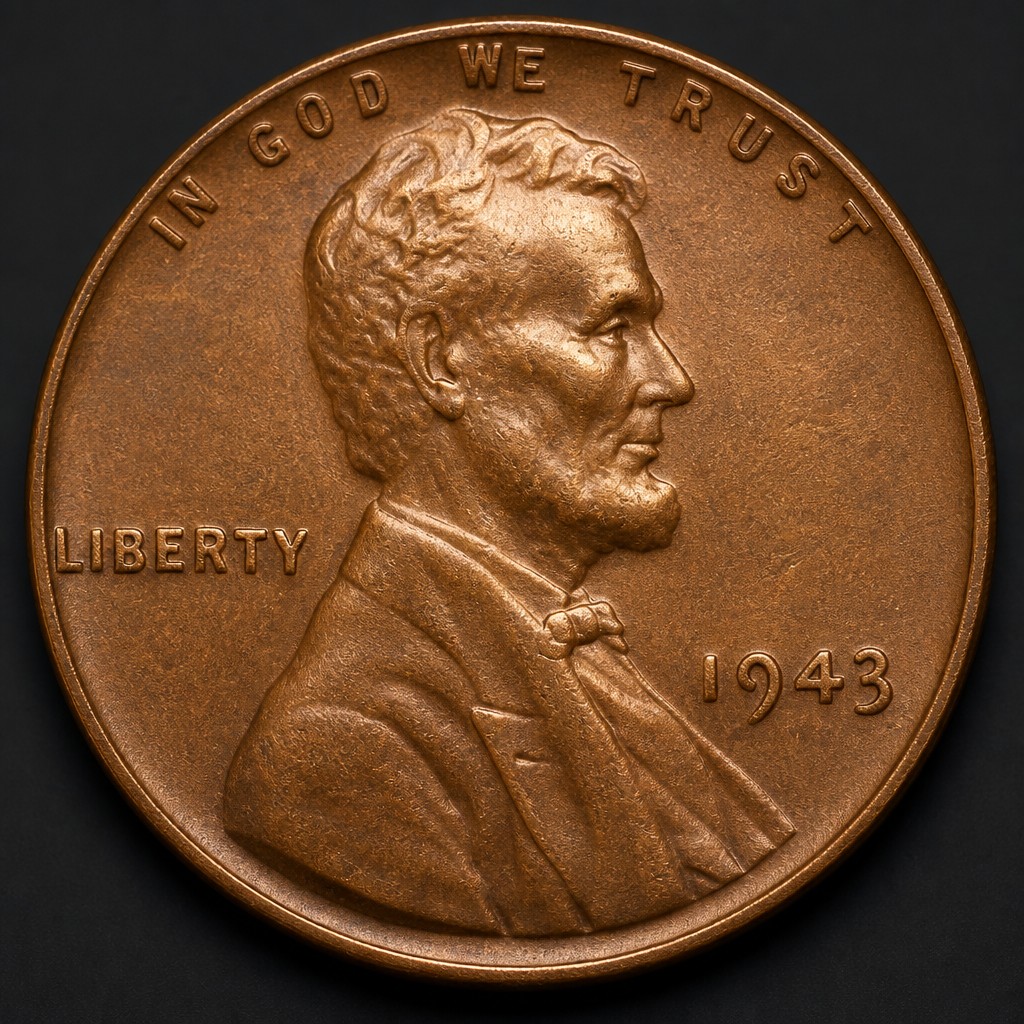
What This Coin Is
In 1943, the U.S. Mint switched Lincoln cent production to zinc-coated steel to conserve copper for the war effort. A small number of bronze planchets left over from 1942 production were accidentally struck with 1943 dies at one or more mints, creating an extremely scarce error coin known as the 1943 copper cent. Genuine examples are among the most famous error coins in American numismatics.
Obverse Design & Inscriptions
The obverse shows the standard Lincoln portrait used throughout the wheat cent series, facing right, with "IN GOD WE TRUST" arched above, "LIBERTY" to the left of the portrait, and the date "1943" to the right.
Reverse Design & Inscriptions
The reverse carries the wheat ears design flanking "ONE CENT" and "UNITED STATES OF AMERICA," identical to other Lincoln wheat cents of the era. There is nothing unusual about the design itself — the coin's rarity comes entirely from its metal composition.
Size, Weight, Metal & Edge
This is the detail that matters most: a genuine 1943 copper cent weighs about 3.11 grams, matching standard bronze cent weight, versus roughly 2.7 grams for the standard steel cent. The diameter and plain edge match other cents of the period. Any 1943-dated cent that is not attracted to a magnet and weighs close to 3.11 grams deserves careful, professional evaluation.
Mint Marks & Where to Find Them
Look just below the date for a small "D" (Denver) or "S" (San Francisco) mint mark; a blank space below the date indicates the Philadelphia mint. Genuine bronze off-metal strikes are known from more than one mint, though in every case the number of surviving examples is extremely small.
Telling It Apart From Similar Coins
The single most useful test is a magnet: genuine steel 1943 cents are strongly magnetic, while copper does not respond to a magnet at all. Because copper-plated steel cents are a common alteration made to fool collectors, weight and a magnet test together are essential, along with checking the "8" in the date, since some fakes are altered 1948 cents with the last digit reshaped.
Judging Condition at a Glance
Given the coin's rarity, even heavily worn or environmentally damaged genuine examples carry significant numismatic interest, so condition assessment focuses on how well the original design details, especially Lincoln's hair and the wheat stalks, have survived rather than on typical grading expectations for common coins.
Authenticity Red Flags
Any 1943 cent that looks bronze in color should be tested with a magnet first, weighed on an accurate scale, and checked for an altered date. Because of the coin's fame and value, professional third-party authentication is strongly advised before assuming a find is genuine, since decades of cleverly made counterfeits and alterations exist in the marketplace.
Frequently asked questions
How can I quickly test a 1943 cent at home?
Use a magnet — genuine steel cents stick strongly, while a genuine bronze error will not respond to the magnet at all.
What should a genuine 1943 copper cent weigh?
Approximately 3.11 grams, close to standard bronze cent weight, versus about 2.7 grams for a normal steel 1943 cent.
Are most 1943 copper-colored cents genuine?
No. The vast majority are copper-plated steel cents or altered dates, so magnet and weight tests plus professional authentication are essential.
Which mints produced genuine bronze 1943 cents?
Examples are known bearing marks consistent with more than one mint of the era, but in every case surviving genuine specimens are extremely scarce.