
How to Identify the 1943 Bronze Cent
A guide to the extremely rare 1943 bronze (copper) cent transitional error, including the weight and magnet tests used to separate genuine pieces from common fakes.
Read the full 1943 Bronze Cent encyclopedia entry →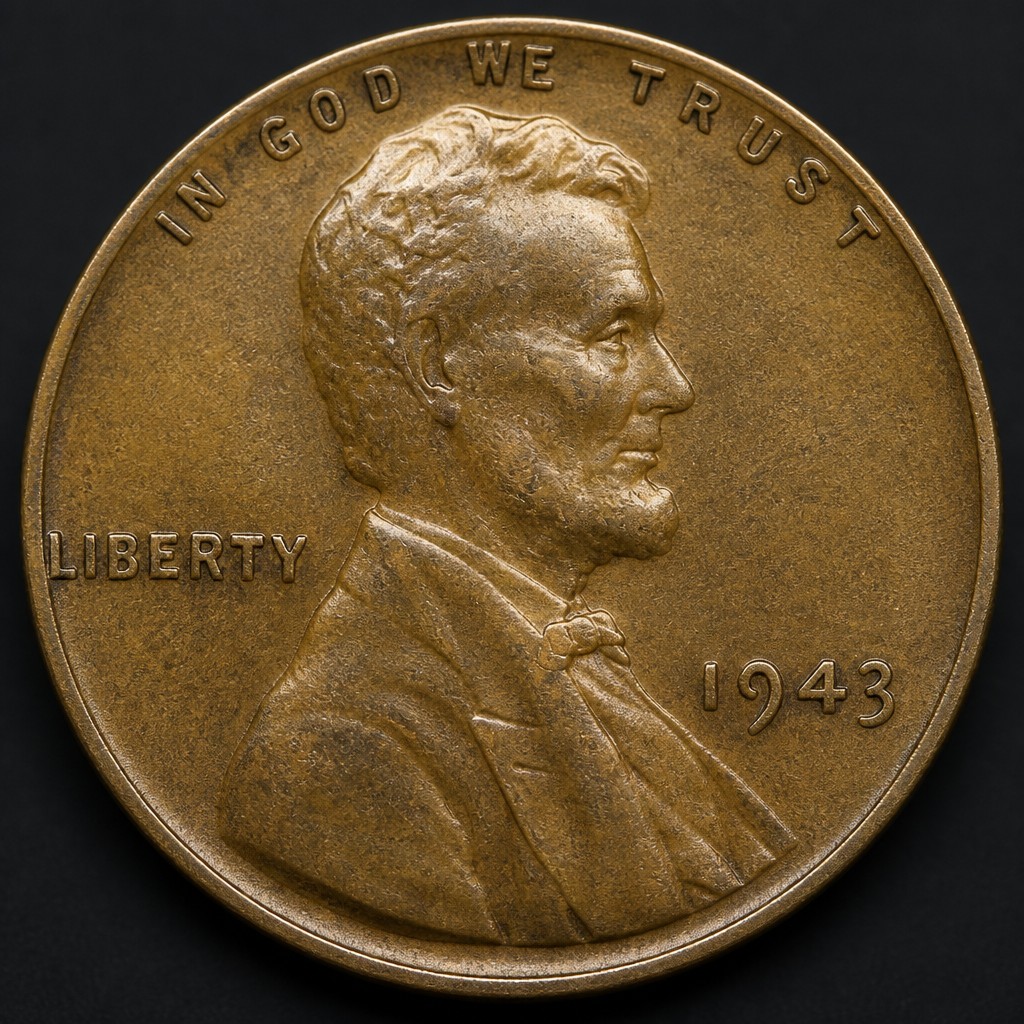
What It Is
In 1943, the U.S. Mint switched cent production to zinc-coated steel planchets in order to conserve copper for the war effort. A very small number of leftover bronze planchets from 1942 production were accidentally fed into the presses alongside the new steel blanks and struck with 1943 dies, creating the extremely rare 1943 bronze cent, a genuine transitional error rather than an intentional issue.
Obverse Design
Standard Wheat cent obverse: Lincoln facing right, "IN GOD WE TRUST" above his head, "LIBERTY" to the left, and the date "1943" to the right.
Reverse Design
Standard Wheat cent reverse with two curved wheat stalks framing "ONE CENT," "UNITED STATES OF AMERICA," and "E PLURIBUS UNUM" above center.
Size, Weight, and Metal
This is the single most important identifying feature for this coin. A genuine 1943 bronze cent is struck in the older 95% copper alloy, weighing about 3.11 grams — noticeably heavier than a normal 1943 steel cent, which weighs about 2.7 grams. Overall diameter and design proportions match a normal cent, with a plain edge in either case.
Mint Marks
Genuine examples are known to exist from Philadelphia (no mint mark), Denver ("D"), and San Francisco ("S"), though authenticated pieces are extraordinarily rare from all three mints, numbering only in the dozens combined.
Telling It Apart From Similar Coins
The fastest test is a magnet: a genuine 1943 bronze cent is not magnetic, since copper is not attracted to a magnet, while a normal 1943 steel cent is strongly magnetic. It's also worth weighing the coin on a gram scale, since a copper-plated steel cent, the most common type of fake, will weigh close to the steel standard of about 2.7 grams and will still be magnetic despite its copper-colored surface, because only a thin copper layer covers the steel core underneath.
Judging Condition
Given the extreme rarity of genuine examples, authentication takes priority over cosmetic grading. Any candidate coin needs to pass a weight check and a magnet test, along with close comparison of the date style and mint-mark placement to known genuine specimens, before its condition or grade is even a relevant consideration.
Authenticity Red Flags
This is among the most frequently counterfeited U.S. coins in existence. Common fakes include copper-plating a genuine 1943 steel cent, which will still be magnetic, underweight, and often shows gray steel peeking through at the edges or through worn spots in the plating, and altering the date on a common 1948 bronze cent by reshaping the "8" into a "3," which can leave irregularities in the last digit's shape, unnatural gaps, or visible tool marks under magnification. Always weigh the coin and test it with a magnet before drawing any conclusions about authenticity.
Frequently asked questions
Will a genuine 1943 bronze cent stick to a magnet?
No. Copper is not magnetic, so a genuine example will not be attracted to a magnet.
How much should it weigh?
About 3.11 grams, versus about 2.7 grams for a normal 1943 steel cent.
What's the most common fake?
A copper-plated 1943 steel cent, which is magnetic and underweight despite its copper color, or a 1948 cent with the date altered.
Can I identify it without special tools?
A simple magnet and a gram scale are enough to rule out the vast majority of fakes.