
How to Identify the 1942 Doubled Die Obverse Lincoln Cent
A wheat-back Lincoln Cent from Philadelphia showing doubling in the date and lettering on the obverse, caused by a misaligned hub impression during die manufacture.
Read the full 1942 Doubled Die Obverse Lincoln Cent encyclopedia entry →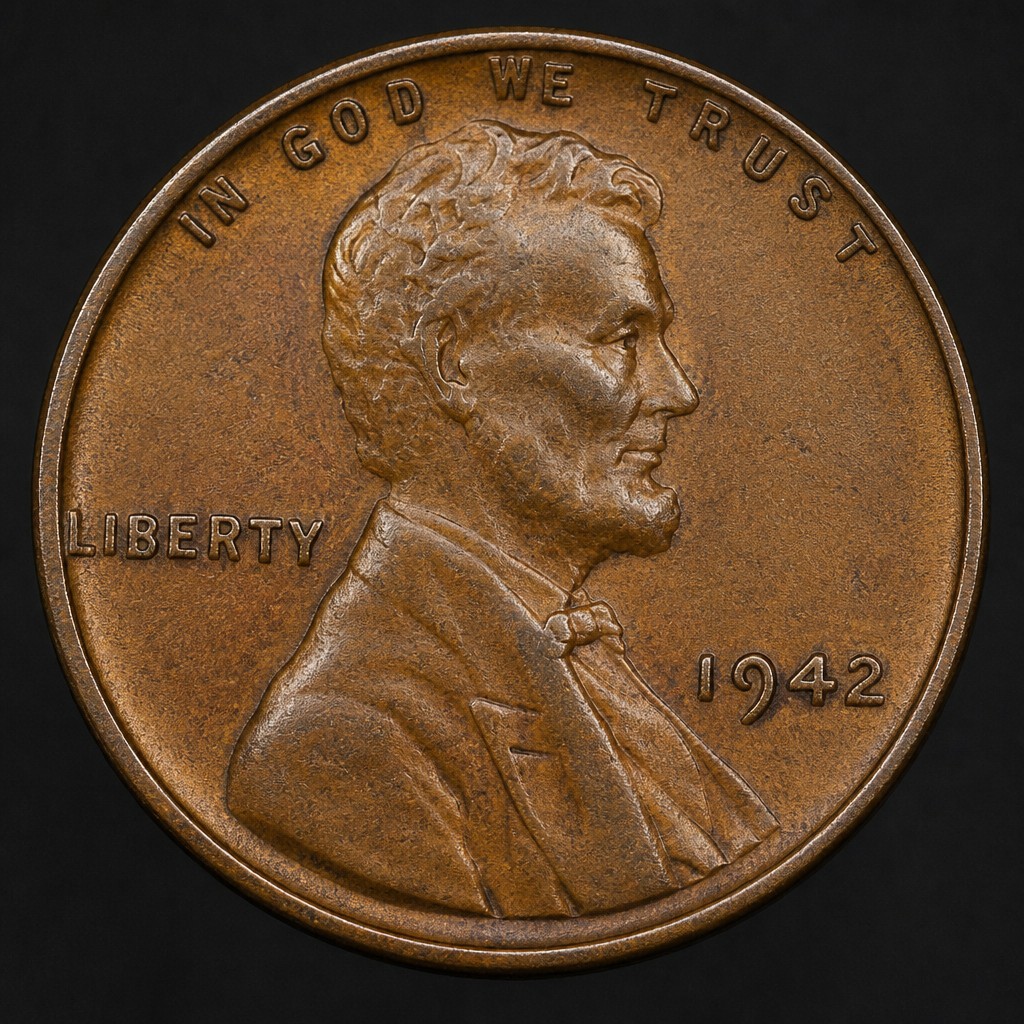
What It Is
The Lincoln Wheat Cent was minted from 1909 to 1958. The 1942 doubled die obverse (DDO) is a die variety in which the working die received two slightly offset impressions from the hub during production, leaving a secondary, shifted image on parts of the design. It is less widely known than later doubled dies like 1955 or 1972, but it is a recognized variety from this date.
Obverse Design and Inscriptions
The obverse shows Abraham Lincoln's portrait facing right, with "IN GOD WE TRUST" above, "LIBERTY" to the left of the portrait, and the date to the right. On the doubled die example, magnification typically reveals doubling most clearly in the date numerals and in the motto or "LIBERTY," appearing as a raised, parallel secondary line rather than a flat smear.
Reverse Design and Inscriptions
The reverse features two stylized wheat ears framing "ONE CENT" and "UNITED STATES OF AMERICA," a design used from 1909 through 1958. The reverse is unaffected by this variety and matches any standard 1942 wheat cent.
Size, Weight, Metal, and Edge
The 1942 cent measures 19 mm in diameter and weighs 3.11 grams, struck in a bronze alloy of 95% copper with 5% tin and zinc, giving it the familiar reddish-brown color of pre-1943 cents. The edge is plain. Note that 1943 cents (the following year) were made of zinc-coated steel due to wartime copper shortages, so a 1942 cent should still show the bronze coloring, not a silvery steel appearance.
Mint Marks and Where to Find Them
The mint mark, when present, is located on the obverse just below the date. No mint mark indicates Philadelphia, "D" indicates Denver, and "S" indicates San Francisco. This doubled die variety is generally associated with Philadelphia-struck coins showing no mint mark.
Telling It Apart From Similar Coins
Compare suspected doubling to a normal 1942 cent under 5x-10x magnification. Genuine hub doubling shows a rounded, distinct secondary line running parallel to the letters or numerals, with consistent width and separation, while machine or strike doubling (a much more common and less valuable occurrence) tends to look flat, shelf-like, and shallow rather than fully formed.
Judging Condition at a Glance
Check Lincoln's cheek, jaw, and coat for smoothness from wear, along with the wheat stalks on the reverse, which show wear on their outer edges first. A coin with strong, well-defined lettering and date numerals makes confirming genuine doubling far easier than one that is heavily worn.
Authenticity Red Flags
Be skeptical of "doubling" that looks like a scratch, smudge, or added material rather than a raised, integrated part of the coin's strike. Also confirm the coin's bronze color and weight are consistent with a standard 1942 cent, since a cent that looks silvery or unusually light in weight would not match this date's known composition and may indicate a mistaken date reading or an altered coin.
Frequently asked questions
How common is the 1942 doubled die compared to 1955 or 1972?
It is less widely known and typically less dramatic than the famous 1955 or 1972 doubled dies, but it is a recognized variety showing doubling in the date and lettering.
Where should I look for the doubling?
Examine the date and the word LIBERTY or IN GOD WE TRUST under magnification for a raised, parallel secondary outline.
What color should a genuine 1942 cent be?
It should be reddish-brown to brown bronze, since the steel cent composition was not introduced until 1943.
How is strike doubling different from a true doubled die?
True doubled die doubling looks rounded and fully formed, while strike doubling (caused by die movement during striking) looks flat and shelf-like, and is far more common and less significant.