
How to Identify the 1938-D/S Buffalo Nickel Overmintmark
The final year of the Buffalo Nickel series includes this Denver-struck variety where a D mint mark was punched over an earlier S, leaving visible remnants of both letters.
Read the full 1938-D/S Buffalo Nickel Overmintmark encyclopedia entry →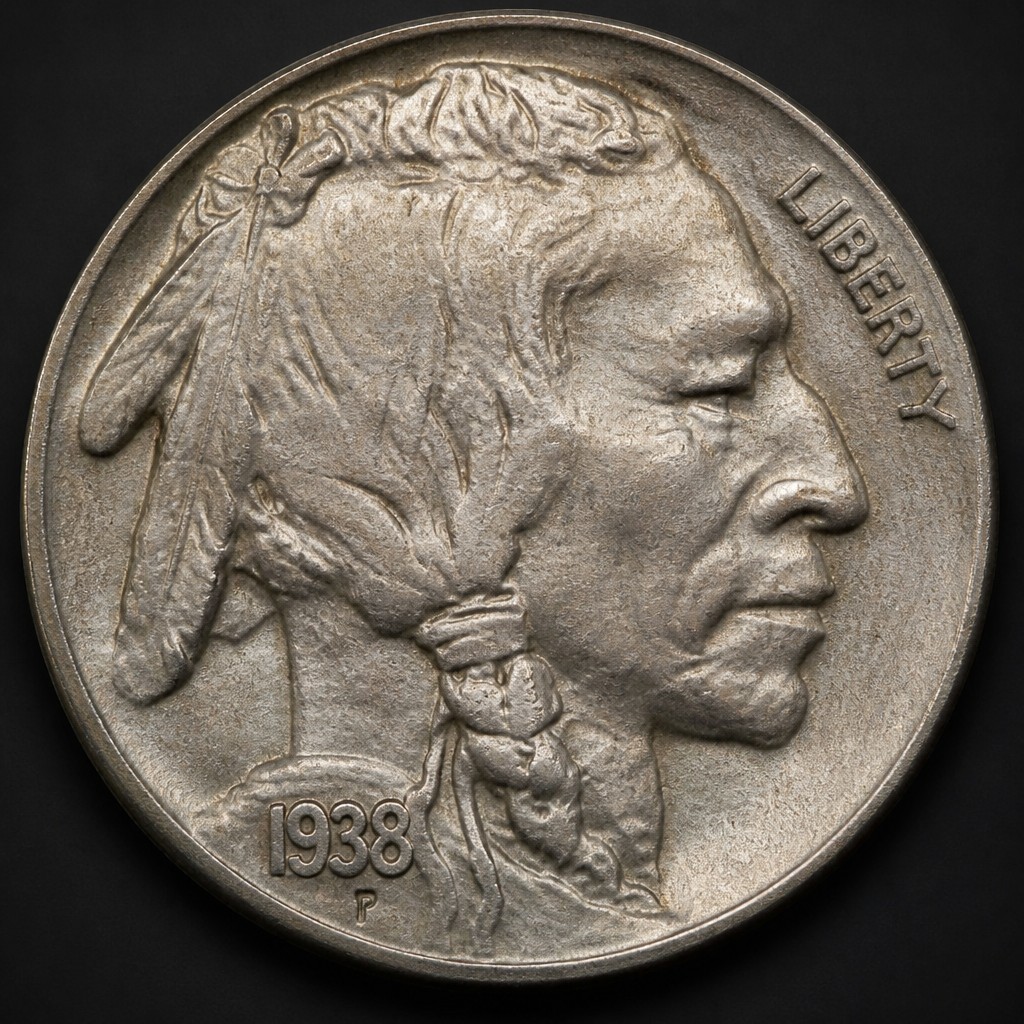
What It Is
1938 was the last year the Buffalo Nickel (Indian Head Nickel) design was produced before it was replaced by the Jefferson Nickel later that year. The 1938-D/S variety is an overmintmark: a working die originally punched with an "S" for San Francisco was instead finished with a "D" for Denver, leaving a faint outline of the "S" beneath the final "D."
Obverse Design and Inscriptions
The obverse features a right-facing Native American portrait with "LIBERTY" to the right of the neck and the date below the bust truncation. This variety shows no doubling on the obverse; the feature to examine is located on the reverse.
Reverse Design and Inscriptions
The reverse depicts an American bison standing on a mound, "UNITED STATES OF AMERICA" arcing above, "FIVE CENTS" below, and "E PLURIBUS UNUM" on the ground line beneath the bison. The mint mark is located directly below "FIVE CENTS," which is where the overmintmark should be examined.
Size, Weight, Metal, and Edge
The coin is 21.2 mm in diameter, weighs 5.0 grams, and is composed of 75% copper and 25% nickel, with a plain edge, consistent with all Buffalo Nickels.
Mint Marks and Where to Find Them
Look beneath "FIVE CENTS" on the reverse for the mint mark. On the 1938-D/S variety, magnification should reveal a secondary "S" shape visible within or beside the primary "D," a result of the mint reusing or repurposing a die originally intended for a different branch mint.
Telling It Apart From Similar Coins
Compare with a standard 1938-D nickel, which has a single clean "D" with no additional marks. Since 1938 is the final year of the design, also confirm the coin is not confused with the first-year 1938 Jefferson Nickel, which has an entirely different portrait and Monticello reverse design. A true overmintmark shows a legible secondary letter shape rather than a random blemish or die crack.
Judging Condition at a Glance
Examine the bison's horn, shoulder, and foreleg, along with the Indian's cheekbone and hair braid, for wear, since these are the highest points of the design and wear first. A coin with strong horn and mound detail, along with a fully legible mint mark, is easier to authenticate for this variety.
Authenticity Red Flags
Watch for coins where the secondary letter under the mint mark appears artificially added, with tool marks or a texture that does not match the coin's natural surfaces. A genuine overmintmark should show consistent wear, toning, and luster across the entire coin, including the mint mark itself, with no signs of scraping, engraving, or recently disturbed metal around the letter.
Frequently asked questions
Why would a Denver coin show traces of an S mint mark?
Mint marks were hand-punched into dies at this time, and a die originally prepared with an S for San Francisco appears to have been repurposed and repunched with a D for Denver use.
Where is the mint mark on a Buffalo Nickel?
It is located on the reverse, directly below the words FIVE CENTS.
Is 1938 the last year for the Buffalo Nickel design?
Yes, 1938 was the final year of Buffalo Nickel production before the Jefferson Nickel design took over later that year.
How can I be sure the extra letter isn't just damage?
A genuine overmintmark shows a recognizable letter shape consistent with the surrounding strike and wear, while damage typically looks like random scratches or disturbed, inconsistent metal.