
How to Identify the 1938-D Buffalo Nickel
A guide to the 1938-D Buffalo Nickel, the final year of the Buffalo Nickel series, covering its standard design, Denver mint mark, known re-punched mint mark varieties, and grading tips.
Read the full 1938-D Buffalo Nickel encyclopedia entry →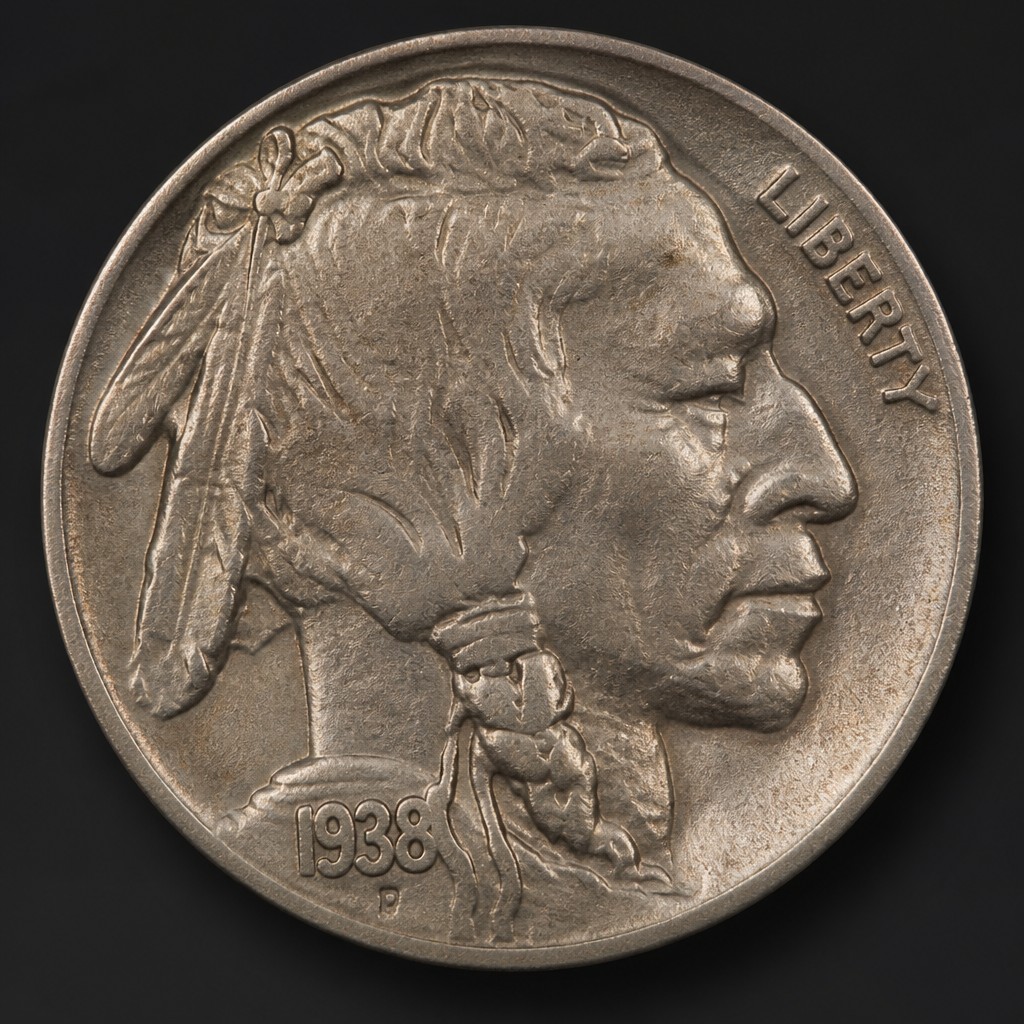
What It Is
The 1938-D Buffalo Nickel represents the last year the Buffalo (Indian Head) Nickel design was produced, before the Jefferson Nickel took over later in 1938. Struck at the Denver Mint, it is a popular coin for collectors seeking the final date of James Earle Fraser's design, and it also includes some notable mint mark varieties.
Obverse Design
The obverse shows a composite portrait of a Native American man in profile facing right, based on several individuals the sculptor used as models. "LIBERTY" is inscribed to the right of the portrait, with the date below.
Reverse Design
An American bison stands on a raised mound of earth, with "UNITED STATES OF AMERICA" above, "FIVE CENTS" below, and "E PLURIBUS UNUM" along the lower border.
Size, Weight, Metal, and Edge
The coin measures 21.2 mm in diameter and weighs 5.00 grams, struck in 75% copper and 25% nickel, with a plain edge.
Mint Mark and Known Varieties
The "D" mint mark for Denver appears on the reverse, to the left of "FIVE CENTS," beneath the bison. This date and mint combination is known for re-punched mint mark (RPM) varieties, where the mint mark was punched into the die more than once, sometimes over a different letter, leaving a doubled or overlapping impression. These varieties, such as a D punched over a partial D or S, are a recognized and collectible die characteristic rather than damage or an error to be concerned about.
Telling It Apart from Similar Coins
Since 1938-D was produced in significant quantities, it is not a key date, but it is often sought after specifically as the final year of the design, so accurate date and mint mark reading is important. Collectors distinguish the re-punched mint mark varieties by examining the mint mark closely under magnification for doubling, extra serifs, or a faint secondary outline of a different letter behind the primary D.
Judging Condition at a Glance
Wear shows first on the Native American's cheekbone and braid, and on the bison's hip, shoulder, and horn. A coin with a fully rounded, well-defined horn tip and separated hip and leg lines is in noticeably better condition than one where these features have flattened into the surrounding field.
Authenticity Notes
Given that 1938-D is not a scarce date, outright counterfeiting is uncommon, but the re-punched mint mark varieties can sometimes be confused with mint mark damage or post-striking alterations. A genuine re-punched mint mark shows consistent metal flow and luster matching the rest of the coin, while an added or tampered mint mark may show tool marks or mismatched texture. When in doubt about a specific variety's authenticity or value, comparison to published reference images of known re-punched mint mark varieties is recommended.
Frequently asked questions
Why is the 1938-D Buffalo Nickel popular with collectors?
It represents the final year the Buffalo Nickel design was struck before the Jefferson Nickel replaced it later in 1938, making it a sought-after 'last year of issue' coin even though it is not especially rare.
Where is the mint mark on this coin?
The 'D' mint mark is on the reverse, to the left of 'FIVE CENTS,' beneath the bison.
What is a re-punched mint mark variety?
It occurs when the mint mark was stamped into the die more than once, sometimes over a different letter, leaving a doubled or overlapping appearance; this is a recognized die variety rather than damage.
Is the 1938-D Buffalo Nickel rare?
No, it was struck in significant numbers and is not considered a key date, though it remains popular for being the last year of the Buffalo Nickel design.